
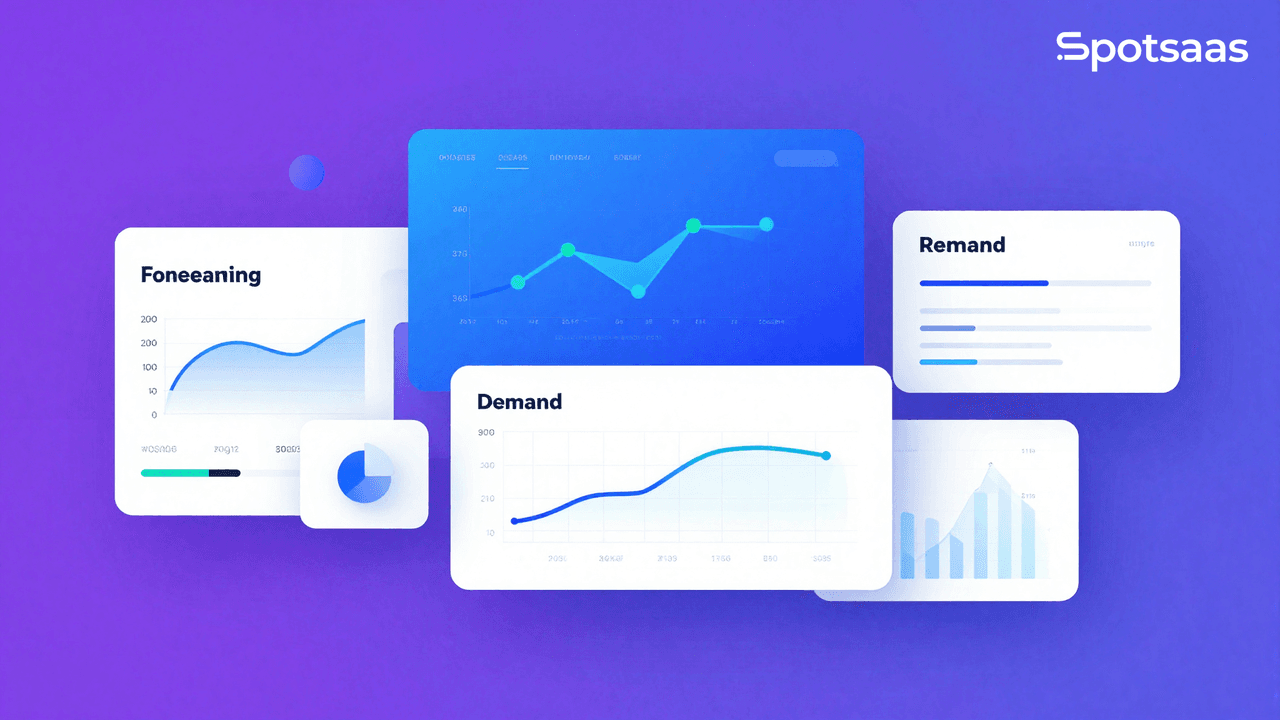
Making business decisions is hard when the future is uncertain. Successful companies reduce that uncertainty with business forecasting, which uses available data to build informed strategic plans.
This article explains how business forecasting works and how to use data for planning and day-to-day decision-making.
Key Takeaways
- Business forecasting is essential for planning the future, making informed business decisions, and avoiding surprises in taxes.
- Effective business forecasting helps companies adapt to changing market conditions and align their strategies with their goals and objectives.
- By predicting future trends and analyzing historical data, businesses can estimate financial projections, improve operations, and support growth.
What is Business Forecasting?
Business forecasting refers to the process of using historical data and predictive analysis to estimate future trends and make informed decisions for the business.
Definition
Business forecasting is a technique that combines past data, predictive analytics, and market research to estimate future trends. Its main purpose is to predict what might happen in the business environment.
The practice uses statistical tools and techniques to project future trends from historical data and current market conditions. Forecasts can cover short or long periods, depending on the nature of the business and its industry. A short-term forecast might guide the next quarter of inventory or staffing, while a long-term forecast supports bigger bets such as entering a new market.
They help companies anticipate likely scenarios in sales, finances, demand, and operations, among other areas.
Methods (Quantitative and Qualitative)
Business forecasting relies on two primary methods. Quantitative forecasting works from measurable historical data and statistical models, while qualitative forecasting draws on expert judgment and market research when hard data is limited. Many companies combine the two, using the numbers as a base and expert opinion to account for factors the numbers do not capture.
The Importance of Business Forecasting
Business forecasting matters because it helps companies plan for the future, inform their decisions, and avoid surprises in taxes.
Planning for the future
Business forecasting gives firms a sense of direction. It uses predictive analysis and statistical methods to read market trends, assess risks, and build financial projections.
These forecasts support business planning by helping managers set strategic paths for growth. Whether the task is managing inventory or optimizing production processes, forward-looking strategies help businesses gain a competitive edge.
These predictions are more than educated guesses. They are grounded in practical data assessment, which lets companies adapt quickly to changing conditions while staying aligned with their overall goals and objectives.
Planning around a forecast keeps surprises to a minimum and helps a business act on growth opportunities.
Informing business decisions
Forecasting plays a central role in informing business decisions. By analyzing historical data and current market conditions, a company can predict likely outcomes and use those predictions to guide its choices.
This lets managers build strategies on reliable forecasts and act with more confidence on sales, expenses, and revenue. With sound forecasting insights, businesses can handle uncertainty more easily and make decisions that match their goals and objectives. A decision backed by a forecast is easier to explain to a board or a lender, because it rests on evidence rather than instinct.
Avoiding surprises in taxes
Forecasting is a useful tool for avoiding surprises in taxes. By predicting future trends and analyzing historical data, a business can estimate its financial projections and plan its budget accordingly.
This helps a company anticipate potential tax liabilities or changes in tax rules, so it can decide on and take the steps needed to reduce unexpected tax burdens.
With careful forecasting and analysis of market conditions, businesses can prepare for tax season and meet their tax obligations without last-minute surprises.
Types of Forecasting in Business
Business forecasting comes in several types, including general forecasting, financial forecasting, demand forecasting, sales forecasting, and capital forecasting.
General
Business forecasting is a useful tool for companies of all sizes and industries. It analyzes past data, market conditions, and future trends to make informed predictions about what lies ahead.
Using historical information and statistical methods, businesses can build accurate forecasts that support decision-making and strategic planning. Whether the goal is projecting revenue, estimating growth, or spotting risks and opportunities, forecasting gives organizations the insight to stay competitive and reach their goals.
Financial
Financial forecasting is a crucial aspect of business planning and decision-making. It predicts future financial outcomes based on historical data, market conditions, and other factors.
With financial predictions in hand, businesses can budget their resources, estimate growth potential, and make informed choices about investments and expenses. That helps them stay competitive and adjust their strategies as the market changes.
Financial forecasts also help a business avoid surprises at tax time and keep a clear picture of its financial health. With accurate projections, a company can face the challenges and opportunities ahead with more confidence.
Demand
Demand forecasting is a critical aspect of business planning and decision-making. By predicting future demand for products or services, a business can match its production capacity and inventory levels to what customers will actually want.
This helps avoid stockouts and overstocking, which improves operations and customer satisfaction. Demand forecasting also helps a business anticipate market trends and adjust its marketing to meet changing consumer needs.
It also supports better resource allocation, so the right resources are in place at the right time to meet customer demand. With accurate demand forecasts, businesses can make sound decisions about pricing, promotions, product development, and supply chain management, which supports growth and profitability.
To forecast demand well, businesses use techniques such as statistical analysis of historical data, market research surveys, and expert opinions from industry professionals or consultants.
These methods help analyze the factors behind demand swings, including seasonal patterns, economic conditions, competitor actions, and new product launches. Building these insights into planning lets a business anticipate market shifts and act on them with less risk. The result is a supply plan that bends with demand instead of reacting to it after the fact.
Sales
Sales forecasting is a crucial aspect of business planning and decision-making. By analyzing past sales data and market trends, a business can project future sales figures and make informed choices about production, inventory management, and resource allocation.
Sales forecasts help a company set realistic targets, identify growth opportunities, and plan marketing to increase revenue. This gives businesses a way to stay competitive and adjust their strategies as conditions change.
Accurate sales forecasting also supports budgeting and financial planning by estimating expected revenue and keeping resources allocated efficiently. A reliable sales forecast tells a sales team what quota is realistic and warns finance early when revenue is likely to fall short. In short, sales forecasting drives business results by revealing what customers want and how the market is moving.
Capital
Forecasting capital requirements is a critical part of business planning. It estimates the funds needed for things like buying new equipment, expanding operations, or investing in research and development.
By forecasting capital needs accurately, a business can make sure the financial resources are on hand when opportunities appear. That lets it decide how to allocate funds and manage its cash flow.
Accurate capital forecasting also helps a business avoid financial constraints or unexpected funding gaps that could hold back its growth.
How to Develop a Forecast
Developing a forecast involves projecting revenue, analyzing expenses, monitoring cash flow, and setting the time frame for the forecast.
Projecting revenue
Projecting revenue is a core part of business forecasting. It means making a reasoned estimate of the income a company expects to earn within a specific time frame.
By analyzing historical data, market trends, and other relevant factors, a business can build forecasts that guide planning and decisions. This information is valuable for budgeting, resource allocation, and setting financial goals, and it draws on forecasting techniques and statistical methods.
Accurate revenue projections let a company anticipate cash flow swings and adjust its strategies in time. They also give a benchmark to measure actual results against, so the business can see quickly when reality drifts from the plan. In the end, projecting revenue gives a business a clearer view of its financial health and the room to make proactive choices that protect profitability.
Analyzing expenses
Analyzing expenses is a key step in business forecasting. By examining spending in detail, a business can build accurate financial predictions and make informed decisions about budgeting and resource allocation.
Expense analysis shows where costs can be cut or reduced, which helps protect profitability. It also surfaces unexpected or hidden costs that could affect the organization’s financial health.
On top of that, analyzing expenses reveals spending patterns and trends, so a business can adjust its strategies and hold its financial footing.
Monitoring cash flow
Monitoring cash flow is a key part of business forecasting. By watching the money coming in and going out, a business can plan for future expenses and make informed decisions about its financial health.
Accurate cash flow monitoring shows potential gaps or shortfalls early, so a company can act before they turn into real problems.
This keeps the business stable and makes sure it has enough working capital to cover operating expenses, invest in growth, and meet financial obligations as they come due.
Time frame
Business forecasting predicts future trends and supports decisions grounded in data analysis. In developing a forecast, the time frame you plan for is a key consideration.
The right time frame lets a business align its forecast with specific goals. By weighing market conditions, economic trends, and customer behavior across that window, a company can estimate future demand and adjust its operations accordingly.
The time frame is central to effective planning, because it keeps a forecast relevant and useful for taking proactive steps toward success.
Conclusion
Business forecasting plays a central role in decision-making and planning. By analyzing historical data and predicting future trends, a business can make informed choices about its operations, finances, and growth strategies.
With forecasting techniques and market analysis, businesses can anticipate risks, spot opportunities, and build data-driven strategies to stay competitive.
In short, business forecasting is an essential tool that helps businesses handle uncertainty and reach their goals efficiently.
FAQs
1. Why is business forecasting important for decision-making and planning?
Business forecasting helps organizations anticipate future market trends, demand for products or services, and potential risks. This information supports informed decision-making and effective planning to protect profitability.
2. How does business forecasting help in reducing uncertainty?
By analyzing past data and current market conditions, businesses can use forecasting techniques to make informed predictions about future outcomes. This reduces uncertainty by giving a clearer view of potential risks and opportunities.
3. What are the benefits of using business forecasting in financial planning?
Business forecasting lets companies estimate expected revenue, expenses, cash flow, and profitability over a specific period. This helps in setting realistic financial goals, allocating resources effectively, and making sound investment decisions.
4. Can business forecasting be used across different industries?
Yes. Business forecasting applies across industries including retail, manufacturing, finance, and healthcare, because it provides insight into consumer behavior patterns and market dynamics that shape decision-making.
5. Are there any limitations or challenges associated with business forecasting?
While useful for decision-making and planning, business forecasting carries some uncertainty. Unpredictable factors such as economic swings or shifts in consumer preferences can affect the accuracy of the forecasts it produces.

- Independent picks for exactly what you just read about
- Matched to your team size & needs
- Vendors don't pay for placement
Step 1 of 4
How big is your team?
We tailor recommendations to companies your size.















Related Articles

Buyers guide
How To Choose The Best Marketplace Software For 2026
Continue reading →
Buyers guide
How To Choose The Best E-Commerce Tools For 2026
Continue reading →
E-commerce Platforms
Top 13 Best ACA Reporting Software Tools in 2026 for IRS Compliance & Benefit Tracking
Continue reading →
Buyers guide
How To Choose The Best Product Analytics Software For 2026
Continue reading →