
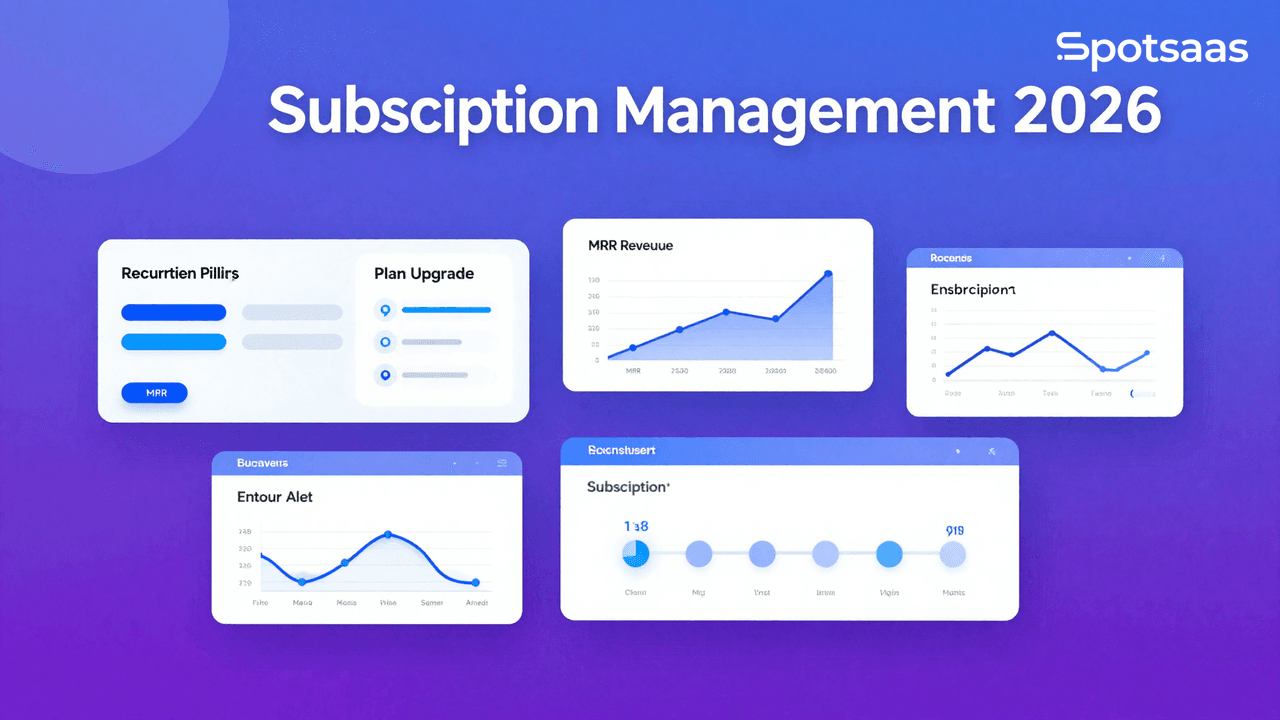
What Is Subscription Management Software?
Subscription management software handles the recurring billing, payment processing, and customer subscription lifecycle that a business would otherwise have to track by hand across spreadsheets and separate tools. It cuts friction out of the subscription cycle — managing upgrades and downgrades, tracking revenue, and keeping customers from lapsing without anyone noticing until it’s too late to win them back.
SaaS companies, media services, membership businesses, and subscription-based e-commerce brands are the primary users, relying on this software to run revenue operations and customer experience together. Most platforms connect to CRM, accounting, and payment gateway systems, which keeps the whole financial workflow in sync. Fewer manual errors and tighter processes free up teams to focus on growth instead of chasing down billing issues.
Why Should Businesses Use Subscription Management Software?
Automated Recurring Billing
Manual invoicing disappears — renewals, upgrades, and cancellations all run on autopilot. That cuts the odds of errors and shrinks the administrative load on whoever used to handle it manually. On-time payments become more consistent, which supports steadier cash flow, and customers notice the difference when their subscription just works without friction.
Flexible Pricing and Subscription Plans
Tiered, usage-based, freemium — businesses can mix and match pricing models to build a subscription offer that appeals to a wider range of buyers. Dynamic pricing supports both new revenue and better retention, and that flexibility tends to lift conversion rates and keep customers engaged for longer.
Secure and Automated Payment Processing
Integration with multiple payment gateways keeps transactions moving smoothly. Customers can pay by credit card, PayPal, or digital wallet, and security measures like encryption and fraud protection guard against fraudulent charges on both sides of the transaction.
Customer Lifecycle Management
Real-time visibility into sign-ups, renewals, plan changes, and cancellations gives businesses a clearer read on user behavior and where to focus engagement efforts. Tracking that activity makes it possible to offer personalized deals and cut down on churn, while automatic alerts keep subscribers informed about what’s happening with their account.
Revenue Recognition and Compliance
Staying compliant with finance regulations like ASC 606 or IFRS 15 depends on accurate revenue forecasting, and the right software automates the tax calculation and regulatory work behind it. It also closes off revenue leakage by keeping invoice tracking and reporting accurate, and automated compliance lowers the odds of audit findings or financial discrepancies down the line.
Lower Churn and High Retention
Dunning management runs on its own, retrying failed charges and notifying customers automatically before a payment failure turns into a lost subscriber. That alone cuts involuntary churn substantially. On top of that, businesses can layer in personalized retention offers to build loyalty — staying ahead of churn this way keeps recurring revenue growth on a steadier footing.
What Are the Key Features of Subscription Management Software?
Recurring Billing and Invoicing
Billing runs automatically, keeping every subscription invoiced accurately and on time. Businesses can configure invoice templates with their own branding and personalization. The system supports several billing types — automated renewals, one-time charges, proration adjustments, discounts — which takes manual workload and errors out of accounting. Integration with accounting tools makes reconciliation simpler, with real-time visibility into invoices and payments as they happen.
Customization of Subscription Plans
Tiered, usage-based, freemium, or some combination — companies can build flexible plans that include discounts, trial periods, and promotional offers. Customers can upgrade, downgrade, or switch plans whenever they want. Customer segmentation supports personalized pricing by preference, which tends to lift conversion by letting potential customers pick the option that fits, and it reduces churn since active subscribers have room to switch rather than cancel outright.
Payment Gateway Integration
Compatibility with major gateways like Stripe, PayPal, Braintree, and Authorize.net covers most of what businesses need, accepting credit and debit cards, bank transfers, and digital wallets alike. Encryption, PCI compliance, and fraud detection keep transactions secure. Multi-currency support handles cross-border payments for businesses operating globally, and localized payment options smooth out expansion into new markets — all of which adds up to a payment experience that feels effortless on the customer’s end.
Dunning Management and Payment Recovery
Failed payments get retried automatically, protecting revenue against involuntary churn. Customers are notified of payment failures through email, SMS, or app notifications, and smart retry logic gives a declined transaction another shot before writing it off. The software also surfaces recovery rate data so businesses can refine their retention strategy, and tracking expired or declined payment methods cuts down the risk of cancellations tied purely to billing friction.
Tax Compliance and Global Payments
Regional taxes — VAT, GST, sales tax — get calculated automatically based on customer location, keeping the business aligned with regulations like ASC 606 and IFRS 15. Multi-currency support enables international expansion, and integration with tax compliance tools generates accurate financial reports without manual reconciliation. Automated filings and documentation ease the administrative load, helping companies avoid legal penalties while keeping tax reporting transparent and cross-border transactions running smoothly with region-specific pricing baked in.
Customer Self-Service Portal
Customers manage their own subscriptions, billing details, and plans through a self-service portal, cutting down on support tickets for routine changes and cancellations. Billing history, invoices, and payment status are all visible in real time. That transparency around subscription terms and renewal policies builds trust, and giving customers direct control over their own account tends to strengthen retention over time.
Analytics and Revenue Forecasting
Core metrics — Monthly Recurring Revenue (MRR), churn rate, Lifetime Value (LTV) — are tracked automatically, giving businesses a clear read on revenue growth, retention, and payment trends. AI-driven analytics help predict revenue fluctuations and refine pricing strategy, and integration with BI tools supports custom reports and dashboards. Spotting trends in customer behavior earlier makes it easier to sharpen engagement and loyalty efforts, and businesses end up forecasting revenue with a lot more confidence as a result.
Multi-Channel Integration
Integration with CRM, ERP, and accounting software automates a lot of what would otherwise be manual workflow. Syncing with marketing automation tools supports personalized offers and reminders, and connecting to customer support tools speeds up issue resolution and ticket handling. The result is omnichannel support that feels more coordinated, with data flowing automatically between business systems and API-based integrations available for whatever a business needs beyond the defaults.
What Are the Benefits of Subscription Management Software?
Enhanced Operational Efficiency
Manual work drops out of the picture, freeing teams to focus on growing the business and engaging customers instead of chasing invoices. Errors in invoicing, tax calculation, and revenue recognition become rarer. Payment processing speeds up through automated billing and self-service portals, financial compliance stays intact, and integration across sales, finance, and support keeps the whole operation moving without redundant, drawn-out processes slowing things down.
Heightened Customer Satisfaction
Automatic billing, flexible payment options, and self-service portals combine into an experience customers barely have to think about. They can track subscriptions, switch plans, and update payment details on their own. Clear invoicing and unambiguous terms cut down on billing disputes, and proactive reminders about renewals, failed payments, or upcoming charges keep surprises to a minimum. Secure transactions and GDPR-compliant data handling build trust, and personalized offers or loyalty programs give customers more reason to stick around — all of which strengthens the relationship over time.
Improved Revenue and Growth Insight
Real-time analytics give a clear picture of financial health, surfacing subscription trends, churn rate, and customer lifetime value (CLV) as they develop. That data supports sharper decisions on pricing and promotions, and detailed reports feed directly into revenue forecasting and financial planning. High-value customers and segments become easier to spot for focused marketing, financial reconciliation gets simpler through accounting integration, and more predictable revenue means businesses can plan growth with a lot more confidence.
Lower Payment Failures and Churn
Automated dunning procedures recover failed payments and cut involuntary churn before it snowballs. Timely reminders and retry attempts head off cancellations tied to billing failures, and the system flags customers at risk of churning so businesses can step in with retention offers. Multiple resubmit attempts improve the odds of a successful payment, and alternative payment methods give customers a way around failures altogether — the net effect is a business with more stable, preserved recurring revenue.
Compliance with Accounting Standards
Revenue recognition standards like ASC 606 and IFRS 15 stay covered automatically. Tax calculation and reporting run without manual intervention, cutting the risk of financial non-compliance, and precise financial records make audits far less painful. Multi-currency accounting supports international sales, discrepancies in revenue tracking and reporting shrink, and staying current with tax laws and industry regulations brings financial transparency while taking real workload off the accounting team.
Scalability for Growing Businesses
High transaction volume gets handled with minimal manual intervention, and multi-location, multi-currency, multi-language support keeps global operations running smoothly. The software adapts as business models shift between B2B, B2C, or hybrid subscription approaches. New plans, pricing tiers, and features can be added without disrupting what’s already running, infrastructure stays ready for expansion and customer growth, and built-in analytics point toward where the next growth opportunity actually is.
What Are the Types of Subscription Management Software?
SaaS Subscription Management Software
Built for product-based SaaS companies, this type automates recurring billing, license management, and renewals. Tier-based pricing, feature-based subscriptions, and pay-per-use models are all supported, with interfaces into cloud applications, CRMs, and developer tools to keep operations running smoothly. Analytics track product usage, engagement, and revenue growth, which helps shape pricing strategy and retention efforts. Assisted onboarding and easy plan adjustments round out the experience for software businesses specifically.
E-Commerce Subscription Platforms
These platforms manage recurring billing for subscription boxes, membership packages, and digital products, plus order processing, shipping, and inventory for physical goods without manual intervention. Integrations with Shopify, WooCommerce, and Magento keep workflows simple. Personalized offers, discount codes, and loyalty programs are built in, delivery schedules and pricing stay flexible across audiences, and real-time visibility into sales, preferences, and demand keeps the whole operation transparent.
Software for Media and Streaming Subscriptions
Content providers managing revenue from video, music, and digital content rely on this type for access control, paywalls, and multi-tiered subscription models around premium content. Integration with OTT platforms, mobile apps, and smart TVs keeps streaming simple, and content creators can run trials, bundles, and regional pricing as needed. Tracking subscriber engagement, churn, and revenue performance helps publishers refine monetization while keeping existing subscribers engaged.
How Do You Choose the Best Subscription Management Software?
The right software automates billing, invoicing, renewals, and customer management well enough that the subscription business runs itself day to day.
It should also surface insights into subscriber behavior, support flexible pricing models, and work with a range of payment gateways — all of which improves the customer experience while making operations easier to run.
What Goals Should You Define Before Choosing Subscription Software?
Before picking a platform, it’s worth being specific about what the subscription model needs to achieve. Is the goal streamlined billing, better retention, or more efficient scaling? Clear objectives up front make it much easier to land on a solution built for the actual need.
Simplify billing and payment processing
The software should automate the full billing cycle — invoicing, payments, renewals, late fees — cutting manual work and errors at every stage.
Improve customer retention
Good subscription software tracks customer behavior, manages plans, and surfaces targeted promotions or upgrades — all of which improves retention and pushes churn down.
Streamline subscription lifecycle management
The platform should manage the full subscription lifecycle, sign-up through cancellation, keeping the experience smooth at every stage in between.
Optimize revenue and financial reporting
Detailed financial reporting and revenue forecasting tools help monitor cash flow and spot new growth opportunities before they become obvious to everyone else.
What Subscription Management Software Models Are Available?
The different models of subscription management software matter because the right fit depends heavily on the business. Some platforms are purpose-built for SaaS companies, while others suit businesses selling physical products or services better.
All-in-one platforms for full control
These combine billing, invoicing, customer management, and reporting into a single solution, giving businesses one comprehensive tool instead of several disconnected ones.
Billing-first platforms for simplicity
Subscription billing software focuses mainly on automating billing — invoicing, payment processing, recurring charges — a good fit for businesses that just need a straightforward billing solution and nothing more.
Recurring payment tools for consistent transactions
These solutions handle payments on a fixed schedule, keeping transactions consistent for both customers and businesses — well suited to companies running fixed pricing models.
SaaS-focused platforms for complex needs
SaaS subscription management software is built specifically for subscription-based businesses in the software-as-a-service industry, handling complex billing, user access, and tiered pricing that other models aren’t designed for.
What Data Capabilities Should Your Subscription Software Offer?
The software needs to handle a wide range of data — customer information, billing history, payment details — and integration with other business systems like CRM and accounting tools keeps that data flowing without manual re-entry.
CRM syncing for personalization
Syncing with a CRM system keeps customer data automatically updated, which supports more personalized experiences and more effective communication overall.
Accept payments through trusted gateways
Integration with gateways like PayPal, Stripe, or Square means accepting payments from customers anywhere in the world, with flexible payment options built in.
Accounting system integration for clarity
Connecting to accounting and ERP systems automates the transfer of subscription billing data, which makes financial reporting and reconciliation considerably smoother.
Analytics connections for smart decisions
Analytics tool integration surfaces real insight into customer behavior, subscription performance, and revenue trends — the kind of data that supports genuinely data-driven decisions.
What Key Features Should Subscription Software Include?
The best subscription management software covers enough ground to help businesses manage subscriptions, improve retention, and grow revenue all at once.
Core Features
Automated billing and invoicing
Billing, invoicing, and payment collection run automatically for new customers and renewals alike, cutting errors and administrative tasks down significantly.
Subscription plan management
Businesses can easily create, modify, and manage subscription plans, pricing tiers, and discount offers, keeping flexibility on the table for customers at every stage.
Dunning management
Strong dunning management reduces churn by automating reminders and follow-ups on failed payments, prompting customers to update their payment method before losing access.
Customer self-service portal
A self-service portal lets customers view subscription details, manage payment methods, upgrade or downgrade plans, and renew — all without needing to contact support.
Advanced Features
Usage-based billing
For businesses running usage-based pricing, the software needs tools to track consumption and bill customers accordingly, matching charges to actual use.
Revenue recognition and reporting
Revenue recognition tools help businesses stay compliant with accounting standards by automatically recognizing revenue as it’s earned over the subscription period, and detailed reports add visibility into overall financial performance.
Customer retention and churn management
The software should track retention, analyze churn rates, and surface insight into what’s driving customer satisfaction up or down and where attrition is creeping in.
Multi-currency and multi-language support
Global businesses need multi-currency and multi-language support to accept payments and manage subscriptions across customers in different regions without friction.
How Can Reporting Tools Help You Optimize Subscriptions?
Solid reporting and analytics are what make managing revenue, retention, and growth possible in the first place. The right software should provide reports detailed enough to track performance and flag where things need attention.
Granular Reporting
Subscription and billing reports
These reports track revenue, sign-ups, cancellations, and renewals, giving businesses a way to monitor key performance indicators (KPIs) and refine their subscription model over time.
Revenue and forecasting analytics
Revenue analytics compare actual against projected revenue and forecast what’s ahead based on current subscription data, supporting sharper financial planning.
Visualization Tools
Custom dashboards
Dashboards surface at-a-glance insight into critical metrics — revenue, customer lifetime value (CLV), churn rates — helping leaders make informed decisions without digging through raw data.
Exportable reports
The ability to export reports as PDF or Excel means stakeholders can access and analyze subscription data on their own terms, making it easier to share insight across teams.
How Should You Evaluate Pricing Models for Subscription Software?
Pricing for subscription management software varies with the feature set, business size, and number of users involved.
Subscription-based pricing
Most platforms charge monthly or annual fees tied to users, subscriptions, or features needed — a flexible, predictable model that scales with the business.
Pay-per-transaction pricing
Pay-per-transaction pricing charges based on transaction volume, which suits companies whose subscription numbers fluctuate a lot month to month.
Custom pricing plans
Larger businesses or those with specific needs can access custom pricing built around advanced features, added support, or enterprise-level functionality.
Why Is Scalability Important for Subscription Software?
As a subscription business grows, the software needs to scale right alongside it — handling more customers, transactions, and subscriptions without performance dropping off.
High-volume transaction support
The platform needs to handle large transaction volumes, especially during peak periods, without losing speed or accuracy.
Multi-seller and multi-product support
Marketplace or multi-vendor subscription models need software that can manage multiple vendors or products at once, leaving room for flexibility and growth.
Customizable features for growth
Scalable software offers flexible features that let businesses customize the platform as their subscription needs evolve — new plans, new integrations, new payment options added without a rebuild.
How Important Is Support and Training?
Reliable support and thorough training make the difference between a team that adopts the software quickly and one that struggles with it for months.
Fast support availability
24/7 technical support resolves issues quickly, keeping disruptions to a minimum and the subscription process running at all times.
Learning resources for your team
Onboarding materials, training guides, and tutorials help a team get up to speed on the platform quickly and get the most out of what it offers.
What Are the Top Subscription Management Platforms?
Subscription management platforms vary a lot in features, pricing, and business focus, which makes a side-by-side comparison worthwhile before committing budget to any one of them. Some are built specifically for SaaS billing, others for e-commerce subscriptions or enterprise-scale operations spanning multiple business units.
Weighing integration capability against automation and global compliance support helps narrow down which tool is genuinely competitive for a given business. Comparing the core features side by side makes it easier to land on a platform that actually fits growth and revenue goals.
| Software | Pricing | Key Features | Best For | Customers |
|---|---|---|---|---|
| Chargebee | Starting at $249/month | Automated billing, revenue recognition | SaaS, startups | Tech companies, e-commerce |
| Recurly | Custom Pricing | Subscription analytics, churn reduction | Digital businesses | SaaS, media streaming |
| Zuora | Custom Pricing | Enterprise-grade billing, finance automation | Large-scale enterprises | Telecom, software, media |
| Chargify | Custom Pricing | B2B subscription management, advanced pricing models | B2B SaaS, tech businesses | Mid-size and large companies |
| Paddle | Revenue share model | Global payments, tax compliance | SaaS companies, global businesses | Subscription-based companies |
| Bold Subscriptions | Starting at $49.99/month | Shopify integration, recurring payments | E-commerce, retail brands | Online stores, subscription boxes |
| Recharge | Custom Pricing | Subscription retention tools, dunning management | E-commerce businesses | Direct-to-consumer brands |
| Vindicia | Custom Pricing | Media and OTT subscription billing | Streaming platforms, digital content | Media companies, publishers |
Final Verdict On Choosing Subscription Management Software
Subscription management software takes the weight off recurring billing, payment processing, and retention for any business running a subscription model, regardless of size or industry. SaaS, e-commerce, and media-streaming solutions each lean toward marketing automation and compliance in slightly different ways, but all support scalability across a range of revenue management needs as the business grows.
How well the software fits the pricing model, how much automation it allows, and how well it integrates with existing systems all matter when choosing the right one. The right subscription management solution tends to lift customer satisfaction, sharpen revenue forecasting, and support steadier growth over time.
It also gives the organization a way to base decisions on real analytics — from pricing strategy through customer retention, rather than relying on gut instinct. As subscription-based models keep growing in popularity across industries, choosing the right platform is what turns that growth into efficiency, compliance, and a payment experience customers barely notice.

- Independent picks for exactly what you just read about
- Matched to your team size & needs
- Vendors don't pay for placement
Step 1 of 4
How big is your team?
We tailor recommendations to companies your size.















Related Articles
Buyers guide
Twilio Alternatives 2026: 6 Compared and What They Cost
Continue reading →
Buyers guide
How To Choose The Best Auto Dialer Software For 2026
Continue reading →

Buyers guide
How To Choose The Best Freelance Platforms For 2026
Continue reading →

Buyers guide
How To Choose The Best Audience Response Software For 2026
Continue reading →