
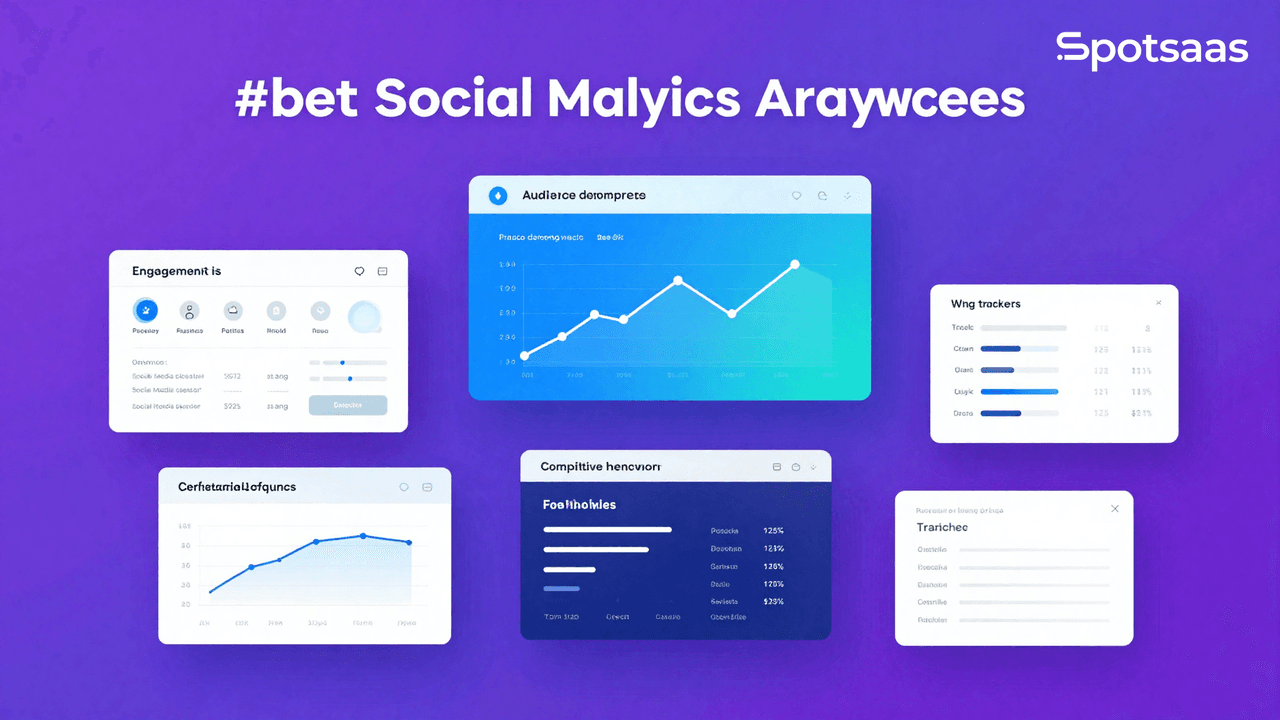
What Is Social Media Analytics Software and How Does It Work?
Social analytics tools are software businesses marketers can use to collect, examine, and interpret data from social media platforms. These tools furnish practical details on audience demographic data, engagement metrics, campaign performance, and the quality of content.
By analyzing user behavior and trends, organizations can modify their strategies, thus improving the content and measuring the success of the KIPs. Such social media marketing tools are crucial for understanding how social efforts can be linked to business goals. Thus, they enable good marketing decisions and maintain a lead in the competitive digital environment.
Why Should You Use Social Media Analytics Platforms in 2025?
Supporting Data-Driven Decisions
Social media analytics software showcases relevant information by observing trends, user engagement, and demographic preferences. Based on these insights, companies can effectively decide about content and campaigns directly impacting their target customers.
Tracking Social Media Performance Effectively
Such social media metrics include reach, engagement, impressions, and conversions, which can be collected from the platforms to track social media. This brings all performance data into one place, enabling marketers to understand what is working, identify weak spots for development, and craft combat plans to maximize effectiveness.
Saving Time with Analytics Tools
Through machinery for collecting and examining data, which will be social media tools for data analytics, these tools save the marketing units valuable time. Instead of manually compiling data in teams, it can be used to interpret insights, brainstorm creative ideas, and implement strategies to increase the number of followers on the Internet.
Analyzing Competitors with Social Media Tools
These tools, which contain characteristics that allow them to track competitor performance, are instrumental in helping the firms comprehend how their measures compare with those of the industries within them.
Measuring ROI with Social Media Analytics
Social media analytics tools are used by companies to estimate the success of their social media campaigns in terms of ROI (Return on Investment). Associating campaign success with key business outcomes such as leads, conversions, and sales highlights the following areas in which marketers can prove budgets are justified, optimize resource allocation, and achieve accurate results they will be able to share with those in charge.
What Are the Key Features of Social Media Analytics Software?
Social media analytics software has many features that allow businesses to monitor, analyze, and optimize their social media performance. These features are beyond mere metrics; they offer deep insights and actionable data for strategic decision-making. The table below provides the main features of social media analytics software, along with their descriptions.
| Key Feature | Description |
|---|---|
| Cross-Platform Analytics | Provides a unified view of performance across multiple platforms, consolidating metrics like engagement, reach, and impressions into one dashboard for easy comparison and analysis. |
| Customizable Reporting | Allows users to create tailored reports aligned with specific KPIs, featuring visual dashboards, automated report generation, and various export formats. |
| Audience Insights | Offers detailed data on audience demographics, behaviors, preferences, and locations, enabling more effective targeting and campaign personalization. |
| Sentiment Analysis | Analyzes user sentiment (positive, neutral, or negative) around a brand or topic, helping businesses understand audience perception and manage their reputation. |
| Competitor Benchmarking | Tracks and compares performance with competitors by monitoring their engagement rates, content strategies, and audience growth to identify improvement opportunities. |
| Trend and Hashtag Tracking | Identifies trending topics, hashtags, and keywords relevant to your industry, allowing businesses to create timely content and leverage trends for better engagement. |
What Are the Different Types of Social Media Analytics Tools?
Social media analytics tools vary in different ways, such as tools for analyzing information about social media brands and interactions on the web. They include tools that are mainly platform-specific, such as:
Platform-Specific Social Media Analytics Tools
Instagram Insights, Facebook Analytics, TikTok Analytics, Pinterest Analytics, and Twitter Analytics are platform-specific tools that aim to deliver detailed analytics capabilities for a single social media platform with metrics and data. Such tools are the best for businesses that only concentrate on meeting the goals of operation performance on a particular platform. They provide various social media profiles to enrich insights.
For instance, the user base is based on demographics, post-interaction, and content reach based on the platform’s distinguishable attributes.
Multi-Platform Social Media Analytics Tools
Multi-platform tools like Hootsuite and Sprout Social let businesses manage and measure their activities in multiple social media channels in one interface. They work as an all-in-one social media manager to help marketers. The selection of these marketing tools eases the operations process by collecting data and providing single reports, which are appropriate for a company that deals with many platforms. They mainly consist of direct interfaces for scheduling, monitoring, and reporting, which facilitate the effective management of the channels.
Competitor Analysis Tools
Competitor analysis tools like SEMrush and BuzzSumo, which measure and compare your social media activity with competitors, are the best for this purpose. They enable businesses to establish industry trends, set performance benchmarks, and discover opportunities to develop a strong social strategy. These are the tools that those who desire market dominion and differentiation, as well as content moderation congruent with the market, should use specifically.
Real-Time Social Media Monitoring Tools
Real-time monitoring tools like Mention and Keyhole use trending brand mentions, hashtags, and hot issues in the industry to facilitate immediate notifications to interested stakeholders. These social media monitoring tools are most important for organizations that want to handle customer questions, control PR scandals, and use viral trends immediately. They are the most successful ways to connect with customers in rapidly changing social media channels.
Visual Social Media Analytics Tools
Visual analytics tools, such as Canva Insights and Pinterest Analytics, are highly effective in examining the usage experience of visual content. These tools keep track of the proportion of images involved, the number of clicks on pins, and the style perception. These tools are typically aimed at businesses that use visual platforms such as Pinterest and Instagram for their very dramatic or aesthetic looks to promote their products or brands.
Customer Support and Chat Analytics Tools
Tools like Sprinkler and Zendesk Social are the first to provide social media monitoring tools for analyzing interactions. They enable organizations to determine the result of the customer response period, the level of satisfaction, and the efficiency of the social media customer support system. The tools are handy for companies that focus on customer service through social media and are committed to brand reputation management.
How Do You Choose the Right Social Media Analytics and Reporting Tool?
This guide provides an in-depth overview of social media analytics software. From key objectives to essential features, pricing models, and support, it helps businesses select the right tool for their needs.
By choosing the right software, companies can measure performance, improve ROI, and drive data-driven decisions for future campaigns.
Why Defining Goals Matters Before Choosing Analytics Software
Before choosing social media analytics software, it’s essential to define your business goals. Clearly understanding your objectives will help you select a tool that aligns with your social media strategy and business needs. Having clear goals ensures you can track meaningful metrics, enhance your campaigns, and improve the overall impact of your social media presence.
Main Objectives You Should Focus on
Tracking Engagement and Reach
Measuring likes, comments, shares, clicks, and impressions allows businesses to understand how well their content is performing. This insight helps marketers refine their content strategy and create posts that generate more engagement and visibility.
Enhancing Your Content Strategy
Knowing which posts, videos, and images perform best enables businesses to tailor future content to audience preferences. By leveraging data from past performance, companies can optimize content to achieve better engagement, more shares, and stronger audience connections.
Monitoring Brand Reputation
Tracking brand mentions and industry-specific keywords allows companies to understand public perception of their brand. This helps identify potential public relations issues early, address negative sentiment, and protect brand reputation.
Generating Data-Driven Insights
By collecting and analyzing data from social media campaigns, businesses can generate actionable insights to improve future campaigns. These insights enable more informed decision-making, better content strategies, and higher returns on marketing investments.
Improving ROI from Campaigns
Analyzing the return on investment (ROI) of both paid and organic campaigns helps businesses allocate budgets effectively. By identifying the social platforms that drive the best results, companies can optimize ad spend and maximize campaign profitability.
Social Media Analytics Models and Choosing the Right One
Real-Time Analytics for Instant Insights
Real-time analytics provide up-to-the-minute insights on social media activity. Companies can track live mentions, trending hashtags, and customer comments as they happen. This is essential for live events, product launches, or crisis management.
Historical Analytics for Long-Term Tracking
Historical analytics allow businesses to review past campaign performance, analyze audience growth, and track key performance indicators (KPIs) over time. By studying past data, companies can identify patterns and replicate successful campaigns.
Predictive Analytics for Smarter Planning
Predictive analytics use AI and machine learning to forecast future engagement, conversions, and overall campaign success. This model provides businesses with predictive insights that help them plan better, allocate budgets, and optimize strategies before launching campaigns.
Which Analytics Model Fits Different Business Types?
Best Model Choice for Small Businesses
Small businesses benefit most from real-time and historical analytics. These models allow small teams to assess campaign performance quickly and make informed decisions without requiring advanced forecasting capabilities.
Best Model Choice for Enterprises
Enterprises should consider predictive analytics for large-scale planning and budgeting. Predictive models help large teams anticipate campaign results, improve ad spend allocation, and plan future strategies more effectively.
What Are Data Requirements to Consider for Analytics Tools?
Social Media Platforms
The software must integrate with platforms like Facebook, Instagram, Twitter, LinkedIn, TikTok, YouTube, and Pinterest. This ensures that companies can track metrics from all their key social channels in one unified dashboard.
CRM Integration
Integration with CRM systems like Salesforce, HubSpot, or Zoho allows businesses to link customer data with social media activity. This supports personalized customer engagement and better marketing automation.
Advertising Platforms
Many businesses run ad campaigns on platforms like Facebook Ads, Google Ads, and TikTok Ads. Analytics software should track ad spend, impressions, clicks, and cost-per-click (CPC) to give companies a complete view of their ad performance.
Data Export Options
The ability to export reports as CSV, Excel, or PDF files allows businesses to share key insights with stakeholders. It also enables further analysis using external tools, such as spreadsheets or business intelligence platforms.
How to Manage Data Volume and Complexity
Supporting Large Datasets for Campaigns
Does the system support large datasets for multiple social media accounts and high-volume campaigns?
Enabling Multi-Channel Analysis
Does it support multi-channel analysis allowing you to compare performance across Facebook, Instagram, Twitter, and LinkedIn simultaneously?
Handling Large-Scale Campaign Tracking
Can it support large-scale marketing campaigns with thousands of mentions, hashtags, and content pieces to track?
How Should You Evaluate Social Media Analytics Features?
Core Features
Social Media Monitoring
Track mentions of your brand, industry keywords, and competitors in real-time. Monitoring helps identify new opportunities, manage brand reputation, and respond to customer feedback quickly.
Audience Insights
Audience insights provide detailed demographic information about your followers, such as their age, location, and interests. These insights help you create personalized content that resonates with your target audience.
Content Performance Analysis
This feature identifies which posts, images, and videos generate the most engagement. By analyzing content performance, companies can focus on what works best and adjust their content strategy accordingly.
Sentiment Analysis
Sentiment analysis helps businesses understand how users feel about their brand. By identifying positive, neutral, and negative sentiment, companies can address issues before they escalate and protect their brand reputation.
Competitor Analysis
Competitor analysis helps businesses benchmark their performance against industry rivals. Companies can track competitor engagement, audience growth, and content performance to identify areas for improvement.
Advanced Features to Look Out For
AI-Driven Predictive Analytics
Predictive analytics use AI to forecast campaign outcomes, engagement rates, and ROI. By analyzing historical data, companies can make data-driven decisions and allocate budgets more effectively.
Automated Alerts
Receive notifications when a sudden spike in negative mentions or an emerging trend occurs. Automated alerts help teams respond quickly to crises or capitalize on trending hashtags.
Custom Dashboards
Custom dashboards allow businesses to view key metrics at a glance. Companies can customize dashboards to display only the data that matters most, such as conversions, engagement, and revenue.
What Should You Know About Reporting and Insights in Social Media Analytics?
Granular Reporting
Tracking Campaign Performance
Track the performance of social media campaigns including impressions, clicks, shares, and conversions.
Monitor Audience Growth and Engagement
Monitor audience growth rates and engagement trends for a deeper understanding of social audience development.
Use Conversion Tracking to Measure Sales Impact
Use conversion tracking to see how social media contributes to overall sales, leads, and sign-ups.
Visualization Tools
Using Dashboards for Better Visualization
Use dashboards with visual graphs and pie charts to visualize campaign performance, ROI, and audience trends.
Exporting Graphs for Stakeholder Reporting
Export charts and graphs as PDFs for easy presentation to stakeholders.
Understanding Analytics Pricing Models
Pay-Per-User Pricing
In this model, companies pay based on the number of users who have access to the software. This option is ideal for small teams managing multiple social media accounts.
Monthly Subscription
A monthly subscription provides access to all features for a flat fee. This model suits brands with consistent social media activity and reporting needs.
Custom Enterprise Pricing
Large enterprises with high social media volume often receive custom pricing. This plan may include unlimited users, dedicated support, and enhanced features like API access and advanced analytics.
Cost Considerations
Setup Fees
Setup fees for enterprise clients requiring advanced onboarding or training.
API Costs
API costs for custom data access and integration with CRM and reporting tools.
Why Is Scalability Important in Social Media Analytics Tools?
Managing Multiple Accounts Efficiently
Can the software manage multiple social media accounts for large organizations or agencies?
Supporting Large-Scale Campaigns
Does it support large-scale campaigns and high-volume data collection from multiple platforms?
Enabling Cross-Departmental Collaboration
Can the software support cross-departmental use allowing marketing, PR, and customer service teams to collaborate?
What Support and Training Should You Expect from Social Media Analytics Tools?
Customer Support
Access to 24/7 support via email, live chat, and phone for urgent technical issues. Enterprise clients may be assigned a dedicated account manager for personalized support.
Training Resources
Access to onboarding guides, video tutorials, and step-by-step help documentation. Live training for large teams or clients requiring customized support and training on platform features and integrations.
What Are the Latest Trends in Social Media Analytics Tools?
AI and Predictive Analytics
Today, more and more tools are incorporating AI into their systems to perform predictive analyses, helping companies forecast trends, audience behavior, and campaign results.
Focus on Video Analytics
As video is the most popular form of content on social media, tools are coming out with better technology to measure video-specific metrics such as watch time, retention rates, and engagement.
Real-Time Insights
Real-time information gathering and publishing is a significant approach to making businesses move quickly when needed.
Integration with Influencer Platforms
As influencer marketing gains ground, many analytics tools have become loaded with features to trace influencer campaigns, measure Return on Investment, and check their effects.
Which Are the Best Social Media Analytics Tools for Marketers?
Choosing the appropriate social media analytics tool is mainly determined by your needs, budget, and goals that you want to achieve. Below is a comparison of some of the most popular tools, with this table highlighting their pricing, key features, and ideal use cases. This will allow you to know which tool best suits your needs to manage and optimize social media performance.
| Tool | Pricing | Key Features | Best For |
|---|---|---|---|
| Hootsuite | Starting at $99/month | Multi-platform analytics, scheduling, reporting | Small to medium-sized businesses |
| Sprout Social | Starting at $249/month | Audience analysis, reporting, competitor insights | Comprehensive social media management |
| Brandwatch | Custom pricing | Sentiment analysis, brand tracking | Large enterprises |
| SEMrush | Starting at $119/month | Competitor analysis, SEO integration | Agencies and marketers |
| BuzzSumo | Starting at $99/month | Content performance, influencer discovery | Content marketing |
Final Thoughts: Why Social Media Analytics Tools Are Essential in 2025
Social media analytic tools are the most significant for businesses and marketers pursuing the highest results from their social media goals. These tools transform raw data into insights that tell us what has transpired.
We can track performance, understand the audience, and enhance strategies to help you reach your goals. By selecting the right tool, you can spare yourself and your resources and act on the quality of the data you came up with. Moreover, your benefits can include proper engagement, driving brand growth, and ROI.
This collection includes tools for the latest trends, such as AI, video analytics, and real-time insights, which keep features on the rise. Hence, they are a massive advantage in the fast-changing social media trends.
Whether you are a start-up business or a large company, a social media analytics tool is an investment that gives you a great chance of winning against the competition and attaining the best of your online presence.

- Independent picks for exactly what you just read about
- Matched to your team size & needs
- Vendors don't pay for placement
Step 1 of 4
How big is your team?
We tailor recommendations to companies your size.















Related Articles
Best Tools
SaveFrom.Net Review (2026): Is It Safe, Legal & Worth Using?
Continue reading →
Buyers guide
How to Choose Healthcare Software: A Complete Buyer’s Guide (2026)
Continue reading →
Buyers guide
How to Automate HR Processes: A Practical Guide for 2026
Continue reading →
Applicant Tracking Software
How to Set Up an ATS: Step-by-Step Implementation Guide (2026)
Continue reading →