
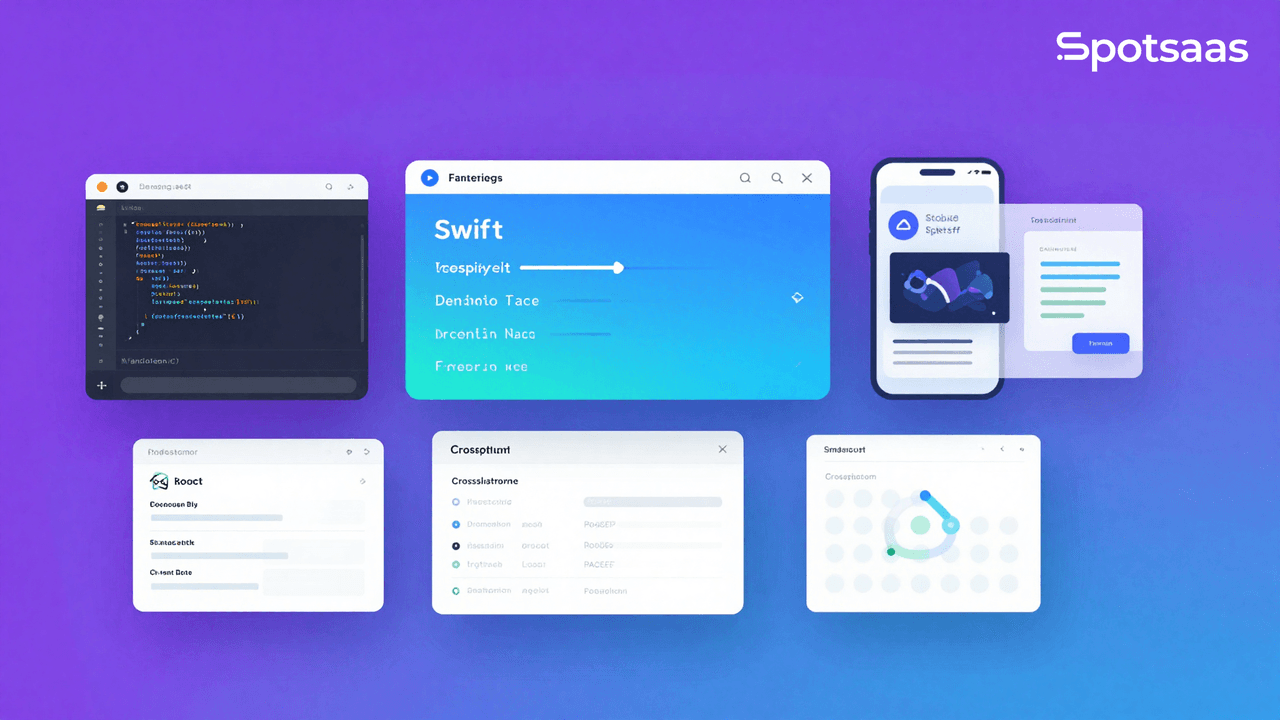
Choosing the right programming language for app development can be a real challenge, given the many options available. Did you know there are over 14 popular languages suited for mobile app creation?
This complete guide will help to simplify your decision-making process by discussing the top languages in depth and providing essential factors to consider when choosing one.
Key Takeaways
- There are over 14 popular programming languages suited for mobile app development, including Objective-C, Swift, Java, Kotlin, React Native, Flutter, HTML5, JavaScript and Dart.
- Different types of apps require different programming languages. Native apps provide the best user experience and are developed using languages like Objective-C and Swift for iOS or Java and Kotlin for Android. Hybrid apps use web technologies like HTML, CSS, and JavaScript encased in a native wrapper. Progressive Web Apps (PWA) can be accessed through a browser without installation.
- Factors to consider when choosing a programming language include platform compatibility, learning curve, community support, performance requirements,
- Xamarin is a popular cross-platform development tool that allows developers to build native mobile apps using C#. Flutter is another cross-platform language known for its high-quality apps that work smoothly on Android and iOS platforms. React Native allows developers to write code once and create apps that run on both iOS and Android platforms. Angular is a popular language for web and mobile app development.
The Most Popular Programming Languages for Mobile App Development
There are various programming languages used for mobile app development, including Objective-C and Swift for iOS, Java and Kotlin for Android, React Native and Flutter for cross-platform development, as well as HTML5, JavaScript, and Dart for Progressive Web Apps.
Types of Mobile Apps (Native, Hybrid, PWA)
Native apps provide the ideal user experience as they’re designed for a specific platform. They are developed using languages like Objective-C and Swift for iOS or Java and Kotlin for Android.
Hybrid apps, on the other hand, use web technologies such as HTML, CSS, JavaScript encased in a native wrapper that allows them to function across platforms. Their development speed and cost effectiveness make them quite popular among businesses of all sizes.
Lastly, progressive web apps (PWA) represent the future of app development offering many advantages including functionality offline, nearly instant loading times and an ability to receive push notifications just like a native app while being accessed through a browser without needing any installation.
iOS Programming Languages (Objective-C, Swift)
Objective-C served as the backbone for many iOS applications, using its dynamic runtime and strong set of capabilities. It held a significant role in app development languages up until Swift emerged on the scene.
The Swift programming language brings immense power to your hands with its simple syntax and coding practices that are easy to master, hence being a favored choice for iOS app development.
Swift promises performance close to that of C++ which is considered one of the fastest algorithms calculation arithmetics. For those seeking safety alongside performance in their applications, Swift becomes an unquestionable selection among iOS programming languages.
Its modern features like automatic memory management prevent some common issues previously seen in Objective-C such as null pointer dereferencing or overflows while promoting developer productivity and app quality simultaneously.
Android Programming Languages (Java, Kotlin)
Java holds a prominent place in Android app development, known for its robustness and platform independence. It is one of the top mobile application development languages, globally recognized and widely used.
Kotlin, on the other hand, is gaining popularity among developers due to its concise coding methodology that reduces chances of errors compared to Java. As a statically-typed language officially endorsed by Google for Android programming, Kotlin provides interoperability with Java along with many modern features ensuring safety and efficiency in app creation process.
Both these languages have unique strengths for creating dynamic and easy-to-use applications for diverse Android devices. In choosing between them for your project, understand how each can cater to your functional requirements without compromising performance or security.
Cross-platform Programming Languages (React Native, Flutter)
React Native and Flutter are two popular cross-platform programming languages that allow developers to build mobile apps for both iOS and Android platforms using a single codebase.
With React Native, developers can write their app in JavaScript and use pre-built components to create native-like user interfaces. On the other hand, Flutter uses Dart as its programming language and provides a rich set of customizable widgets for creating beautiful UIs.
Both React Native and Flutter offer high performance, hot reloading capabilities, and excellent community support. They are great choices for businesses looking to save time and resources by developing apps that work smoothly across multiple platforms.
PWA Programming Languages (HTML5, JavaScript, Dart)
PWA (Progressive Web App) programming languages play a essential role in developing web-based applications that provide a mobile app-like experience. These languages include HTML5, JavaScript, and Dart.
HTML5 is the backbone of PWA development. This provides the structure and layout for web pages. JavaScript brings interactivity and functionality to PWAs. This allows developers to create dynamic experiences.
Lastly, Dart is another language used for building PWAs with its focus on high-performance and productivity. With these powerful languages, developers can create engaging and easy-to-use Progressive Web Apps that work across multiple platforms smoothly.
Choosing the Best Programming Language for App Development
Consider factors such as the type of app you want to develop, platform compatibility, community support, and your team’s expertise when deciding on the most suitable programming language for your app development project.
Factors to consider
When choosing a programming language for app development, there are several factors to consider:
- Platform compatibility: Ensure that the language you choose is compatible with the platform(s) you intend to develop your app for, such as Android, iOS, or cross-platform.
- Learning curve: Consider the complexity of the language and your team’s familiarity with it. Opting for a language that your team is already comfortable with can speed up the development process.
- Community support: Evaluate the availability of resources and community support for the programming language you are considering. A strong developer community can provide valuable guidance and troubleshooting assistance.
- Performance: Take into account the performance requirements of your app and compare how different languages handle tasks like memory management and processing speed.
- Libraries and frameworks: Assess the availability and quality of libraries and frameworks that are compatible with your chosen programming language. These resources can help simplify development by providing pre-built components and functionalities.
- Scalability: Consider whether the language supports scalability. This allows your app to handle increased user traffic or data loads without compromising performance.
- Security: Look for languages that prioritize security features like encryption, secure coding practices, and vulnerability testing to protect user data from potential breaches.
- Long-term viability: Evaluate the popularity and longevity of the programming language you’re considering. Choosing a language that has seen consistent growth in usage and has an active community ensures ongoing support in the future.
Comparison of different languages
While choosing the right language for your app development project, comparison between different languages can be highly beneficial. The following table provides the comparison of five widely used app development languages based on various parameters.
| Programming Language | Platform Compatibility | Performance | Learning Difficulty | Popularity |
|---|---|---|---|---|
| Java | Multiple Platforms | High | Moderate | High |
| Swift | iOS | High | Moderate | High |
| Kotlin | Android | High | Moderate | Moderate |
| C++ | Multiple Platforms | High | High | High |
| HTML5/CSS3/JavaScript | Multiple Platforms | Moderate | Moderate | High |
Java is praised for its platform independence and robustness in mobile app development. This makes it a popular choice for many. Swift is preferred for its performance and safety measures, specifically designed for iOS platform use. Kotlin, on the other hand, is often hailed as the advanced version of Java. This provides improved efficiency and readability. C++ is widely used for developing gaming apps, animations, and other mobile applications due to its high performance. Lastly, the combination of HTML5, CSS3, and JavaScript is preferred for the development of progressive web apps due to its wide compatibility.
Mobile App Development Platforms and Tools
Mobile App Development Platforms and Tools provide developers with the resources they need to create, test, and deploy mobile applications efficiently.
Xamarin
Xamarin is a popular cross-platform development tool that allows developers to build native mobile apps using C#. By sharing code across different platforms, Xamarin reduces the need for rewriting code from scratch.
This saves time and effort when developing apps for Android, iOS, and Windows. Xamarin also offers a range of features like easy integration with back-end services and access to platform-specific APIs.
With its strong community support and compatibility with Visual Studio, Xamarin is an excellent choice for companies looking to develop versatile and high-performing mobile applications efficiently.
Xamarin has gained popularity among corporate developers because it enables them to create native apps without compromising on performance or user experience. By utilizing shared codebase, businesses can save time and resources by reusing existing skills in C# rather than learning new languages specific to each platform.
Flutter
Flutter is a popular cross-platform programming language for app development. It allows developers to create high-quality apps that work smoothly on both Android and iOS platforms.
With Flutter, you can build beautiful user interfaces and create native-like experiences for your users. The language uses Dart, which is known for its simplicity and ease of use. Flutter also offers hot reload feature. This allows developers to see changes instantly without having to restart the app.
Overall, Flutter is a great choice for those looking to develop mobile apps that are efficient, visually appealing, and compatible across different devices.
React Native
React Native is a popular cross-platform programming language for mobile application development. It allows developers to write code once and create apps that can run on both iOS and Android platforms.
With React Native, you can save time and effort by using the same codebase for multiple operating systems. This makes it an efficient choice for businesses looking to develop apps quickly and cost-effectively.
React Native also provides access to native device features. This ensures high performance and a native-like user experience.
Angular
Angular is a popular programming language for web and mobile app development. It offers a complete framework that allows developers to create dynamic and interactive applications with ease.
Angular provides powerful features such as two-way data binding, dependency injection, and component-based architecture. With its strong community support and extensive documentation, Angular is a reliable choice for building scalable and efficient apps.
Whether you’re developing for the web or mobile platforms, Angular can simplify your development process and help you deliver high-quality applications that meet the demands of modern users.
mBaaS
mBaaS, or mobile Backend as a Service, is a cloud computing platform that allows developers to build and deploy mobile applications more efficiently. With mBaaS, developers can focus on writing the frontend code of their apps while leaving the backend infrastructure management to the service provider.
This saves time and resources for companies, especially those with limited technical expertise or budget. mBaaS offers various functionalities like user authentication, push notifications, database integration, file storage, and serverless computing capabilities.
It also provides APIs and SDKs for different platforms such as iOS and Android. This makes it easier to develop cross-platform apps. By using mBaaS solutions like Firebase or AWS Amplify, businesses can simplify their app development process and deliver high-quality mobile experiences to their users without worrying about complex backend infrastructure maintenance.
SDK Toolkit for Windows
The SDK Toolkit for Windows is a valuable resource for developers looking to build mobile apps specifically for the Windows platform. This toolkit provides a range of tools, libraries, and documentation to assist developers in creating high-quality apps that run smoothly on Windows devices.
With the SDK Toolkit, developers can access features and functionality unique to the Windows platform. This allows them to create smooth user experiences. Whether you are an experienced developer or just starting out, utilizing the SDK Toolkit for Windows can greatly enhance your app development process and help you reach a wider audience of Windows users.
Progressive Web App
A Progressive Web App (PWA) is a web application that provides an app-like experience to users. PWAs combine the best features of both web and native apps, offering fast performance, offline capabilities, and push notifications.
They can be accessed directly from a web browser without the need for installation. PWAs are built using HTML5, JavaScript, and CSS. This makes them compatible with different platforms and devices.
With their ability to deliver smooth user experiences across multiple devices, PWAs are becoming increasingly popular in mobile app development.
Responsive web programming
Responsive web programming is a essential aspect of modern app development. It involves designing and coding websites that adapt to different screen sizes and devices. This ensures an optimal user experience.
With the increasing use of smartphones and tablets, responsive web programming has become more important than ever. By using technologies like HTML5, CSS3, and JavaScript, developers can create websites that automatically adjust their layout and content to fit various screen resolutions.
This allows users to access the same website on different devices without any loss in functionality or visual appeal. Responsive web programming helps businesses reach a wider audience by making their websites accessible across multiple platforms and enhancing user engagement.
Resources for Learning App Development Languages
This section provides a list of recommended courses and tutorials, highlights in-demand skills for app developers, and gives an overview of salaries in the industry.
Recommended courses and tutorials
Looking to enhance your app development skills? Check out these recommended courses and tutorials:
- “Mobile App Development for Beginners” – A complete online course that covers the fundamentals of app development using popular programming languages like Java, Swift, and Kotlin.
- “iOS App Development with Swift” – Learn how to create iOS apps from scratch using Swift, Apple’s official programming language for iOS development.
- “Android App Development with Java and Kotlin” – Master the art of Android app development by learning both Java and Kotlin, two widely used languages in the Android ecosystem.
- “React Native Crash Course” – Explore cross-platform app development with React Native, a JavaScript framework that allows you to build native-like apps for both iOS and Android platforms.
- “Web Development Fundamentals” – Gain a solid foundation in web development by learning HTML5, CSS3, and JavaScript, essential languages for creating responsive web applications.
- “Advanced Mobile App Development Techniques” – Take your app development skills to the next level with advanced techniques such as implementing mBaaS (Mobile Backend as a Service) and integrating APIs into your apps.
- “Building Progressive Web Apps (PWA)” – Explore the world of Progressive Web Apps (PWAs) and learn how to use HTML5, JavaScript, and Dart to create fast and engaging web applications that behave like native apps.
In-demand skills for app developers
App developers need to possess a range of in-demand skills to excel in their field. These skills include:
- Proficiency in programming languages such as Java, Kotlin, Swift, C++, and JavaScript.
- Knowledge of mobile app development frameworks like React Native, Flutter, and Xamarin.
- Understanding of cross – platform development techniques for building apps that work on both Android and iOS platforms.
- Familiarity with web development technologies like HTML5, CSS3, and JavaScript for creating hybrid and progressive web apps.
- Experience in using mBaaS (mobile Backend as a Service) platforms for backend development and cloud integration.
- Strong problem – solving abilities to troubleshoot issues during the app development process.
- Design skills to create visually appealing user interfaces (UI) and user experiences (UX).
- Communication skills to collaborate with team members, clients, and stakeholders effectively.
- Knowledge of version control systems like Git to manage codebase changes.
- Continuous learning mindset to stay updated with the latest trends and advancements in app development.
Salary overview
App development is a lucrative field with competitive salaries. As of 2021, the average salary for mobile app developers in the United States is around $105,000 per year. However, salaries can vary based on factors such as experience level, location, and specialized skills.
For example, iOS developers with expertise in Swift programming language tend to earn higher salaries compared to those with less specialized skills. Similarly, Android developers proficient in Kotlin or Java may also command higher pay rates.
Additionally, cross-platform developers skilled in frameworks like React Native or Flutter are high in demand and can expect attractive compensation packages. Overall, app development offers promising career opportunities for skilled professionals looking to work on modern technologies and make a substantial income.
Final Thoughts
For choosing the right programming language for app development, it’s important to consider factors such as the type of app, desired platform compatibility, and developer expertise.
Each programming language has its own benefits and drawbacks, so it’s essential to carefully evaluate your project requirements before making a decision. Additionally, staying up to date with emerging trends and technologies in app development can help long-term your skills and ensure that you’re equipped to navigate new challenges in the changing market of mobile application development.
Benefits and drawbacks of each language
In the realm of app development, each programming language has its own unique set of advantages and disadvantages. Understanding these can help guide the decision-making process when choosing the right language for a particular development project.
| Programming Language | Benefits | Drawbacks |
|---|---|---|
| Java | Java is known for its platform independence and robustness. It’s a top choice for Android development and can be easily used across multiple platforms. | Java can be complex and verbose making it harder for beginners to learn. It also requires more processing power which can affect app performance. |
| Kotlin | Kotlin is fully interoperable with Java. This makes it a smooth transition for developers. It’s more modern and concise than Java. This improves code readability and efficiency. | Kotlin has a smaller developer community compared to Java, meaning less support and resources. There are also fewer Kotlin-specific libraries available. |
| Swift | Swift is necessary for iOS development. It prioritizes safety and performance, and features a modern syntax that is easier to read and write. It’s highly preferred by Apple. | Swift is limited to the Apple ecosystem. This makes it less flexible for cross-platform development. Some older iOS devices do not support Swift. |
| C# | C# is a versatile language that’s easy to learn, with strong support for Windows app development. It’s used with Xamarin for cross-platform development. | C# is less popular in the mobile app development arena, specifically for iOS and Android apps. It also has a slower execution time compared to other languages. |
| HTML5/CSS3/JavaScript | This stack is essential for creating Progressive Web Apps (PWA) and is widely used for creating user interfaces. It’s supported by all web browsers and allows for easy, fast prototyping. | The performance of apps built with this stack can be slower compared to those developed with native languages. They also offer limited access to smartphone features. |
Remember, the best language for app development largely depends on the project’s requirements and the development team’s expertise.
Making the decision
To make the decision on which programming language to use for your app development project, consider factors such as the type of app you’re building, the platform you’re targeting, and your team’s existing skills.
Analyze the benefits and drawbacks of each language, Java offers platform independence and robustness, Swift provides safety and performance, while Kotlin is known for its compatibility with Android development.
Don’t forget to think about future predictions for app development languages to ensure longevity and scalability. By carefully considering these factors, you can confidently select the best programming language for your app development needs.
Future predictions for app development languages
App development languages are constantly evolving to meet the changing needs of the industry. As technology continues to advance, we can expect certain trends and shifts in the programming languages used for app development.
For example, Python is anticipated to gain more popularity due to its simplicity and versatility. Additionally, with the rising demand for cross-platform development, frameworks like React Native and Flutter are expected to become even more prominent in the future.
Furthermore, as Artificial Intelligence (AI) becomes increasingly integrated into mobile apps, languages such as Python and JavaScript will likely see a surge in usage. It’s essential for developers to stay informed about these future predictions in order to make informed decisions when choosing a language for their app projects.
Conclusion
this complete guide has provided an overview of the top app programming languages for mobile app development. It has explored popular options such as Java, Swift, and Kotlin for Android and iOS development, as well as cross-platform options like React Native.
By understanding the benefits and drawbacks of each language, readers can make informed decisions when choosing the right programming language for their app projects. Keeping up with the latest trends and advancements in these languages will be essential in staying ahead in the changing market of app development.
FAQs
1. What are the top app programming languages for app development?
The top app programming languages for app development include Java, Swift, Python, C++, and JavaScript.
2. Which programming language is best for Android app development?
Java is commonly used for Android app development due to its compatibility with the Android platform.
3. Can I use Swift to develop apps for iOS devices?
Yes, Swift is the primary programming language used for developing apps on iOS devices.
4. Is Python a good choice for cross-platform app development?
Yes, Python can be used to develop cross-platform apps thanks to frameworks like Kivy and BeeWare.
5. Do I need prior coding experience to learn these programming languages?
While prior coding experience can be helpful, it is not always necessary as there are resources available that cater to beginners in learning these programming languages.

- Independent picks for exactly what you just read about
- Matched to your team size & needs
- Vendors don't pay for placement
Step 1 of 4
How big is your team?
We tailor recommendations to companies your size.















Related Articles
Expert Interviews
SaaS Talks with Carole Winqwist, CMO at GitGuardian – Inside Their Unique Marketing Strategy
Continue reading →
Buyers guide
How To Choose The Best Digital Banking Platforms For 2026
Continue reading →
Buyers guide
How To Choose The Best Software Development Analytics Tools For 2026
Continue reading →
Buyers guide
How To Choose The Best Invoice Management Software For 2026
Continue reading →