
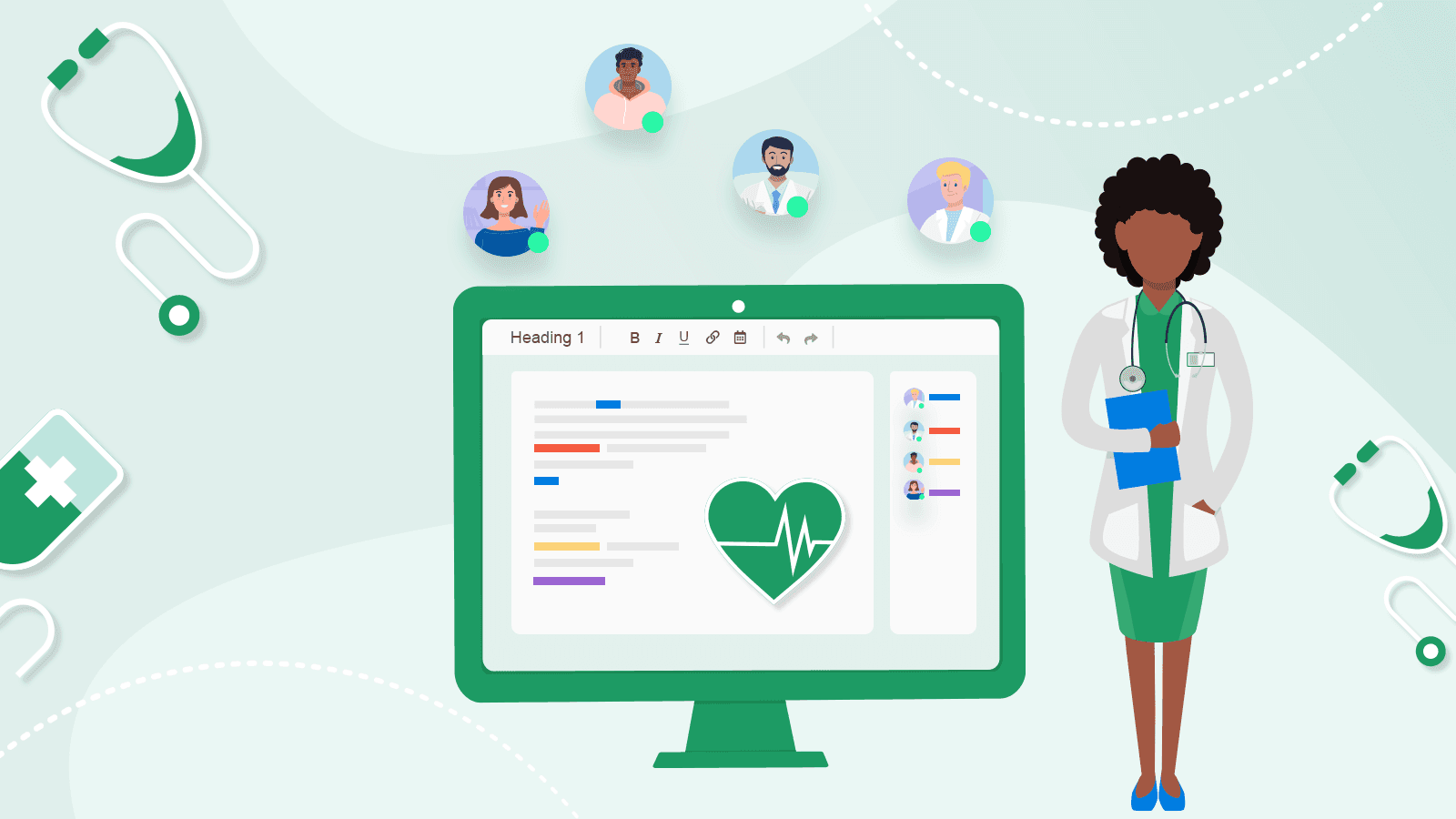
Healthcare work involves a lot of moving parts, and it can feel like an obstacle course. As remote working and virtual patient care keep growing, effective collaboration among healthcare teams matters more than ever.
This article walks through the top 5 competitive healthcare collaborative tools that can improve your work practice, making communication clearer and helping your teams work together more effectively across the organization.
Ready to improve how your healthcare business runs day to day? Here is a good place to start.
Key Takeaways
- Basecamp, Microsoft 365, Slack, Google Workspace, and Flock are the top 5 healthcare collaborative tools that can improve communication and collaboration within healthcare organizations.
- These tools offer features such as file sharing, project management, and real-time communication to improve team effectiveness and simplify processes in healthcare settings.
- When choosing the right tool for your healthcare business, consider key features like communication management, file sharing capabilities, project management features, review and approval processes, and real-time communication options.
- Ask software vendors important questions about compatibility with existing systems, data security measures in place, customization options available, scalability of the software for future growth needs,
The Importance of Collaboration in Healthcare
Collaboration is a vital element in the healthcare field. It drives better patient outcomes, simplifies day-to-day operations, and supports efficient communication between patients, physicians, and staff members.
With so much of healthcare now running on digital technology, using reliable healthcare collaboration software can strengthen that teamwork and coordination across the organization.
Healthcare collaboration tools like Basecamp and Google Workspace have helped many institutions set up effective clinical communication protocols. They make it possible to manage detailed hospital procedures remotely and with ease. Alongside the right software, many providers also choose to hire a telehealth staffing agency to build flexible, credentialed teams that keep virtual workflows running smoothly.
These top-rated platforms also facilitate collaborative review processes, which help maintain high professional standards while keeping teams effective. The right online collaboration tools not only improve internal communication but also have a positive effect on patient care.
Growing reliance on collaborative technology has driven a surge in demand for secure virtual communication, such as videoconferencing, within the medical sector. That shift toward digital means of interaction is one more reason to put strong remote work solutions in place across the connected world of healthcare.
Top 5 Healthcare Collaborative Tools
Here are the top 5 healthcare collaborative tools that can improve communication and collaboration within healthcare organizations of any size: Basecamp, Microsoft 365, Slack, Google Workspace, and Flock.
Basecamp
Basecamp ranks among the top-rated collaboration software in healthcare. This capable tool works well for communication management, helping physicians, patients, and staff connect and stay coordinated.
Besides its significant role as a clinical communication platform, Basecamp also handles project management well.
Its file-sharing feature is intuitive and efficient, so document exchanges between teams are easy and hassle-free. The review and approval process within the system helps maintain high-quality standards throughout hospital procedures.
Whether the work is a complex medical case or a daily administrative task, Basecamp easily adapts to diverse team collaboration needs across different platforms within a healthcare setting.
Microsoft 365
Microsoft 365 offers real-time communication that keeps teams effective while promoting efficiency in hospital management tasks. Microsoft 365 serves both large and small healthcare businesses by offering scalable solutions for remote work scenarios.
With this collaboration software, users can simplify the review and approval process through its integrated tools for collaborative document editing. Its strong emphasis on security makes it an excellent choice for handling sensitive patient information digitally, which fits the virtual collaboration needs of healthcare today.
Slack
Slack is a highly effective collaboration tool for healthcare organizations. Its real-time messaging and file-sharing capabilities keep everyone across teams connected and informed.
Slack also integrates with other healthcare software, making it easy to consolidate information in one place. On top of that, it offers a user-friendly interface that supports efficient project management and team coordination.
Its advanced search feature gives quick access to past conversations and shared files. Overall, Slack is a strong choice for improving team collaboration and workflow efficiency in the healthcare industry.
Google Workspace
Google Workspace is a competitive healthcare collaborative tool with many features to improve communication and simplify workflows. Through its suite of applications like Gmail, Google Drive, Google Docs, and Google Meet, healthcare teams can communicate and collaborate in real time.
The platform supports file sharing, project management, and remote work capabilities. Its user-friendly interface and reliable performance make it a good fit for healthcare organizations that want more effective teams and better clinical communication.
Flock
Flock is another top healthcare collaborative tool with a range of features that support teamwork and communication. With Flock, healthcare professionals can easily chat, share files, and collaborate in real time.
The platform also integrates with other popular tools like Google Drive and Trello, so teams can reach all their resources in one place. Flock’s user-friendly interface and customizable channels make it easy to organize discussions by different departments or projects within a healthcare organization.
Flock also offers video conferencing capabilities, so teams can hold virtual meetings and consultations efficiently. That makes it a good choice for healthcare businesses looking for an all-in-one collaboration solution.
How to Choose the Right Tool for Your Healthcare Business
To choose the right tool for your healthcare business, consider the key features that matter to your teams and ask software vendors a few common questions before you commit.
Key Features to Consider
When choosing the right tool for your healthcare business, there are several key features to consider. They help ensure effective communication and collaboration within your organization:
- Communication Management: Look for a tool that supports smooth, clear communication between healthcare professionals, patients, and staff members alike.
- File Sharing: The ability to share files securely and easily is crucial in a healthcare setting. Choose a tool that offers reliable file sharing capabilities.
- Project Management: Healthcare projects often require careful planning and coordination. Select a tool that includes project management features to keep everyone on track.
- Review and Approval Process: Simplify the review and approval process by choosing a tool that allows for collaborative feedback and easy sign-off on documents or decisions.
- Real-time Communication: In fast-paced healthcare environments, real-time communication is essential. Look for a tool that enables instant messaging or video conferencing capabilities, especially when virtual healthcare assistants are involved in care coordination or administrative workflows.
- Consider integrating a HIPAA-compliant survey tool to collect patient feedback and internal assessments securely. This protects sensitive data while supporting and strengthening your organization’s overall communication strategy.
Common Questions to Ask Software Vendors
- Inquire about the compatibility of the software with your existing systems.
- Ask about the level of data security and compliance measures in place.
- Find out if the software offers customization options to meet your specific needs.
- Determine the scalability of the software and its ability to accommodate future growth.
- Inquire about pricing structures, including any additional fees or hidden costs.
- Ask about customer support and training resources provided by the vendor.
- Find out if the software has a mobile app for convenient access on the go.
- Inquire about integration capabilities with other third-party applications or systems.
- Determine if the software includes features for real-time collaboration and communication.
- Ask for references or case studies from other healthcare organizations that have used the software successfully.
Remember to ask these important questions when evaluating healthcare collaborative software vendors so you choose the right tool for your business needs.
Conclusion
In conclusion, the top 5 healthcare collaborative tools covered in this article give healthcare organizations practical ways to communicate and collaborate. These tools, including Basecamp, Microsoft 365, Slack, Google Workspace, and Flock, all offer essential features for file sharing, project management, and real-time communication.
By choosing the right tool for their specific needs and workflows, healthcare businesses can make their teams more effective and simplify everyday processes for improved patient care.
FAQs
1. What are healthcare collaborative tools?
Healthcare collaborative tools are software or platforms that let healthcare professionals communicate, share information, and collaborate on patient care in a secure and efficient way.
2. How can healthcare collaborative tools benefit my practice?
Healthcare collaborative tools can simplify communication between team members, improve coordination of care, make workflows more efficient, and lead to better patient outcomes.
3. Are these tools easy to use for non-technical staff?
Yes, most healthcare collaborative tools have user-friendly interfaces that require little technical expertise. Training and support are usually provided to ensure smooth integration into the practice.
4. Can I access these tools securely from anywhere?
Yes, many healthcare collaborative tools have web-based or mobile applications that allow secure access from any location with an internet connection. Encryption protocols and strict privacy measures protect patient data.
5. How do I choose the right healthcare collaborative tool for my practice?
The right tool depends on factors such as your practice’s specific needs, budget, compatibility with existing systems, and ease of implementation and training. Research different options and seek recommendations from other professionals before making a decision.
Compare alternatives to the tools in this post

- Independent picks for exactly what you just read about
- Matched to your team size & needs
- Vendors don't pay for placement
Step 1 of 4
How big is your team?
We tailor recommendations to companies your size.















Related Articles
Applicant Tracking Software
Best ATS for Retail and Hospitality Hiring in 2026: 5 Tools for High-Volume Recruiting
Continue reading →
Best Tools
Best EHR Software in 2026: Top Electronic Health Record Systems for Clinics and Practices
Continue reading →
Buyers guide
What Is EHR Software? Electronic Health Records Guide for 2026
Continue reading →
Best Tools
Best Veterinary Software in 2026: Top Practice Management Systems for Veterinary Clinics
Continue reading →