
Struggling to make sense of the world of paid search? You’re not alone. This complex form of marketing can feel like an insurmountable challenge, but with the right guidance, it’s a hurdle you can overcome.
Our ultimate guide provides a clear roadmap that simplifies paid search strategies, breaking them down into digestible nuggets for beginners and experts alike.
Key Takeaways
- Paid search is a type of online advertising where businesses pay to have their ads shown on search engine results pages (SERPs) when specific keywords are searched for.
- Paid search and organic SEO are different methods of showing up on the SERPs, with paid search offering quick wins but requiring ongoing payment, while organic SEO takes longer to see results but can be more sustainable without continual spending.
- A paid search campaign offers various benefits, including only paying when someone clicks on an ad, reaching the right people at the right time, using targeted keywords, clear and measurable results, flexibility in targeting by location or language, control over budget and spend, and quick start-up time with potential for immediate clicks.
- To set up a successful paid search campaign: choose the right location settings to reach your target audience; select relevant keywords that align with your business goals; understand keyword match types to improve targeting accuracy; create compelling ads with strong call-to-action; set bids strategically to optimize ROI; launch the campaign effectively and monitor its performance using tools like Google Analytics.
Understanding Paid Search

Paid search is a form of online advertising where advertisers pay to have their ads displayed on search engine results pages (SERPs) when specific keywords are searched for.
What is paid search?
Paid search is a key part of online marketing. Businesses pay to have their ads show up on a search engine site. They only pay when people click on their ads. This type of advertising helps get messages to the right people at the right time.
It works well for businesses selling products or services that people are searching for online, like e-commerce websites. The “Samurai PPC” book is one guide that can help do this better.
Paid search versus organic search engine optimization
Paid search and organic search engine optimization are two different ways to show up on the search engine results page. Paid search, like its name, means you pay in order for your ad or website to appear when someone looks for a certain word or phrase.
In contrast, organic SEO does not cost money. It works by using best practices to make your website more appealing to a search engine. This can help you rank high on the list of results when someone searches related words.
Both methods have their perks. Paid search can give quick wins as it puts you right in front of people who may want what you offer. But once you stop paying, your spot is gone. On the other hand, it might take longer with organic SEO but once it works out; it will keep working even if you don’t spend money on it every day! So deciding between paid and organic mainly depends on how quickly one needs results and how much they are willing to spend.
Benefits of a paid search campaign
Paid search campaigns offer many good things. They can help your message reach the right people. Here are the big benefits of a paid search campaign:
- You only pay when someone clicks on your ad. This is known as the pay-per-click model.
- Your ads get to show up on search engine results pages. They stand out and attract more clicks.
- You can use keywords in your ads that match what people are looking for online.
- Paid search works well for e-commerce websites. This helps them grow.
- A paid search campaign offers clear and easy-to-measure results.
- With effective strategies, you can meet your goals and get a high return on investment.
- Paid search lets you target by location or language.
- It gives you control over your budget and spend.
- It’s quick; once your ads are live, they can start getting clicks right away.
- Tools like Google Analytics help track progress and make better ad choices in the future.
How Paid Search Works
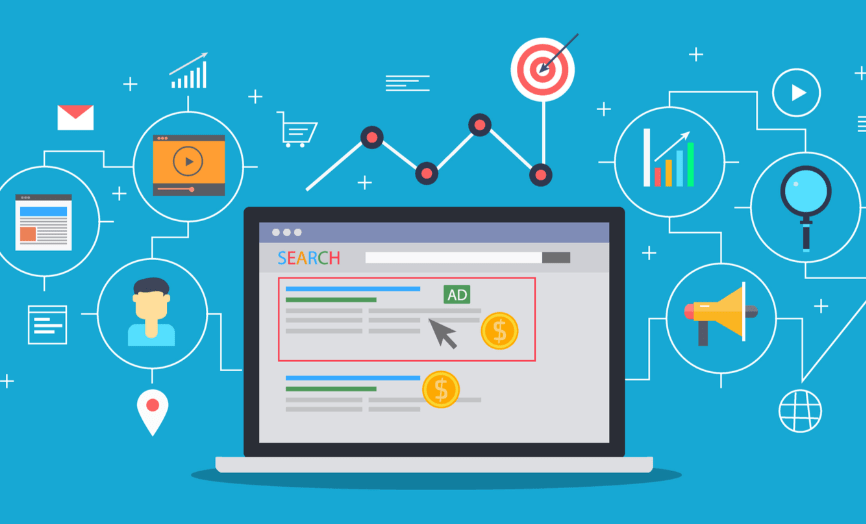
Paid search works by choosing location settings, selecting keywords, understanding keyword match types, creating ads, setting bids, and launching and monitoring the campaign.
Choosing location settings
Location settings decide which geographic areas your paid search campaign can appear in, so they’re one of the first choices you make when setting a campaign up. Getting this step right matters, because everything else in the campaign is built on top of it.
Google Analytics and similar tools let you look at where your existing traffic and conversions come from, so you can pick locations that match your actual audience rather than guessing. Analyzing this data before you launch means you aren’t relying on assumptions about where your customers are based.
Setting the right locations keeps your ads in front of people who can realistically buy from you, instead of spending budget on regions that will never convert. In other words, well-chosen location settings make sure your ads reach the right people in the right places, which improves your odds of a successful campaign.
Selecting keywords
Keywords are the words and phrases people type into a search engine when they’re looking for something, and choosing the right ones is central to a paid search campaign’s success.
Start by thinking through what your target audience is likely to search for, and the specific terms they’d use to find it. Keywords should stay tied to your business and to the products or services you actually offer – broad or unrelated terms waste budget on the wrong searchers.
Google Analytics is one place to research how often a given keyword is searched, which helps you gauge demand before committing budget to it.
Picking a keyword isn’t just about whether it’s popular; it also needs to be genuinely relevant to your business and carry decent search volume. That combination is what puts your ads in front of people who are actually interested in what you sell.
Long-tail keywords – longer, more specific phrases – are worth adding too, since they tend to attract searchers who are further along and more ready to buy.
Understanding keyword match types
Match types control when a keyword triggers your ad to appear on a search engine results page. The three main types are broad match, phrase match, and exact match, and each behaves differently.
Broad match shows your ad for variations and related searches beyond the literal keyword. Phrase match requires the keyword phrase to appear in that specific order within the search. Exact match is the tightest of the three, showing your ad only when someone searches the exact keyword.
Knowing how these types differ helps you reach the right audience and get more out of your paid search campaigns.
Creating ads
Writing the ad itself is a key part of the campaign. The keywords and match types you’ve chosen should line up with what your target audience is actually searching for.
Focus the ad copy on grabbing attention and prompting clicks. Working relevant keywords into your headlines and descriptions helps both relevance and quality score.
Include a clear call-to-action that tells people what to do next. Testing a few different versions of the same ad is a reliable way to see which one earns more clicks and conversions.
Setting bids
Bidding is where you set the maximum amount you’re willing to pay each time someone clicks your ad. It’s a core part of running a paid search campaign, and it deserves as much attention as your keyword list or your ad copy. Your bid should reflect how relevant the keyword is, how much competition it has, and what your budget allows.
You can set bids manually or rely on automated bidding tools to manage them for you. Either approach can work, depending on how much time you have to manage the account and how predictable your keyword competition is. Adjusting your bids over time helps keep your ads visible while protecting your return on investment (ROI), so it’s worth revisiting bids regularly rather than setting them once and leaving them alone.
Launching and monitoring
With location settings, keywords, and ads in place, the campaign is ready to launch and then monitor on an ongoing basis.
Before launch, set realistic goals and work out the conversion rates you’ll need to hit them. Once the campaign is live, keep an eye on performance using tools like Google Analytics.
Tracking metrics such as ad clicks tells you whether the campaign is on track or needs adjusting. Launching and monitoring aren’t separate steps – the second depends on the first, and together they’re what keeps a paid search campaign performing.
In short, once the groundwork is done, launching a paid search campaign well comes down to the location settings, the keywords, and the ads working together.
A Beginner’s Guide to Paid Search

Learn how to avoid common pitfalls and choose the right keywords and match types for a successful paid search campaign. Craft effective ads, set realistic goals, calculate required conversion rates, and forecast results.
Discover the essential tips and strategies in our ultimate guide to paid search.
Avoiding common pitfalls
To ensure success in your paid search campaigns, it’s important to avoid common pitfalls. Here are some key tips:
| Tip | Description |
|---|---|
| Conduct Thorough Keyword Research | Choose relevant keywords aligned with business goals and target audience using tools like Google Keyword Planner. |
| Avoid Broad Match Keywords | Opt for specific match types (phrase match, exact match) to target a relevant audience and prevent budget wastage on irrelevant clicks. |
| Regularly Monitor And Adjust Bids | Monitor campaign performance closely and adjust bids to optimize ROI. |
| Create Compelling Ad Copy | Craft attention-grabbing headlines and clear call-to-actions in ads to increase click-through rates and conversions. |
| Test Different Ad Variations | Experiment with various ad formats, messaging, and visuals to find the best-performing options for your target audience. |
| Don’t Neglect Mobile Optimization | Ensure ads are optimized for mobile viewing to provide a smooth user experience, considering the high mobile device usage among internet users. |
| Continuously Track And Analyze Data | Utilize analytics tools like Google Analytics to measure campaign effectiveness and make data-driven decisions for future optimizations. |
Choosing the right keywords and match types
To have a successful paid search campaign, choosing the right keywords and match types is essential. Keywords are the words or phrases that people use when searching for something online.
It’s important to select keywords that are relevant to your business and what potential customers might be searching for. Match types determine how closely a user’s search query needs to match your chosen keyword in order for your ad to show up.
There are different match types like broad, phrase, exact, and modified broad match. Each has its own advantages and considerations. By understanding your target audience and conducting proper keyword research, you can choose the most effective keywords and match types for your paid search campaign.
Crafting effective ads
Crafting effective ads is a essential aspect of a successful paid search campaign. When creating ads, it’s important to consider your target audience and tailor your messaging accordingly.
Additionally, make sure to choose compelling headlines that grab attention and include relevant keywords to improve visibility on search engine results pages. Remember to keep your ad copy concise, clear, and engaging, highlighting the unique selling points of your products or services.
By crafting effective ads, you can increase click-through rates and drive more qualified traffic to your website for better conversion rates.
In 2023, the digital marketing landscape will keep changing rapidly which makes it essential for businesses to stay ahead of their competition with effective paid search advertising strategies.
The definitive guide by “Samurai PPC” offers useful detail into crafting compelling ads that resonate with target audiences in this ever-evolving space. For ecommerce websites looking to use paid search advertising effectively, there is also a DIY guide tailored specifically for them.
Setting realistic goals
Setting realistic goals is a essential step in any paid search campaign. It’s important to have clear expectations and objectives for what you want to achieve. By setting realistic goals, you can avoid disappointment and focus on strategies that will actually drive results.
The guide mentioned provides practical insights on how to calculate the required conversion rates and forecast your expected outcomes. This way, you can make informed decisions about your budget and optimize your campaigns effectively.
Remember, setting ambitious yet attainable goals is key to achieving success with paid search advertising.
Calculating required conversion rates
To measure the success of your paid search campaign, it’s important to calculate the required conversion rates. This means determining how many people need to convert (such as making a purchase or filling out a form) in order for your campaign to be profitable.
By analyzing key metrics and considering factors like cost-per-click and average order value, you can determine the conversion rate needed for your campaign to generate a positive return on investment.
This ensures that you’re setting realistic goals and optimizing your paid search efforts effectively.
Forecasting results
Forecasting results in paid search advertising is essential for determining the effectiveness and success of your campaigns. By analyzing data from previous campaigns, you can make informed predictions about future performance.
This allows you to set realistic goals and allocate resources accordingly. Whether it’s calculating required conversion rates or estimating click-through rates, forecasting helps you understand the potential outcomes of your efforts.
It also enables you to make adjustments and optimizations along the way to improve overall campaign performance and maximize your return on investment (ROI). With a solid forecast in hand, you can confidently plan your paid search strategy and strive for success in reaching your target audience with relevant ads that drive meaningful engagement.
Optimization and Advanced Techniques
Scale your account by expanding your keyword list, testing new ad variations, and targeting additional audiences.
Scaling your account
Scaling your account is an important step in paid search marketing. It involves expanding your campaigns to reach a larger audience and increase your advertising efforts. With the right strategies, you can grow your account and achieve better results.
One way to scale your account is by targeting new keywords and adding them to your existing campaigns. This allows you to reach more potential customers who are searching for products or services related to yours.
Another strategy is increasing your budget allocation for successful campaigns that have proven to be effective in driving conversions. By allocating more funds, you can generate even more traffic and potentially increase sales.
Utilizing optimization tools
Optimization tools are essential for maximizing the effectiveness of your paid search campaigns. Here’s how you can make the most of these tools:
| Utilizing Optimization Tools for Paid Search Campaigns | Description |
|---|---|
| Keyword Research Tools | Identify relevant keywords and phrases that your target audience is likely to use in their searches. |
| Bid Management Tools | Automate and optimize your bidding strategy to achieve the best return on investment (ROI). |
| Ad Performance Tracking Tools | Gain insights into how well your ads are performing and make data-driven decisions to optimize your campaigns. |
| Conversion Tracking Tools | Measure the success of your paid search campaigns by tracking user actions on your website after clicking on an ad. |
| A/B Testing Tools | Experiment with different ad and landing page versions to determine which ones generate higher conversions. |
| Competitive Analysis Tools | Stay ahead of the competition by gaining insights into their paid search strategies, keywords, and ad creatives. |
Automation and efficiency
Automation and efficiency are key components of a successful paid search campaign. By utilizing automation tools, businesses can simplify their processes and save time. Automation can help with tasks such as keyword bidding, ad scheduling, and performance tracking.
This improves the overall efficiency of the campaign and allows marketers to focus on more strategic activities. Additionally, by using technology to automate routine tasks, businesses can optimize their campaigns in real-time and make data-driven decisions for better results.
Overall, automation is central in maximizing ROI and achieving success in paid search advertising.
Reporting tools
Reporting tools are an essential part of paid search marketing. These tools help you track the performance of your campaigns and measure the success of your ads. They provide useful detail into key metrics, such as click-through rates, conversion rates, and return on investment (ROI).
With reporting tools, you can easily monitor how well your ads are performing and make data-driven decisions to optimize your strategies. By analyzing the data provided by these tools, you can identify trends, spot areas for improvement, and adjust your campaign accordingly to achieve better results.
Whether you’re a beginner or an advanced marketer, using reporting tools is essential for maximizing the effectiveness of your paid search campaigns.
Paid search marketing involves paying only when someone clicks on your ad. It allows businesses to target specific audiences who are relevant to their products or services. This makes it important to have reliable reporting tools that can accurately track and analyze campaign performance.
The Takeaway
this ultimate guide to paid search marketing provides useful detail and strategies for success. Whether you’re a beginner or looking to optimize your existing campaigns, this guide offers practical tips on choosing the right keywords, crafting effective ads, and setting realistic goals.
It emphasizes the importance of understanding the basics of paid search and maximizing ROI through various optimization techniques. With this knowledge in hand, businesses can use paid search advertising to reach their target audience and gain visibility on search engine results pages.
So take advantage of this complete resource and elevate your paid search game in 2023!
Conclusion
the Ultimate Guide to Paid Search is a valuable resource for anyone looking to master paid search marketing. It offers practical insights and strategies that can help businesses secure a prime spot on search engine results pages.
With this guide, readers can learn how to choose the right keywords, craft effective ads, and optimize their campaigns for maximum ROI. Whether you’re a beginner or an experienced marketer, this guide has everything you need to succeed in the world of paid search advertising.
Frequently Asked Questions
What is paid search?
Paid search refers to online advertising where advertisers pay a fee each time their ad is clicked on in search engine results pages.
How does paid search work?
In paid search, advertisers bid on keywords relevant to their business and create ads that appear at the top or bottom of search results when those keywords are searched. They only pay when someone clicks on their ad.
What are the benefits of using paid search for my business?
Using paid search can increase your visibility in search engine results, drive targeted traffic to your website, and provide measurable results through analytics and tracking tools.
How much does it cost to use paid search?
The cost of using paid search depends on factors such as competition for keywords, targeting options, and budget allocation. Advertisers set daily or monthly budgets and bids for keywords based on what they are willing to spend.
Is it necessary to hire an expert for managing my paid search campaigns?
While itu0026#8217;s possible to manage your own paid search campaigns, hiring an expert can help ensure optimal performance, efficient budget utilization, and improved ROI. Experts have extensive experience in keyword research, campaign setup, optimization techniques, and monitoring metrics.
Related Articles
Buyers guide
Twilio Alternatives 2026: 6 Compared and What They Cost
Continue reading →

Finance & Billing Software
Best Payroll Software for Contractors and Freelancers in 2026
Continue reading →

Buyers guide
How To Choose The Best Auto Dialer Software For 2026
Continue reading →

Buyers guide
How To Choose The Best Freelance Platforms For 2026
Continue reading →