
Why This Blog Matters
False statements, whether spoken or written, can cause lasting damage to personal and professional reputations. Understanding the difference between defamation, slander, and libel is crucial for protecting yourself against reputational harm and knowing when to seek legal recourse.
What You’ll Learn Here
This blog explains the key elements of defamation, how to distinguish slander (spoken falsehoods) from libel (written falsehoods), and the legal consequences of such actions. You’ll also discover common defences against defamation claims, potential damages victims can pursue, and why timely legal assistance is essential to safeguard your rights.
Who Should Read This
Ideal for professionals safeguarding their reputation, content creators navigating the risks of public statements, and anyone facing harmful false claims who needs clarity on how defamation law protects their character and credibility.
Understanding the difference between slander and defamation can be confusing, yet both are essential terms for protecting your personal or professional reputation from false statements, whether those statements come from a coworker, a stranger online, or a competitor.
This blog offers an easy-to-understand breakdown of what constitutes defamation, slander, and libel.
Quick Key Takeaways on Slander and Defamation
- Defamation means making a false statement that damages a person’s reputation, character, or professional standing.
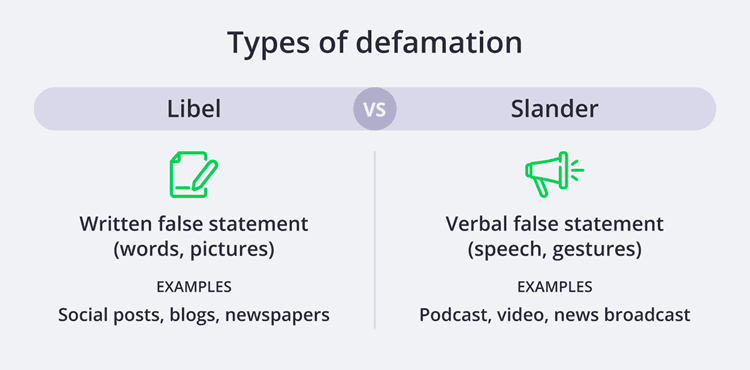
- Slander is a false spoken statement that damages someone’s character or professional standing.
- Libel is a false written or printed statement that harms a person’s reputation.
- If you believe you’ve been a victim of slander or defamation, seeking legal assistance is important.
What Is Defamation? Definition, Types, and Key Elements
At its core, defamation is making a false statement that damages a person’s reputation, character, or professional standing.
Defamation Definition: What It Means Legally
Legally, defamation is a false statement presented as fact that injures someone’s reputation. It typically happens when a person intentionally spreads misinformation about someone else, causing unwarranted damage to their social standing, character, or professional reputation.
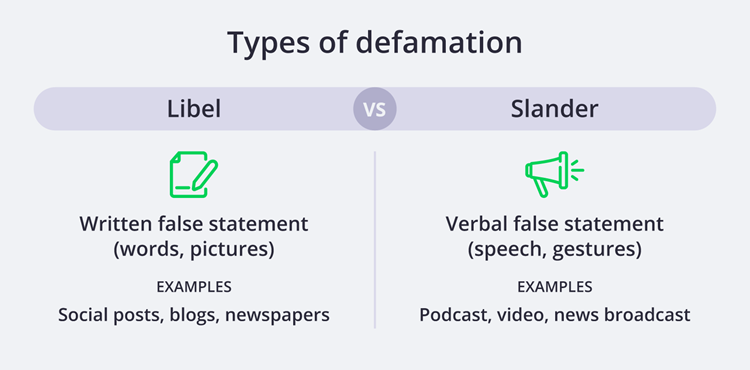
For a statement to count as defamation, a third party has to actually believe it. Defamation takes two forms: “libel,” which is written, and “slander,” which is spoken.
3 Essential Elements of Defamation You Must Prove
Defamation happens when someone makes a false and defamatory statement about another person that harms their reputation, character, or professional standing. Three elements need to be present for a statement to count as defamatory, and each one plays a distinct role in the legal test.
First, the statement has to be false, not grounded in truth. Second, it has to actually harm the person’s reputation. Third, it has to have been communicated to at least one other person, whether through publication or spoken words.
Together, these three elements form the basis of a defamation claim, and when all three are met, they can lead to real legal consequences for whoever made the false, damaging statement.
To prove defamation of character in court, a plaintiff has to establish all three elements with supporting evidence. The burden of proof falls on the person harmed by the defamation, who must show all three elements are present in order to obtain compensation.
Opinion vs. Defamation: How to Tell the Difference
Opinion and defamation are often confused, but they’re distinct legal concepts, and knowing the difference matters for avoiding legal trouble. An opinion is a personal belief or judgment, while defamation involves making false statements about someone with the intent to harm their reputation.
Unlike opinions, defamatory statements are presented as fact and can seriously damage a person’s character and professional standing if they turn out to be untrue. Expressing an opinion is generally protected under freedom of speech, while making false, harmful statements falls into the category of defamation, which is illegal and can carry legal consequences.
Slander vs. Libel: Understanding the Key Legal Distinctions
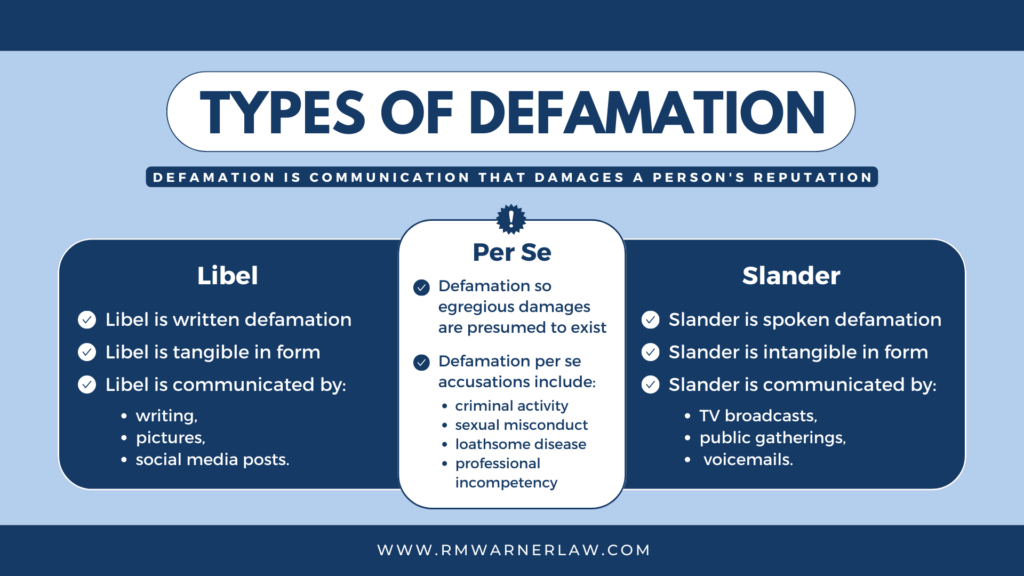
Slander is a false, defamatory statement made out loud, while libel is a false, defamatory statement made in writing or another permanent form.
What Is Slander? Definition and Legal Examples
Slander is the spoken form of defamation: a false statement that harms someone’s reputation, character, or professional standing. It happens when untrue information about another person is spread out loud, potentially damaging their reputation and social standing.
Unlike libel, the written form of defamation, slander happens through verbal communication, such as conversations or speeches in public settings. Slanderous statements can include false accusations, character attacks, or harmful rumours that are spread deliberately in order to cause unjustified harm.
What Is Libel? Definition and Legal Consequences
Libel is a false statement made in writing, whether in an article, a blog post, or a social media post. It’s considered defamatory when it harms someone’s reputation, character, or professional standing.
Unlike slander, the oral form of defamation, libel involves publishing false, damaging information in writing for others to see. For a statement to be considered libellous, it has to be untrue and cause harm to the person’s reputation or character.
Libel can carry serious consequences for individuals and businesses alike when they’re falsely accused, or when their reputations are unfairly harmed by rumours or false claims circulating in writing.
Slander vs. Libel: Side-by-Side Comparison Table
| Slander | Libel | |
|---|---|---|
| Definition | False spoken statements damaging someone’s reputation. | False written or printed statements harming a person’s character or standing. |
| Medium | Oral | Written |
| Legal Implication | Defamation through spoken words. | Defamation through written or printed format. |
Consequences of Defamation: Damages and Legal Outcomes
Someone found guilty of defamation can face damages and other legal consequences, and legal assistance can help protect your rights and reputation along the way. Here’s a closer look at what those repercussions can involve.
Damages in Defamation Cases: What Victims Can Claim
Anyone who engages in defamation, whether through slander or libel, can be held liable for damages meant to compensate the victim for harm done to their reputation, character, and professional standing.
The amount awarded varies based on several factors, including how severe the false statements were, how widely they were published or shared, and whether there’s proof of actual harm resulting from them.
Making false accusations with malicious intent can lead to significant legal consequences, which is why legal assistance is worth seeking if you’re facing a defamation claim.
Common Defences Against Defamation Claims
Common defences against defamation claims include truth, privilege, and opinion. A true statement can’t be considered defamatory, no matter how damaging it is. Privilege covers situations where certain people can make statements without fear of being sued, such as during court proceedings or legislative debates.
Opinion is another defense, since it’s generally protected under the First Amendment, though an opinion that includes false statements presented as facts, or that implies undisclosed defamatory facts, may lose that protection.
Consulting a lawyer who specializes in defamation law is the best way to understand the available defences and navigate legal proceedings effectively.
When and Why to Seek Legal Assistance for Defamation
If you’ve been defamed or slandered, seeking legal assistance may be necessary, even if you’re not yet sure whether you have a strong case. A lawyer can help you navigate the legal process and guide you on how to handle your case effectively.
A lawyer will assess the evidence, gather witnesses if needed, and build a strong argument to prove defamation of character. Legal assistance protects your reputation, lets you seek damages for the harm caused, and holds those responsible accountable.
Conclusion: Protecting Your Reputation Against Defamation and Slander
Understanding the difference between slander and defamation matters for protecting your reputation. Slander refers to false oral statements that harm someone’s character or professional standing, while defamation covers both written and oral false statements.
Whatever form it takes, defamation can carry serious consequences and lead to legal action. If you believe you’ve been a victim of slander or defamation, seeking legal assistance helps make sure your rights are protected.
FAQs on Defamation, Slander, and Libel
1. What is the difference between slander and defamation?
Defamation covers any statement, oral or written, that damages a person’s reputation. Slander refers specifically to an oral statement that causes that damage.
2. Could verbal attacks be grounds for defamation?
Yes. A false verbal attack on your reputation can count as slander, which falls under the broader category of defamation.
3. How does libel differ from slander?
Libel involves harmful statements in a fixed medium, like print or images, while slander applies only to spoken harmful and false statements.
4. Can both libel and slander cause significant reputation damage?
Yes. Whether written as libel or spoken as slander, these false statements can cause serious harm to a person’s personal or professional reputation.

- Independent picks for exactly what you just read about
- Matched to your team size & needs
- Vendors don't pay for placement
Step 1 of 4
How big is your team?
We tailor recommendations to companies your size.















Related Articles

Buyers guide
How To Choose The Best eDiscovery Software For 2026
Continue reading →

Buyers guide
How To Choose The Best Electronic Signature Software For 2026
Continue reading →

Buyers guide
How To Choose The Best Legal Case Management Software For 2026
Continue reading →

Finance & Billing Software
Contract Management Software Pricing in 2026: A Buyer’s Guide
Continue reading →