
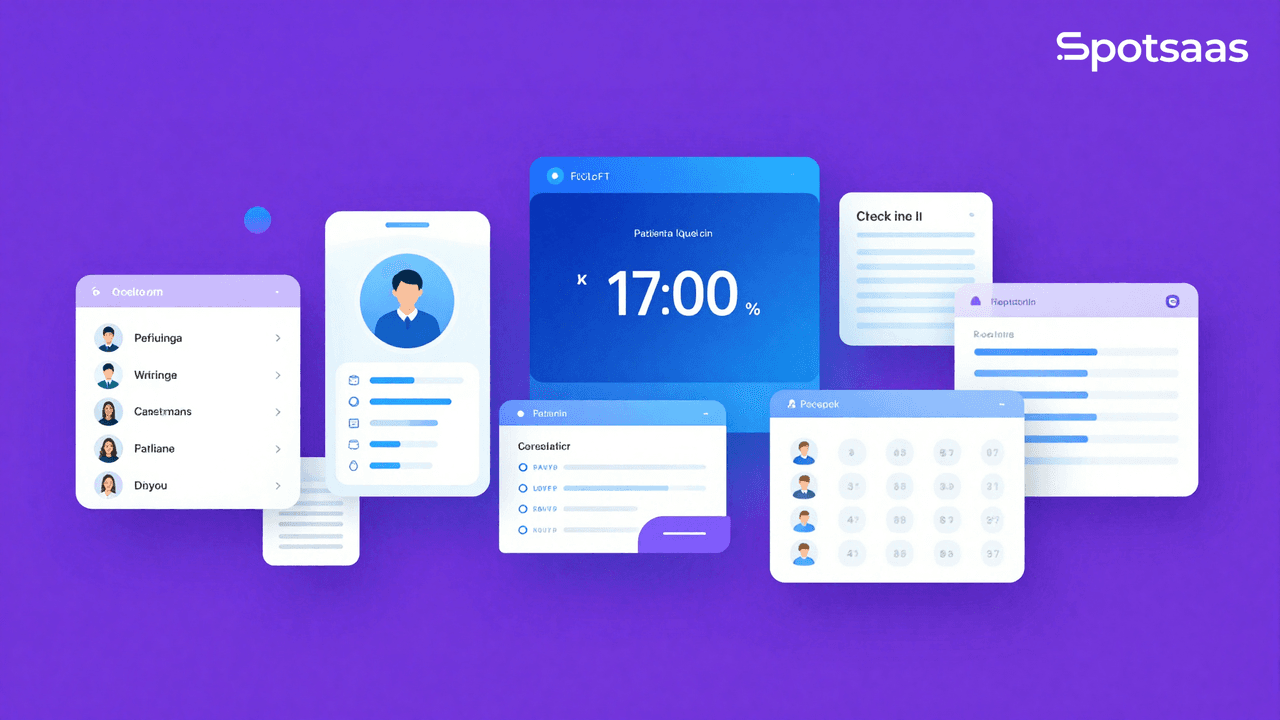
PatientTrak is a patient flow management platform that coordinates how people move through a medical facility, from arrival to follow-up. It combines self-service check-ins with live monitoring so that both patients and staff can track where each visit stands, which supports steadier healthcare efficiency and clearer care coordination.
Kiosk check-in and real-time tracking capabilities
PatientTrak’s kiosk check-in system changes how patients enter a medical facility. Instead of waiting at a reception desk, people can register themselves as soon as they arrive. That cuts wait times at the front desk and gives staff time to handle other work.
Self-registration also feeds directly into appointment scheduling and queue management, so staff spend less effort keying in details and patients spend less time standing in line.
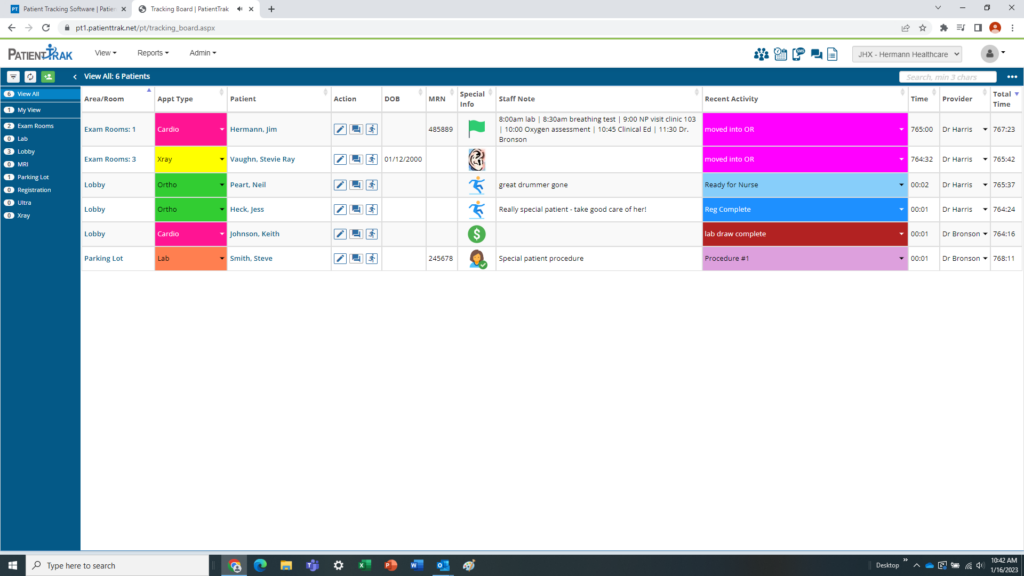
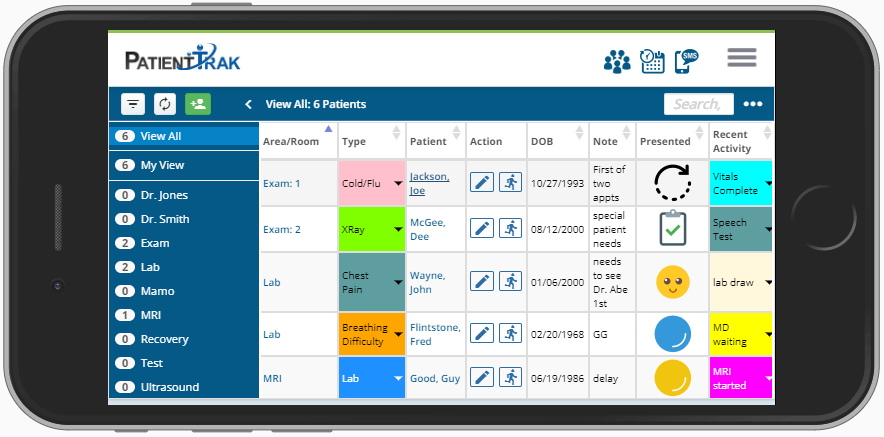
The real-time tracking side of PatientTrak gives medical organizations a way to watch patient flow as it happens. Providers can see where each patient sits in their care journey and what step comes next, all from one screen.
That visibility makes wait-time tracking more accurate and keeps the facility running on schedule. It also gives patients online booking options that show current wait times, so they know what to expect before they walk in.
Patient monitoring and post-visit survey tools
Patient monitoring and post-visit survey tools give healthcare providers a clearer record of each patient’s experience. Staff can follow a patient’s journey through the visit and step in when wait times or bottlenecks start to build up.
Catching those slow points early keeps patients moving through the facility, which smooths day-to-day operations and improves satisfaction.
Post-visit feedback is the other half of this. Patients receive surveys after their appointments, and their responses show practices where to improve. The same surveys also prompt patients to leave public reviews on platforms like Google, which raises a practice’s review count.
Automated messages reach patients once the appointment is over and ask them to share feedback, and those responses tend to lift online ratings. Staying in touch this way signals that a practice cares about care quality and helps build trust with both current and prospective patients.
Because these tools rely on workflow automation for healthcare, staff can handle routine tasks with less manual effort. Collecting feedback stops being a separate chore and becomes part of the normal visit flow.
The payoff is twofold: staff save time, and the practice gets usable data from its satisfaction surveys, data it can act on to improve service.
Understanding PatientTrak’s Pricing Model and Subscription Options
PatientTrak’s pricing is built to fit different types of users and to scale as they grow. The platform offers separate subscription packages aimed at freelancers, small-scale users, medium-sized organizations, and larger corporate clients.
A free plan covers people who are just getting started or who need only basic features, while the paid tiers add functionality for growing practices and hospitals.
Picking the right package means matching your patient flow management needs against what PatientTrak includes at each tier. Subscriptions can change as a practice grows, so clients pay only for the features they actually use.
There is also a trial period, which lets decision-makers test how PatientTrak works with their existing systems before committing any budget.
That setup helps buyers make an informed call about the technology, keeping operations organized without paying for features they don’t need.
Exploring the Best Alternatives to PatientTrak for Healthcare Management
PatientTrak covers a lot of patient flow management, but some healthcare providers will find that another tool fits their day-to-day operations more closely.
This section compares several healthcare management options and shows how they stack up on functionality and user experience.
A comparison of leading competitors like ClinicSense and CharmHealth
Choosing the right healthcare management software takes a close look at the main options on the market. ClinicSense and CharmHealth are two well-known alternatives to PatientTrak, and each takes a different approach to patient engagement and practice operations.
| Feature | ClinicSense | CharmHealth | PatientTrak |
|---|---|---|---|
| Primary Focus | Practice Management for Wellness Clinics | Electronic Health Records and Practice Management | Patient Flow Management |
| Key Features | Appointment Scheduling, SOAP Notes, Payment Processing | TeleHealth, EHR, Revenue Cycle Management | Kiosk Check-In, Real-Time Tracking, Post-Visit Surveys |
| Pricing Model | Subscription-based with multiple tiers | Free Tier Available; Paid Upgrades for Advanced Features | Customized Pricing Based on Facility Size and Needs |
| Platform Availability | Web-Based | Web-Based, iOS and Android Apps | Web-Based |
| Unique Selling Point | Integrated Tools for Wellness Service Providers | Comprehensive Suite for End-to-End Practice Management | Specialized in Enhancing Patient Experience and Flow |
| User Experience | Intuitive Design, Suited for Small Practices | Customizable and Scalable for Various Practice Sizes | Focus on User-Friendly Interfaces for Patients and Staff |
| Customer Support | Email and Online Resources | 24/7 Support, Community Forum, Knowledge Base | Email, Phone Support, and Training Materials |
The best fit comes down to what a practice does and how large it is. Pricing, platform availability, and the type of customer support on offer all weigh heavily in the decision. ClinicSense leans toward wellness clinics, CharmHealth covers broad practice management, and PatientTrak concentrates on patient flow, so each points to a different route to better clinical efficiency. Matching the software to the practice is what moves a team closer to delivering good patient care.
Review of Doxy.me as a potential alternative
Doxy.me is another option worth a look among healthcare management tools. It is a telemedicine platform built for virtual consultations, and it keeps the setup simple so practices can focus on patient engagement rather than technical hurdles.
Access is the main draw: patients join a visit through a plain web link, with no downloads or accounts to create.
For clinicians, Doxy.me focuses on practice management basics. It supports electronic health records integration and includes tools for remote patient monitoring to round out virtual care.
Its pricing may be the biggest selling point: Doxy.me has a free basic plan plus premium tiers, which makes it a lower-cost choice for medical scheduling and healthcare software compared with PatientTrak and similar services.
Conclusion: Is PatientTrak the Right Solution for Your Healthcare Practice?
PatientTrak is a full patient flow management tool that can change how a medical practice runs. When you weigh your software needs, look at its check-in process, real-time updates, and post-visit surveys.
Its flexible subscriptions, including a free trial, suit a range of healthcare settings that want to run more efficiently. If you need different features or a different pricing structure, it’s worth checking the leading alternatives.
In the end, PatientTrak sets out to improve staff performance and patient satisfaction across digital healthcare settings.
(Image credit: PatientTrak)
Frequently Asked Questions
1. What does PatientTrak do?
PatientTrak helps healthcare facilities manage patient flow and improve satisfaction by tracking wait times and streamlining communication.
2. Can I see how much PatientTrak costs online?
You need to contact the company for specific pricing, as they customize their services based on your needs.
3. What features does PatientTrak offer?
PatientTrak offers features like real-time wait time tracking, appointment reminders, and feedback collection tools.
4. Is there training available for using PatientTrak?
Yes, when you get PatientTrak, they provide training so you can learn how to use all its features effectively.
5. Are there any alternatives to PatientTrak?
Yes, other software options are available that also help with patient flow management and may offer different features or pricing structures.

- Independent picks for exactly what you just read about
- Matched to your team size & needs
- Vendors don't pay for placement
Step 1 of 4
How big is your team?
We tailor recommendations to companies your size.















Related Articles
Applicant Tracking Software
Best ATS for Retail and Hospitality Hiring in 2026: 5 Tools for High-Volume Recruiting
Continue reading →
Best Tools
Best EHR Software in 2026: Top Electronic Health Record Systems for Clinics and Practices
Continue reading →
Buyers guide
What Is EHR Software? Electronic Health Records Guide for 2026
Continue reading →
Best Tools
Best Veterinary Software in 2026: Top Practice Management Systems for Veterinary Clinics
Continue reading →