
Swamped with tasks and not sure where to start? An Impact Effort Matrix, a product management tool, can help you cut through the noise and prioritize what actually matters.
This guide breaks down how to use this matrix to manage your workload more efficiently and get more done with less wasted effort.
Key Takeaways
- An Impact Effort Matrix is a product management tool that can help you prioritize tasks and manage your workload more efficiently.
- The matrix uses the factors of impact (how much a task helps reach your goals) and effort (the work required to complete a task) to determine which tasks should be given priority.
- By using an impact effort matrix, you can focus on high-impact tasks that require less effort, leading to increased productivity and improved teamwork.
The Importance of Prioritization
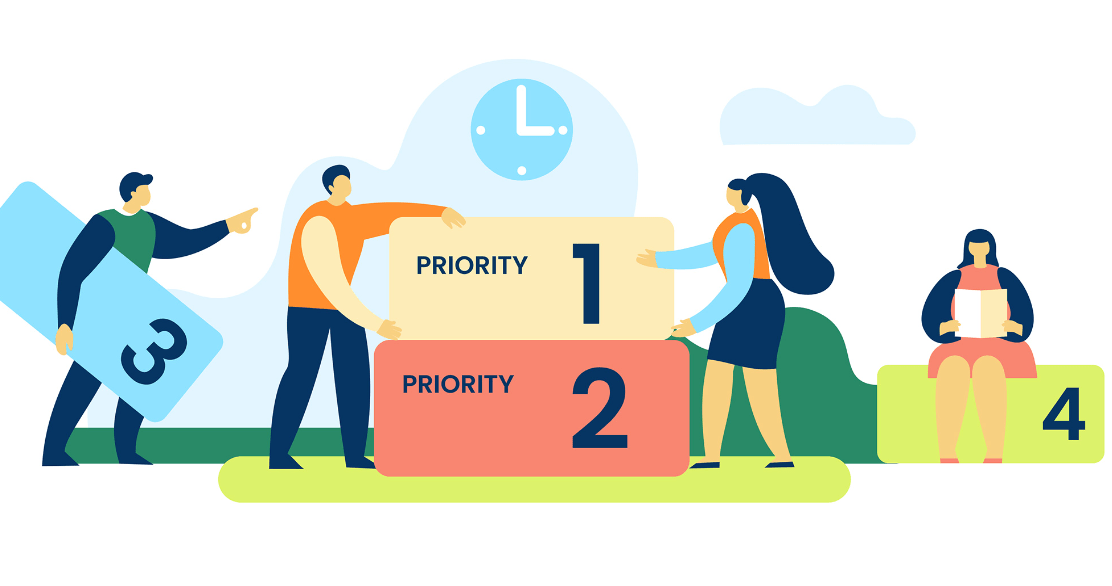
Sorting tasks is key to your success. It saves time and energy. When every job on your list looks important, the impact effort matrix earns its keep as a tool for deciding what to do first.
Used consistently, it cuts the time you spend managing projects.
Here’s how it works: the tool scores tasks on impact and effort to identify which ones deserve top priority. Those two factors give project managers a clear order to work through their list.
Used well, this method lifts productivity and improves teamwork by keeping the focus on high-impact tasks.
What is an Impact Effort Matrix?
An Impact Effort Matrix is a decision-making tool that helps you prioritize tasks based on their impact and effort required.
Definition of the matrix
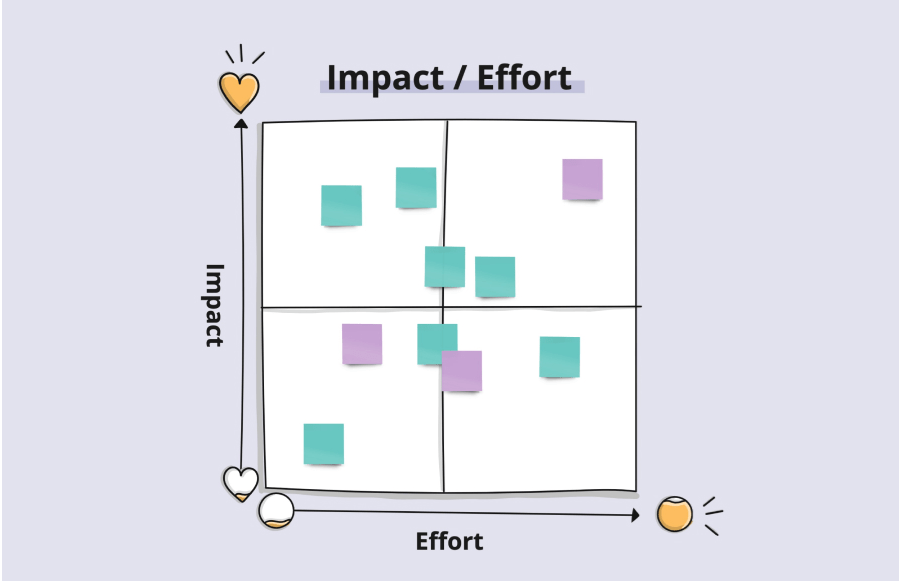
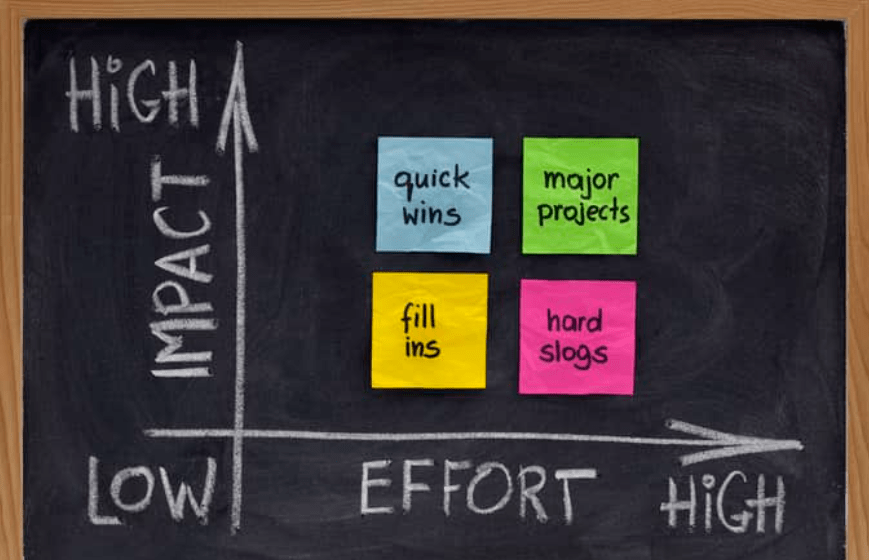
A matrix is a tool that helps you make choices. It lets you see which tasks carry high impact and take less effort, plotted across two axes: impact and effort.
Project managers rely on the Impact Effort Matrix often, using it to pick which tasks to tackle first. It shows what jobs give the most effect for the least work, which keeps you from chasing the wrong ideas or sinking too much time into low-impact jobs.
The matrix makes clear which tasks deserve your focus. As a decision-making tool, it also helps manage time better, improve teamwork, and get more done.
The axes: impact vs. effort
The two axes are the heart of the matrix. One axis tracks impact, the other tracks effort. The “impact” axis shows how much a task moves you toward your goals; high-impact tasks get you there fast.
Low-impact tasks don’t move the needle nearly as much.
The “effort” axis shows how hard a task is to complete, whether that means time, money, or the work needed to finish it. Tasks that demand more effort need more resources and can slow you down.
Put the two together and you can see which tasks deliver big results for less work, so you know where to put your energy first. That combination is what separates the matrix from a simple to-do list — it forces you to weigh cost against payoff for every item, rather than just working through tasks in the order they arrived.
How to Use an Impact Effort Matrix
Using an Impact Effort Matrix effectively comes down to six steps: identify tasks or projects to prioritize, assess the impact of each task on company and customer goals, evaluate the effort required for each task, plot tasks on the matrix based on their impact and effort levels, analyze the results to determine priority tasks, and allocate resources accordingly.
Six steps for using the matrix
Using an impact effort matrix to prioritize tasks is a helpful technique. Here are six steps to guide you:
| Step | Description |
|---|---|
| Identify Your Goals | Clarify the objectives you want to achieve with your tasks. |
| Determine Impact Criteria | Define the factors that will have a significant effect on achieving those goals. |
| Define Effort Criteria | Identify the level of effort required for each task, considering time, resources, and skills. |
| Plot Tasks on the Matrix | Place each task in the matrix based on its impact and effort levels. |
| Analyze Results | Evaluate the distribution of tasks across the matrix and identify patterns or imbalances. |
| Adjust Priorities | Based on the analysis, re-prioritize tasks by focusing on high-impact, low-effort items first. |
Benefits of using the matrix
An impact effort matrix pays off in several ways. It helps project managers prioritize tasks and manage their time more efficiently. Weighing a task’s potential impact against the effort it requires makes it obvious what the team’s priorities should be.
That clarity lifts productivity and improves collaboration among team members. It also lets project managers stay focused on high-impact tasks that serve both company goals and customer goals.
Overall, the impact effort matrix is a solid tool for task prioritization and decision-making on technology projects.
Avoiding Pitfalls of an Impact Effort Matrix
Cognitive biases can distort decision making when using an Impact Effort Matrix, leading to wrong calls and inefficient prioritization.
Cognitive biases that can impact decision making
When making decisions, it pays to watch for cognitive biases that skew judgment. These biases work like mental shortcuts your brain takes when processing information, and they can push you toward irrational or flawed choices.
One common bias is confirmation bias, where you tend to seek out information that confirms what you already believe and ignore evidence that contradicts it. This can crowd out alternative perspectives and get in the way of effective decision making.
Another is the anchoring effect, where you lean too heavily on the first piece of information you receive when making a decision. That can cause you to overlook other relevant factors and limit how well-rounded your judgment ends up being.
Real-life examples
A few examples of how an impact effort matrix plays out in the technology industry:
- Company XYZ used the impact effort matrix to prioritize their software development projects. By weighing the potential impact on customer satisfaction against the effort required for each project, they focused on high-impact tasks that aligned with their company goals.
- Tech startup ABC implemented the impact effort matrix to manage their workload more efficiently. Prioritizing tasks based on both importance and urgency let them stay focused on key deliverables and meet their deadlines consistently.
- Team DEF used the impact effort matrix to make collective decisions about feature development for their mobile app. Weighing each potential feature’s impact on user engagement against the effort needed to build it let them make informed choices that matched their customers’ goals.
- Software company GHI used the impact effort matrix to identify the root causes of bugs reported by customers. By weighing each bug’s impact on user experience against the effort needed to fix it, they addressed critical issues promptly and improved overall product quality.
- Technology firm JKL applied the impact effort matrix when deciding which new technologies to adopt in their infrastructure. Evaluating the potential impact on business efficiency and scalability alongside the effort required for implementation helped them make strategic decisions that kept them ahead in a fast-moving industry.
Implementing the Impact Effort Matrix in Your Work
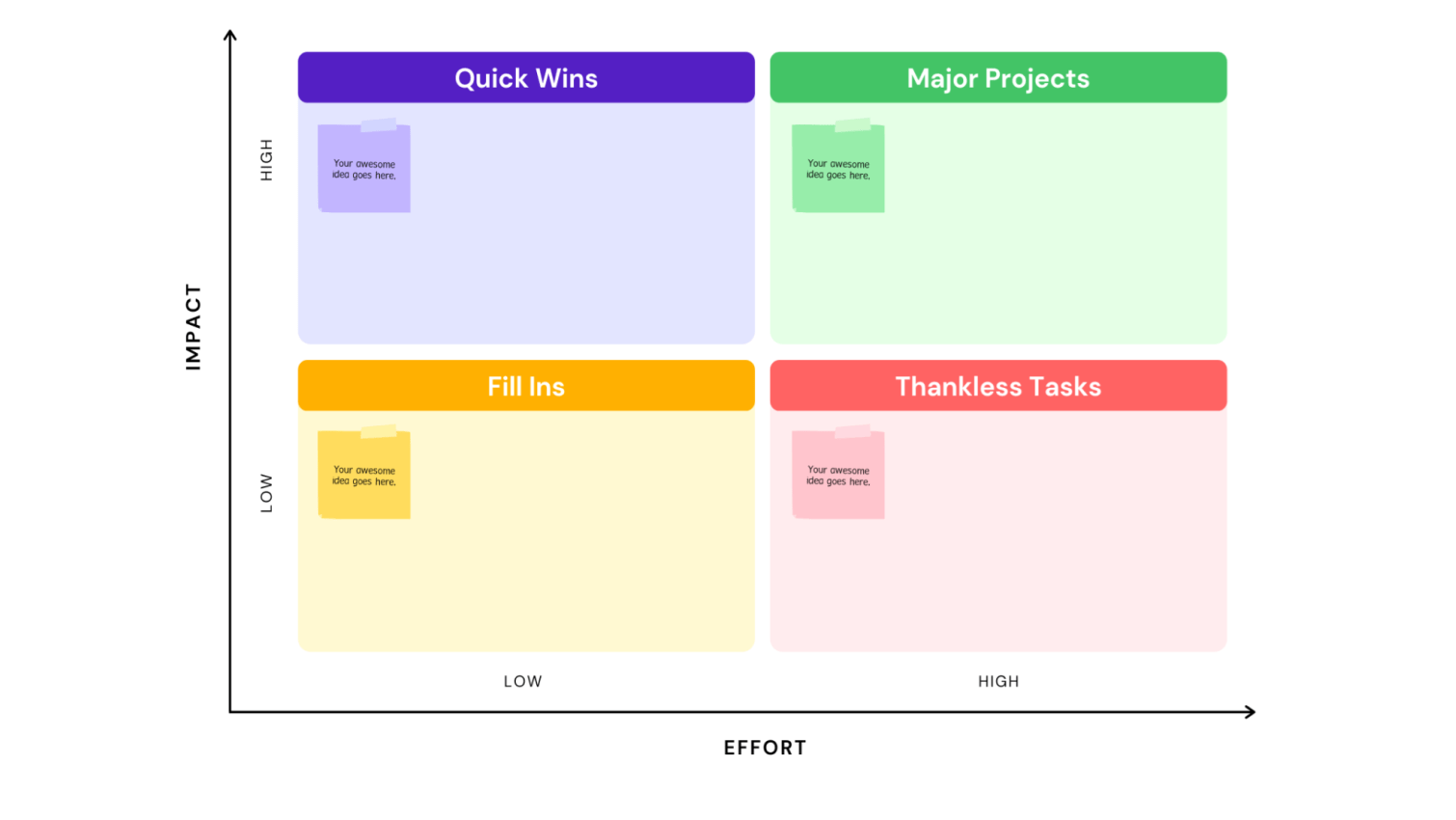
To put the Impact Effort Matrix to work successfully, follow these best practices and lean on the tools and resources available for building the matrix.
Best practices for successful implementation
To get the most out of an impact effort matrix, keep these practices in mind:
| Best Practice | Description |
|---|---|
| Understand the Purpose | Familiarize yourself with how the impact effort matrix works and why it is important for prioritizing tasks effectively. |
| Define Clear Criteria | Establish specific criteria for assessing impact and effort, aligning them with your company’s goals and customer’s goals. This will help ensure consistent decision-making across projects. |
| Involve the Right Stakeholders | Engage key team members in the decision-making process to gain a diverse range of perspectives and insights. This promotes collaboration and buy-in from those involved. |
| Conduct Root Cause Analysis | When evaluating tasks, dig deeper to identify underlying causes or issues that may affect their potential impact and effort required. Understanding these factors can lead to more accurate assessments. |
| Regularly Reassess Priorities | Priorities can change over time, so regularly review and update your impact effort matrix to reflect shifting circumstances, new information, or evolving goals. |
| Use Reliable Data | Base your assessments on reliable data rather than assumptions or personal biases. This will help you make more objective decisions about task prioritization. |
Tools and resources for creating an impact effort matrix
Building an impact effort matrix is easy once you have the right tools. Here are some options to get you started:
| Option | Description |
|---|---|
| Spreadsheets | Programs like Microsoft Excel or Google Sheets offer templates that can be customized for creating an impact effort matrix. These tools allow you to easily plot tasks on the matrix and calculate scores based on impact and effort. |
| Project Management Software | Many project management software platforms, such as Trello or Asana, have built-in features for creating and visualizing an impact effort matrix. These tools make it simple to assign tasks, set priorities, and collaborate with team members. |
| Online Templates | Numerous websites provide free downloadable templates specifically designed for creating impact effort matrices. Simply search for “impact effort matrix template” to find options that suit your needs. |
| Collaboration Tools | Communication and collaboration platforms like Slack or Microsoft Teams can also be used to create an impact effort matrix. By sharing a document or a whiteboard within these tools, team members can collaborate in real-time to prioritize tasks. |
| Workshops and Training | If you prefer a more hands-on approach, attending workshops or training sessions dedicated to project management methodologies can provide valuable guidance on creating an impact effort matrix. Look for online courses or local events offered by professional organizations. |
Conclusion
An impact effort matrix earns its place as a prioritization tool because it forces a real trade-off decision instead of a gut call. Weighing potential impact against the effort each task requires gives project managers a clearer basis for deciding what gets done first.
The payoff is better productivity, stronger collaboration, and a sharper focus on high-impact work. Put it into practice, revisit it as priorities shift, and it becomes a lasting improvement to how your team manages tasks and ships projects rather than a one-time exercise you run once and forget.
Frequently Asked Questions
What is an impact effort matrix?
An impact effort matrix is a tool used to assess and prioritize tasks based on their impact or importance and the effort required to complete them.
How does an impact effort matrix help in task prioritization?
By using an impact effort matrix, you can visually analyze tasks and determine which ones have high impact but require less effort, allowing you to focus on those first.
How do I create an impact effort matrix?
To create an impact effort matrix, list your tasks along one axis based on their level of impact or importance, and along the other axis based on the amount of effort required. Then plot each task accordingly.
Can an impact effort matrix be used for personal as well as professional tasks?
Yes. An impact effort matrix works just as well for personal tasks as it does for professional ones, helping you prioritize and manage your time and resources in either setting.
Are there any limitations of using an impact effort matrix in task prioritization?
Yes. The accuracy of an impact effort matrix depends on how objectively you score impact and effort. Cognitive biases like confirmation bias or anchoring can skew those scores if you are not careful, so it works best alongside reliable data and input from more than one stakeholder.

- Independent picks for exactly what you just read about
- Matched to your team size & needs
- Vendors don't pay for placement
Step 1 of 4
How big is your team?
We tailor recommendations to companies your size.















Related Articles
Buyers guide
Twilio Alternatives 2026: 6 Compared and What They Cost
Continue reading →

Finance & Billing Software
Best Payroll Software for Contractors and Freelancers in 2026
Continue reading →

Buyers guide
How To Choose The Best Auto Dialer Software For 2026
Continue reading →

Buyers guide
How To Choose The Best Freelance Platforms For 2026
Continue reading →