
Like many business owners, you might find the idea of systemizing your operations a bit overwhelming, and that is completely understandable, since it can be a demanding process. Still, after time spent researching and experimenting with different strategies inside real businesses, one lesson holds up again and again: strong systems make a company noticeably more efficient and create real room for it to grow and expand.
Key Takeaways
- Systemizing your business means building organized, efficient workflows that raise consistency, output, and growth.
- The benefits of systemizing your business include better efficiency, consistency, scalability, risk mitigation, and informed decision-making.
- Systemized operations improve productivity and quality, support scaling, protect institutional knowledge and continuity, and make decision-making and delegation easier.
Understanding the Basics of Business Systems
Business systemization is the practice of building organized, efficient workflows across your company. It means developing standard operating procedures, using technology, and improving processes over time to raise efficiency and steady growth.
Systemizing a business also allows for better knowledge management, delegation of tasks, risk mitigation, and compliance, all while keeping operations running smoothly and without gaps.
Definition of Business Systemization
Business systemization is a core strategy for streamlining operations. It means defining, recording, and refining procedures so work runs smoothly and consistently across every part of your business.
From sales processes to customer data management, effective systemization produces smoother workflows with far less hassle, confusion, or ambiguity. It is about organizing tasks and also about managing your resources well so you can improve both productivity and results.
Even with its structure, business systemization still leaves room for creativity and change as the company grows and evolves.
Benefits of Systemizing Your Business
Systemizing your business makes operations run predictably, almost like clockwork. You may notice a significant gain in efficiency and productivity as tasks get completed in less time and with fewer resources than before.
This not only improves the performance of individuals within your company but also lifts the performance of the business as a whole.
Systems bring consistency to your processes. Each task is done the same way every time, which produces high-quality output that meets your standards consistently. That, in turn, raises customer satisfaction and loyalty.
Systemization also helps with knowledge management by preventing key information from being lost when team members leave or change roles.
It does not stop there. Systemized businesses are also built for scalability and growth. Their well-defined workflows can replicate success at a larger size without putting quality or operational standards at risk.
Systemization supports risk control and compliance too, by setting clear guidelines that every employee follows.
Finally, good systems support informed decision-making because they provide clarity about how all the parts of the business operate together. That makes it easier for managers to delegate tasks with confidence, without constant supervision or micromanagement, which in turn gives employees more room to think, contribute, and do their best work.
Efficiency and Productivity
Systemizing your business gives a clear lift to efficiency and productivity. By creating organized processes, defining clear workflows, and simplifying tasks, you can cut waste and make the most of the resources you already have.
Every procedure, from appointment setting to financial operations, runs more smoothly when clear systems are in place. When each task has a defined process, there is less confusion and steadier day-to-day operations.
Automation is another key element that matters here as well. Integrating technology solutions into your processes simplifies operations and frees up valuable time for creativity and growth initiatives across the business.
With systemization, the goal is to work smart, not simply to work hard.
Consistency and Quality
Consistency and quality are central to a successful business. Systemizing your operations helps make sure tasks are carried out the same way and at a high standard.
When processes are standardized and documented, employees have clear guidelines to follow, which leads to consistent results. That improves efficiency and raises customer satisfaction, since people get the same level of service every time.
Good systems also help you spot areas that need improvement and take corrective action to maintain, or even exceed, your quality standards over time. Consistency and quality go hand in hand, and together they keep your operations performing well and at their best.
Scalability and Growth
Scalability and growth are key to the success of any business. Systemizing your operations builds a solid base, so you can repeat and scale your processes as the business expands.
As you grow, your workflows and procedures stay consistent and efficient, which keeps operations smooth across every department. With organized processes in place, you can focus on driving growth, exploring new opportunities, and expanding into new markets.
Systemization gives you the clarity and structure you need to support your company’s scaling goals, all while keeping levels of productivity and customer service high throughout the process.
Knowledge Management and Continuity
A systemized approach improves efficiency and productivity, and it also protects knowledge and continuity. Documenting and maintaining key processes captures useful information and insights that employees can reach easily.
This keeps knowledge inside the organization, even when employees leave or new ones join. Systemization makes transitions smoother, reduces disruption, and keeps critical tasks running consistently.
It provides clarity on responsibilities and helps employees make informed decisions based on the documented knowledge base. With strong knowledge management and continuity in place, your business can keep operating steadily while still supporting ongoing growth and innovation.
Decision-making and Delegation
Sound decisions and clear delegation are central to business systemization. Defining roles and responsibilities lets your team members make informed choices within their areas of expertise.
That lightens the burden on you and keeps decisions moving quickly and efficiently, which smooths overall operations. Delegation frees you to focus on the more strategic parts of your business, while giving others the opportunity to grow and develop their own skills.
With clear decision-making processes and solid delegation in place, you can simplify operations and move your business toward its goals.
Continuous Improvement
Continuous improvement is a key part of systemizing your business. Regularly looking for ways to refine and optimize your processes keeps operations running at their best.
That means regularly reviewing and evaluating your systems, looking for places where efficiency can be increased or bottlenecks can be eliminated. By making small, incremental improvements over time, you continually refine and evolve the business, drive growth, and keep ahead of the competition.
With a focus on continuous improvement, you can build a culture of high standards and excellence across your organization and keep pushing your operations toward their very best.
Risk Mitigation and Compliance
Systematic strategies for cleaner operations matter both for efficiency and productivity and for risk mitigation and compliance. Systemizing your business sets clear processes that meet legal and regulatory requirements, which lowers the chance of errors or non-compliance.
Systemization helps you identify potential risks within your operations and put controls in place to manage them effectively. Keeping documentation up to date and reviewing processes on a regular basis keeps the business compliant as regulations change, which in turn reduces potential legal issues down the line.
With a well-structured system in place, you can handle risk and compliance with confidence while staying focused on your business goals.

How to Systemize Your Business
To systemize your business, start by writing standard operating procedures (SOPs) for each process and task in your organization. Review your current processes to find areas that need improvement or automation.
Build a systemization strategy and roll systems out across all departments. Use technology and automation tools to simplify workflows and cut manual tasks. Then monitor, evaluate, and adjust your systems so they keep working well and moving the business forward.
Creating Standard Operating Procedures (SOPs)
Writing standard operating procedures (SOPs) is an essential step in systemizing your business. SOPs guide employees with step-by-step instructions for specific tasks or processes. They keep operations consistent and efficient while giving employees clarity and structure. Keep these points in mind when writing SOPs:
- Clearly define the objective of the procedure.
- Break down the procedure into clear and sequential steps.
- Include any necessary materials, tools, or resources needed for the task.
- Provide detailed instructions for each step, including any specific guidelines or requirements.
- Consider adding visuals such as diagrams or images to aid understanding.
- Use simple and concise language to make the SOP easy to follow.
- Ensure that the SOP is easily accessible to all relevant employees.
- Regularly review and update SOPs as needed to reflect changes in processes or best practices.
Assessing Your Current Processes
To systemize your business well, assess your current processes first. Here are the key steps involved:
| Step No. | Action | Description |
|---|---|---|
| 1 | Identification | Identify all tasks and activities currently being performed in your business. |
| 2 | Evaluation | Assess the efficiency and effectiveness of each process based on factors like time, resources, and output quality. |
| 3 | Feedback Collection | Obtain feedback from employees involved in the processes to understand challenges and get improvement suggestions. |
| 4 | Data Analysis | Analyze operational data and metrics to pinpoint bottlenecks or inefficiencies. |
| 5 | Comparison | Compare current processes with industry standards to identify gaps or potential enhancements. |
| 6 | Prioritization | Rank processes based on their impact on productivity, customer satisfaction, or cost-effectiveness for in-depth evaluation. |
| 7 | External Insights | Consider bringing in external experts or conducting audits for a fresh view on existing processes. |
Developing a Systemization Strategy
To systemize your business successfully, you need a strategic plan. That means assessing your current processes, identifying areas for improvement, and deciding how to put effective systems in place across the organization.
By writing standard operating procedures (SOPs), using technology and automation, and continuously monitoring and evaluating your systems, you can simplify operations and raise efficiency.
A well-planned systemization strategy provides clarity, removes guesswork, and enables smoother workflows that lead to higher productivity and better overall performance.
Implementing Systems Across Your Organization
Rolling systems out across your organization is a key step in simplifying your business operations. Here are the key actions to take:
| Action | Description |
|---|---|
| Identify the areas that need systemization | Assess your current processes and workflows to determine which areas can benefit from systemization. |
| Create Standard Operating Procedures (SOPs) | Develop clear SOPs that outline step-by-step instructions for each process or task within your organization. |
| Communicate the changes | Inform your employees about the new systems and provide them with training to ensure they understand how to use them effectively. |
| Evaluate and select technology solutions | Explore technology tools and software that can automate tasks, support collaboration, and improve overall efficiency. |
| Implement the systems gradually | Start with one department or process at a time to minimize disruption and allow for a smooth transition. |
| Monitor and evaluate performance | Continuously monitor how the implemented systems are functioning and assess their impact on productivity and efficiency. |
| Seek feedback from employees | Encourage feedback from your team members regarding any issues or improvements they suggest for the implemented systems. |
| Iterate and improve | Based on feedback and performance evaluation, make necessary adjustments to optimize your systems further. |
Using Technology and Automation
Using technology and automation is a key part of systemizing your business. Adding capable tools and software simplifies processes, reduces manual work, and increases efficiency.
Automation removes repetitive tasks and frees time for more strategic work. Tools such as project management software, CRM systems, and workflow automation platforms bring clarity and order to your operations.
With these tools at your disposal, you can simplify complex workflows and keep execution consistent across different departments or teams. Building technology into your business systems also improves communication with customers, which leads to better customer service.
Monitoring, Evaluating, and Iterating
Monitoring, evaluating, and iterating are essential steps in the process of systemizing your business. They let you keep improving and adapting your systems for strong performance. Here are some key aspects to consider:
| Action | Description |
|---|---|
| Regularly monitor your systems | Keep a close eye on how well your systems are functioning and identify any areas that may need improvement or adjustment. |
| Evaluate system effectiveness | Assess whether your systems are achieving their intended goals and delivering the desired outcomes. Collect data, seek feedback, and analyze results for evaluation. |
| Identify iteration opportunities | Use monitoring and evaluation data to identify areas for refinement, simplification, or addressing issues in your systems. |
| Implement changes and improvements | Take action to implement necessary modifications, such as updating SOPs, providing additional training, or using technology solutions to improve your systems. |
| Continuously repeat the cycle | Systemization is an ongoing process. Regularly review and improve your systems to ensure they effectively support your business objectives. |

Scaling and Expanding with Effective Systems
Scaling and expanding your business is an exciting phase, and it brings challenges too. Effective systems help you manage that growth more efficiently.
With standardized processes in place, you can repeat your success and stay consistent as you expand. These systems give your team clarity and simplify workflows, so tasks get done smoothly.
By organizing and automating parts of your business such as sales processes, financial operations, and communication channels, you can remove bottlenecks and improve customer service.
Putting these effective systems in place will support your current growth and set a solid foundation for future expansion opportunities as they arise.
One key benefit of scaling with effective systems is the ability to manage knowledge continuity within the organization. As new team members join or roles change over time, documented standard operating procedures (SOPs) make sure everyone can reach the critical information they need to do their jobs.
That minimizes disruption during transitions and, at the same time, makes the onboarding process smoother for new hires as they get up to speed.
Beyond the efficiency gains from systemizing your operations as you scale, technology can lift performance further. Automation tools reduce manual workload and increase productivity across different functions in the company.
That lets employees focus on higher-value work rather than spending their valuable time on repetitive, low-value activities that a system can handle instead.
Overall, scaling and expanding require careful planning and real consideration of how effective systems can support growth while holding on to consistency and quality across the whole organization’s operations.
By simplifying workflows through systemization strategies, such as writing SOPs or using technology for automation, businesses become better equipped to handle rising demand without sacrificing customer satisfaction or internal productivity.
Overcoming Challenges and Pitfalls
Overcoming challenges and pitfalls is a natural part of systemizing your business. As you introduce new systems and processes, you may meet resistance from employees who are wary of change.
It is important to communicate the benefits of systemization clearly and to address any concerns or fears that arise among your team. You may also hit technical hurdles when integrating new technology or automation tools into your existing operations.
Another common pitfall is failing to adapt and update your systems as needs change. Business environments keep evolving, so it is important to review and iterate on your processes regularly.
Monitoring performance is also key to working through challenges. Keep a close eye on how well the systems are being implemented across all areas of the organization, identify any bottlenecks or inefficiencies that show up, and make the necessary adjustments as you go.
Finally, do not underestimate the importance of employee training for a successful rollout. Provide thorough training programs so everyone understands their role in the new systems and feels confident using them.
By addressing these challenges head-on and learning from any missteps along the way, you can successfully work through the obstacles that tend to come up during the process of systemizing your business.

How Cflow Can Help Systemize Your Business
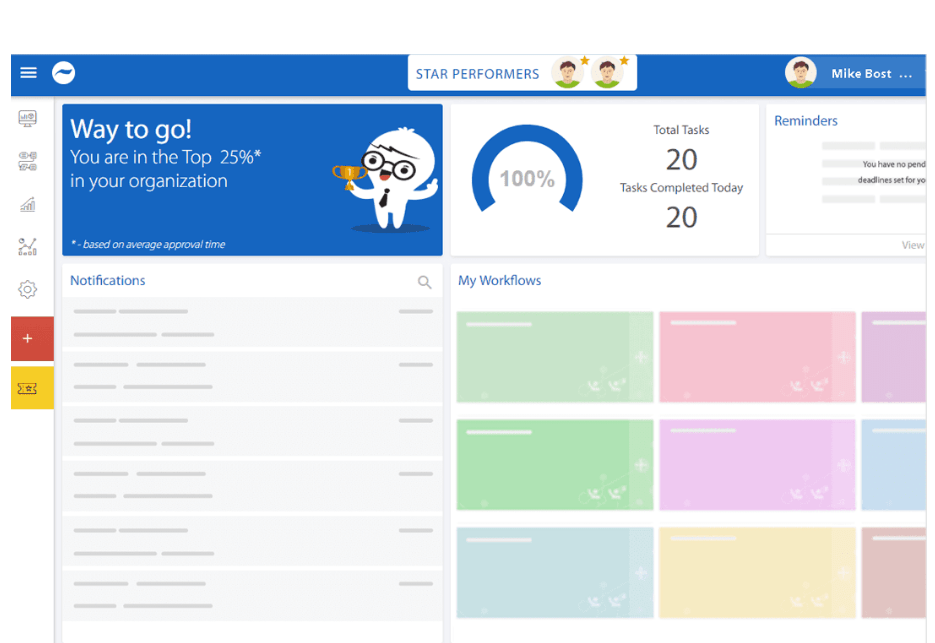
Cflow is a capable workflow automation tool that helps a great deal with systemizing your business. With Cflow, you can create and manage standardized workflows for the many processes within your organization.
By automating repetitive tasks and cutting manual errors, Cflow raises efficiency and productivity. It simplifies your business operations by adding clarity and structure to each step of the process.
With Cflow’s drag-and-drop interface, you can design custom workflows tailored to your specific needs. You can define roles, set deadlines, and assign tasks with just a few clicks.
Cflow also integrates with other popular applications like CRM systems, accounting software, and project management tools.
By using Cflow to systemize your business processes, you can track the progress of each task in real time as work moves along. That gives you far greater visibility into the status of your projects and supports timely, well-informed decision-making.
On top of that, all of the relevant information is centralized in one place within the platform, which ensures continuity even when team members change roles or are temporarily unavailable.
Cflow also provides comprehensive reporting that lets you monitor key performance indicators (KPIs) and identify areas for improvement. By analyzing these reports, you can iterate on your systems and keep raising operational standards.
In short, Cflow makes the process of systemizing your business easier by offering a straightforward, easy-to-use workflow automation solution. It improves efficiency by automating tasks and providing transparency throughout every stage of the process.
Take advantage of this capable tool to simplify and systemize your operations more effectively.
Conclusion
Systemizing your business is a key step toward simplifying operations and driving growth. By building standardized processes, using technology, and continuously improving your systems, you can raise efficiency, lift productivity, and reach a high operational standard.
So start putting systematic strategies in place today to optimize your business processes and lift your organization to a higher level of performance and growth.
Frequently Asked Questions
Why should I systemize my business?
Systemizing your business can help simplify operations, increase efficiency, and improve productivity by creating clear processes and procedures that everyone in the organization can follow.
How do I start systemizing my business?
To start systemizing your business, begin by identifying repetitive tasks or areas that could benefit from standardization. Document the steps involved in these processes and create guidelines for employees to follow.
What are the benefits of streamlining operations?
Streamlining operations can lead to increased profitability, reduced errors or mistakes, improved customer satisfaction, and better overall coordination within the company.
Can small businesses also benefit from systemizing their operations?
Yes, even small businesses can greatly benefit from systemizing their operations as it helps increase consistency, scalability, and allows for smoother day-to-day management.
Are there any tools or software available to assist with the process of systemizing a business?
Yes, there are various tools and software available that can aid in the process of systemizing a business such as project management tools or workflow automation platforms. These tools can help organize tasks and simplify communication among team members.
Compare alternatives to the tools in this post
Related Articles
Buyers guide
Twilio Alternatives 2026: 6 Compared and What They Cost
Continue reading →

Finance & Billing Software
Best Payroll Software for Contractors and Freelancers in 2026
Continue reading →

Buyers guide
How To Choose The Best Auto Dialer Software For 2026
Continue reading →

Buyers guide
How To Choose The Best Freelance Platforms For 2026
Continue reading →