


EMEA is a term that comes up often in global business, and it helps to know exactly what it covers and how it relates to companies that operate worldwide. EMEA stands for Europe, Middle East, and Africa – three vital regions that thousands of multinational companies focus on.
This article explains what EMEA means, why it matters in business operations, which countries are involved, and the main challenges companies face when they work across the region.
Key Takeaways
- EMEA stands for Europe, Middle East, and Africa – three essential regions in global business.
- The EMEA region offers wide opportunities for trade and investment, with its diverse cultures and economies.
- Global corporations use the EMEA designation to expand their operations and reach the markets of Europe, the Middle East, and Africa.
Understanding EMEA
EMEA stands for Europe, Middle East, and Africa – a geographical grouping that matters in business operations and marketing.
Definition of EMEA (Europe, Middle East, and Africa)
EMEA is an acronym for Europe, Middle East, and Africa – a geographic grouping used mainly by international businesses. The label acts as shorthand for these regions when discussing business activities or operations.
It is commonly used in marketing strategies, government reports, and institutional documents to name specific areas of interest or operation within a global context. The term “EMEA” covers a large geographical area that includes many countries with different cultures, economies, regulations, languages, and time zones.
Despite that size and diversity, the EMEA region sits under one abbreviation to simplify conversations about multinational business strategies or market dynamics across these particular areas.
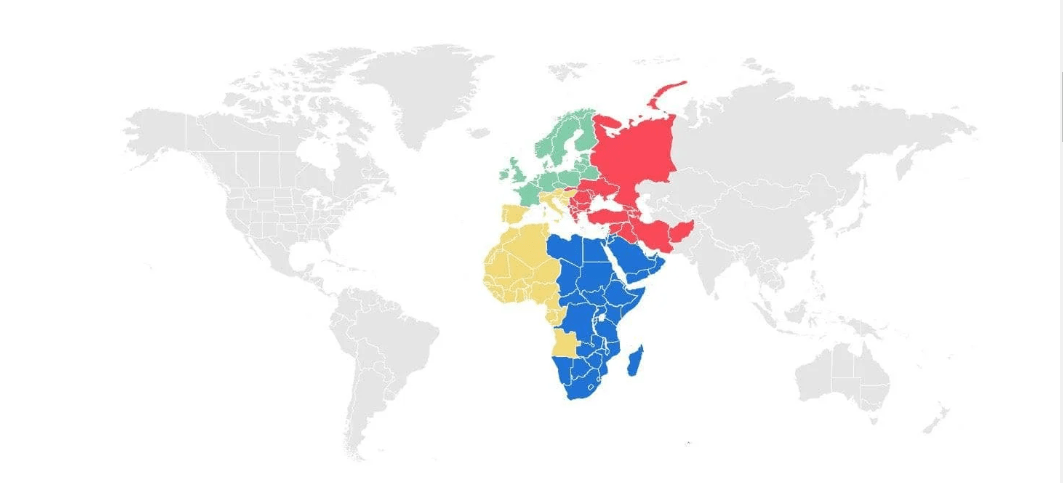
Importance of EMEA in business
EMEA carries real weight in global business operations. The region includes some of the world’s wealthiest and most active economies, which opens wide opportunities for trade and investment.
Companies use this geographical grouping to organize their international businesses. From setting up EMEA headquarters to driving strong EMEA sales, firms extend their reach across Europe, Middle East, and Africa.
Understanding regional business activities within EMEA helps corporations tailor strategies to diverse cultures and economies. Building an effective EMEA strategy is important for expanding into new markets and competing for a leading position in the region.
Geographic regions included in EMEA
EMEA covers a large part of the globe with diverse cultures and economies. This wide geographic grouping includes:
| Region | Countries and Territories |
|---|---|
| Northern Europe | Norway, Sweden, Finland,… |
| Western Europe | France, Germany, United Kingdom,… |
| Southern Europe | Italy, Spain, Greece,… |
| Eastern Europe | Poland, Romania, Ukraine,… |
| The Middle East | Iran, Iraq, Saudi Arabia,… |
| North Africa | Egypt, Libya, Morocco,… |
| Sub-Saharan Africa | South Africa, Nigeria,… |
Corporate Use of EMEA
Global corporations use the EMEA designation to expand their operations and reach the diverse markets of Europe, the Middle East, and Africa.

How global corporations utilize the EMEA designation
Global corporations use the EMEA designation to expand their reach into diverse markets. By setting up headquarters, sales offices, and operations in the region, they can reach a large customer base and take advantage of local business opportunities.
It also lets them tailor their marketing strategies to specific countries or regions within Europe, the Middle East, and Africa, which helps these global corporations grow and compete in a market that shifts from one country to the next.
Benefits of operating within the EMEA region
Operating within the EMEA region offers several benefits, including:
| Advantage | Description |
|---|---|
| Expanded Market Opportunities | Access to a broad set of countries and consumer bases, presenting potential for business growth. |
| Access to a Skilled Workforce | Availability of highly skilled professionals across various industries. |
| Strategic Location | Proximity to Europe, the Middle East, and Africa enables easy access to multiple markets and efficient supply chains. |
| Cultural Diversity | A varied cultural background provides insights into varied consumer preferences and aids in tailoring marketing strategies. |
| Government Support and Incentives | Favorable business regulations, tax incentives, and grants in many EMEA countries support cost reduction and higher profitability. |
| Networking Opportunities | Opportunities to connect with industry players, trade associations, and institutions through various events and platforms. |
| Infrastructure Development | Investments in infrastructure improve connectivity and operational efficiency, benefiting businesses operating in the region. |
| Political Stability | Stable political environments in several EMEA countries provide a secure business foundation for international expansion. |
EMEA Countries
EMEA countries consist of several nations in Europe, the Middle East, and Africa.
List of countries included in EMEA
EMEA includes a wide range of countries from Europe, the Middle East, and Africa. These countries are:
- Albania
- Algeria
- Angola
- Austria
- Bahrain
- Belarus
- Belgium
- Benin
- Bosnia and Herzegovina
- Botswana
- Bulgaria
- Burkina Faso
- Burundi
- Cabo Verde (Cape Verde)
- Cameroon
- Central African Republic (CAR)
- Chad
- Comoros
- Congo, Democratic Republic of the Congo (Kinshasa)
- Congo, Republic of the Congo (Brazzaville)
- Cote d’Ivoire (Ivory Coast)
Alphabetical order of EMEA countries
The EMEA region consists of the following countries, listed in alphabetical order:
- Albania
- Algeria
- Angola
- Austria
- Bahrain
- Belarus
- Belgium
- Benin
- Botswana
- Bulgaria
- Burkina Faso
- Burundi
- Cameroon
- Cape Verde
- Central African Republic
- Chad
- Comoros
- Congo, Democratic Republic of the Congo (Kinshasa)
- Congo, Republic of the Congo (Brazzaville)
- Cote d’Ivoire (Ivory Coast)
Subgroupings and organizations within EMEA
Several subgroupings and organizations exist within EMEA, and they support collaboration and business across the region. These include:
| Name | Description |
|---|---|
| European Union (EU) | Political and economic union of 27 European countries promoting cooperation, trade, and common policies. |
| Gulf Cooperation Council (GCC) | Regional intergovernmental organization consisting of six Arab states in the Persian Gulf, aiming to strengthen economic integration and political cooperation. |
| African Union (AU) | Organization comprising 55 member states across Africa, working towards political stability, economic development, and regional integration on the continent. |
| Organisation for Economic Co-operation and Development (OECD) | International organization promoting economic growth and cross-border investment among its 38 member countries, including several EMEA nations. |
| World Trade Organization (WTO) | Global forum for negotiating trade agreements and settling disputes between its 164 member countries, facilitating international trade within the EMEA region. |
| Middle East North Africa Financial Network (MENAFN) | Online platform providing financial information about businesses in the Middle East and North Africa region. |
| Nordic Council | Regional cooperation forum fostering cultural exchange and collaboration in the Nordic region, comprising several EMEA countries. |
| Economic Community of West African States (ECOWAS) | Regional organization of fifteen West African countries focusing on economic integration and development in the subregion. |
Challenges in Targeting EMEA
Corporations face difficulties with cultural, economic, and regulatory differences when operating across the diverse EMEA region. The sections below cover these challenges and how businesses address them to succeed in the market.

Difficulties faced by corporations when operating in the EMEA region
Corporations operating in the EMEA region often face difficulties due to cultural, economic, and regulatory differences. Cultural diversity within this vast region creates challenges in communication styles, business practices, and consumer preferences.
Economic variations across countries can affect market demand, pricing strategies, and supply chain management. Different regulatory frameworks and compliance requirements can also be complex and time-consuming for corporations operating in multiple countries within the EMEA region.
These difficulties require companies to use flexible approaches that account for the unique characteristics of each country, while still keeping a cohesive regional strategy that ties the separate markets together.
Cultural, economic, and regulatory differences
EMEA covers a broad set of countries and regions with significant cultural, economic, and regulatory differences. These differences can create challenges for corporations operating in the region. Key factors to consider include:
| Factor | Description |
|---|---|
| Cultural Differences | Each country within EMEA has its own unique cultural norms, traditions, and business practices. |
| Economic Differences | The economies within the EMEA region vary greatly in terms of size, development, and industries. |
| Regulatory Differences | Each country within EMEA has its own set of laws, regulations, and business practices. |
| Language Diversity | The EMEA region comprises numerous languages, making effective communication a challenge for multinational companies. |
| Political Instability | Certain countries within the EMEA region may experience political instability or conflicts that impact business operations. |
| Trade Barriers | Trade regulations and tariffs can vary significantly across the EMEA region. |
| Currency Fluctuations | The EMEA region includes countries with different currencies or currency unions (e.g., Eurozone). |
| Infrastructure Variations | Infrastructure quality varies throughout the EMEA region, affecting transportation logistics, supply chain management, and operational efficiency. |
| Consumer Behavior | Consumer behaviors differ across countries within the EMEA region due to varying cultural influences, economic factors, and market maturity levels. |
| Legal and Ethical Considerations | Companies operating in the EMEA region must be aware of and adhere to local laws, regulations, and ethical standards. |
Related Terms and Concepts
Other related terms and concepts include the Commonwealth of Independent States (CIS) and the impact of EMEA trade on global markets. The sections below cover these connections and why they matter in international business.
CIS (Commonwealth of Independent States) and its connection to EMEA
The CIS, or Commonwealth of Independent States, is closely connected to the EMEA region. The CIS consists of former Soviet Union countries that have chosen to keep economic and political ties.
This includes nations within the EMEA region such as Russia, Ukraine, Kazakhstan, and Belarus. The connection between the CIS and EMEA supports trade and collaboration among these countries, which creates opportunities for international businesses looking to expand into this market.
EMEA trade and its impact on global markets
EMEA trade carries real weight in global markets. With Europe, the Middle East, and Africa included, this large region is home to many economies and industries. Trading activities within EMEA have a strong effect on global supply chains, investment flows, and market trends.
From multinational corporations expanding their operations to cross-border trade agreements being formed, EMEA’s trade dynamics shape how connected the global economy is. Understanding EMEA trade matters for businesses that want to succeed across international markets.
Conclusion
EMEA, which stands for Europe, Middle East, and Africa, is a geographical grouping that matters greatly in global business. It covers a wide range of countries and regions and presents both opportunities and challenges for international corporations.
Understanding what EMEA means, and why it matters, can help businesses build effective strategies to work across this diverse market and improve their results in each part of the region.
Frequently Asked Questions
What does EMEA stand for?
EMEA stands for Europe, Middle East, and Africa.
Where is the EMEA region located?
The EMEA region spans across Europe, the Middle East, and Africa.
What is the purpose of EMEA?
EMEA is a geographic division used by businesses to manage operations, sales, and marketing strategies in Europe, the Middle East, and Africa.
How is EMEA different from other regions?
EMEA differs from other regions because it represents a combination of diverse countries from three continents with unique cultural norms and business practices.
Why is EMEA important in global business?
EMEA matters greatly in global business due to its sizeable market potential, strategic location between major economies, and access to valuable resources across multiple industries.
Related Articles
SaaS Insights
Remotion: What It Is & How Programmatic Video Generation Works
Continue reading →
SaaS Insights
Calendly: Pricing, Features & What It Actually Does
Continue reading →
SaaS Insights
Clay: Pricing, Features & What It Actually Does
Continue reading →
SaaS Insights
Lemlist: Pricing, Features & What It Actually Does
Continue reading →