
Choosing the right development model for your project can be a daunting task. With options like waterfall, agile, and iterative models on the table, each with its own vocabulary and workflow, it’s easy to get lost in the terminology.
This post breaks down each model in plain terms, laying out their distinctive features and benefits so you can make an informed choice for your next project, no technical background required.
Key Takeaways
- The waterfall model is a traditional and linear approach to software development, while the agile and iterative models embrace flexibility and adaptability.
- The waterfall model follows a sequential approach with distinct phases that must be completed before moving on to the next, while the agile and iterative models encourage simultaneous work on different aspects of development.
- Pros of the waterfall model include structured planning and documentation, but it can be inflexible when accommodating changes. Agile models offer flexibility, collaboration, and quicker response times to changing requirements, but may face challenges in managing large-scale projects. The iterative model combines elements of both approaches for continuous improvement while providing structure to the project.
Waterfall Model
The waterfall model is a traditional development process characterized by sequential phases and a linear fashion of progression.
Definition and characteristics
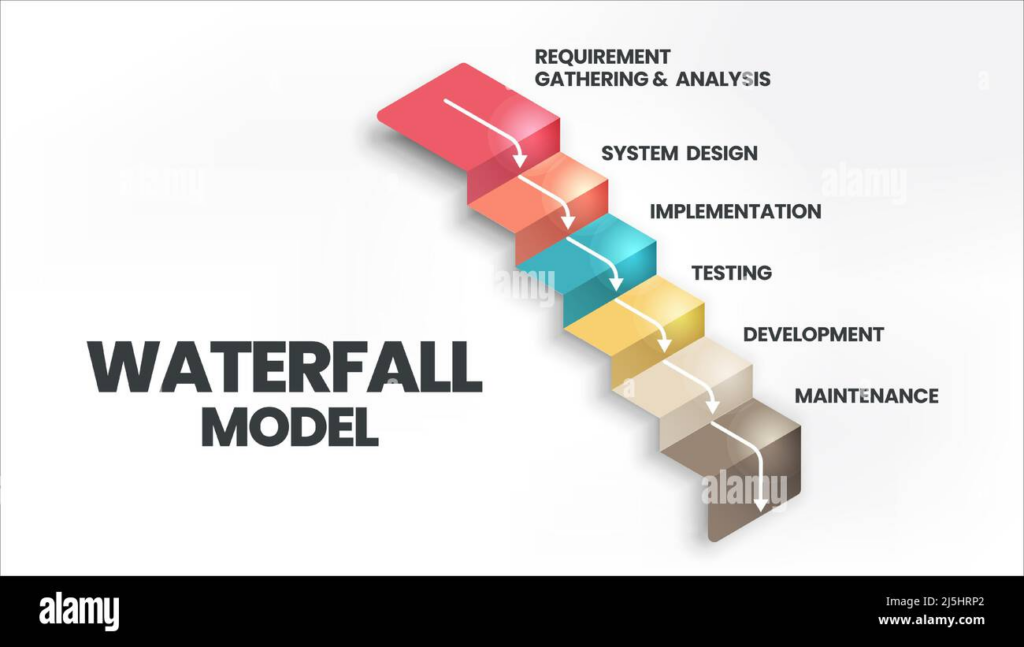
The waterfall model, often called the “traditional” approach in software development, is a linear process. It begins with system requirements and design, followed by implementation, verification, and maintenance stages.
Each phase is distinct and must be completed before moving on to the next one, with clearly defined requirements set at the start. This model leans on meticulous planning and documentation to keep project outcomes predictable.
Because of this structure, waterfall works best when requirements are stable and well understood from the outset, before a single line of code gets written. It’s less suited to projects where those requirements are likely to shift once work is underway, since making changes mid-phase tends to be difficult and costly.
Phases and sequential approach
The waterfall model follows a sequential approach with distinct phases. Each phase must be completed before moving on to the next one. These phases typically include requirements gathering, system design, implementation, testing, deployment, and ongoing maintenance.
The linear fashion of this approach means that each phase builds upon the previous one and progress is measured at the end of each stage. While this method provides structure and clarity in terms of project goals and deliverables, it can also be inflexible when unexpected changes or updates are needed throughout development.
In contrast, agile and iterative models embrace a more flexible approach by dividing the project into smaller iterations or sprints. Instead of completing all phases sequentially like in waterfall, these models encourage simultaneous work on different aspects of software development.
Pros and cons
The waterfall model offers a structured and linear approach to development, making it easy to plan and document the entire process. It allows for clear requirements upfront, reducing the likelihood of unexpected changes later on.
However, this approach can be inflexible when it comes to accommodating changes or feedback during development. Agile models like Scrum and Kanban, by comparison, promote flexibility by emphasizing iterative and incremental development.
Agile approaches enable collaboration between team members and stakeholders, allowing for quicker response times to changing requirements. However, these models may face challenges in terms of managing large-scale projects or maintaining documentation throughout the process.
An iterative model, meanwhile, combines elements of both waterfall and agile methodologies, offering a cyclical approach that allows for periods of planning followed by development iterations.
Agile Model
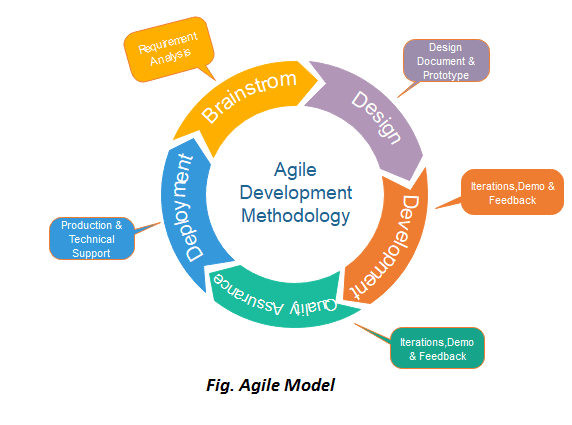
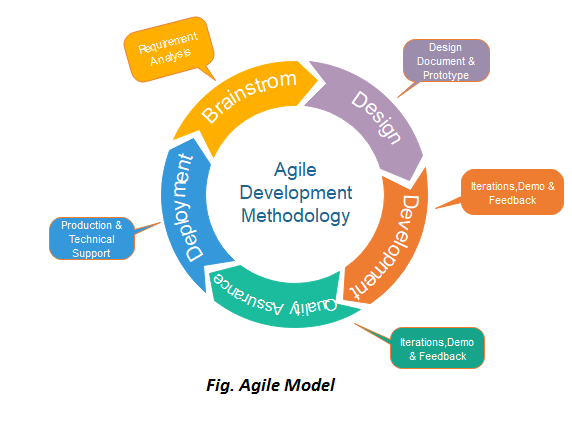
The Agile Model is a development methodology characterized by an iterative and incremental approach to software development.
Definition and characteristics
The Agile Model takes an incremental and iterative approach to software development, built around collaborative problem-solving among cross-functional teams rather than one team handing off to the next.
Instead of waiting until all components are complete to test a product, testing happens alongside development in this model, catching issues as they come up. Agile welcomes changes even late into the life cycle, with the goal of better customer satisfaction over strict adherence to an original plan.
Agile methodology also focuses on regular feedback from stakeholders and encourages rapid, flexible responses to change throughout development. That combination allows for faster delivery of feature-rich software while keeping customer satisfaction in view at every stage of the process.
Iterative and incremental approach
The iterative and incremental approach is a development process that focuses on breaking down the project into smaller, manageable chunks. Instead of waiting until the end to deliver a fully functional product, this approach allows for continuous iterations and improvements throughout the development cycle.
Each iteration builds upon the previous one, adding new features or addressing feedback and changes from stakeholders. This method enhances flexibility, as it can quickly adapt to evolving requirements and customer needs.
It also allows for early testing and feedback, ensuring that any issues are identified and resolved earlier in the process rather than surfacing late, when they’re more expensive to fix.
Pros and cons
The waterfall model offers the advantage of a clear, linear approach with well-defined phases that make it easy to plan and schedule projects. However, its rigid structure can make it difficult to accommodate changes or unexpected challenges.
The agile model, by contrast, allows for flexibility and adaptation throughout the development process, enabling teams to respond effectively to changing requirements. However, this same flexibility can lead to scope creep or a lack of defined milestones if it isn’t managed carefully.
Iterative development allows for incremental progress and feedback from stakeholders at various stages, with each round of iteration building on previous ones. Nevertheless, frequent iterations can stretch out project duration and may require more coordination between team members.
Iterative Model
The Iterative Model is a cyclical approach to software development, allowing for incremental development and flexibility in adapting to changing requirements. Here’s a closer look at its characteristics, along with its pros and cons.
Definition and characteristics
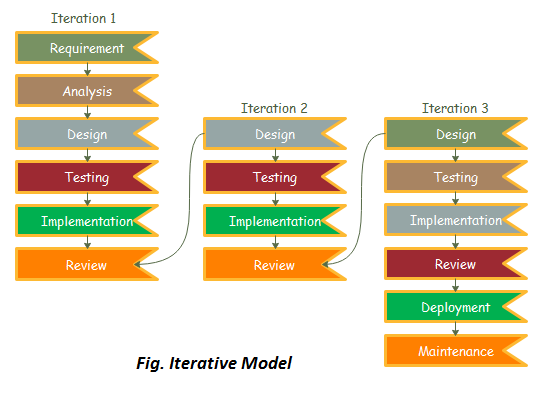
Where waterfall completes every stage for the entire system in one pass, and agile develops in small increments, the iterative model takes a middle path: it breaks development into a series of mini-waterfalls, with phases repeating across iterations until the product reaches a finished state.
Rather than finishing a phase once and leaving it behind for good, teams revisit requirements, design, and build work across multiple passes, refining the product incrementally as they go and learning something new each time. That gives iterative development a structure closer to waterfall than agile, while still leaving room to adapt as the picture becomes clearer.
Cyclical approach
The cyclical approach, also known as the iterative model, is a development process that involves repeating cycles of planning, designing, building, and testing. Unlike the traditional waterfall model, which follows a linear fashion from one phase to another, the cyclical approach allows for flexibility and adaptability throughout the software development process.
In this approach, each cycle focuses on delivering small increments of functionality that can be tested and reviewed by stakeholders. This iterative nature allows for continuous feedback and collaboration, ensuring that any necessary changes or improvements can be incorporated into subsequent cycles.
By breaking down the project into smaller chunks and addressing them incrementally, the cyclical approach promotes faster delivery of usable software with improved feature richness.
This approach offers real benefits, like increased flexibility and adaptability to changing requirements, but it has drawbacks too. Managing complex dependencies between different iterations, or maintaining consistency across multiple cycles, can get difficult as the number of cycles grows.
Pros and cons
There are several pros and cons to weigh across the agile, iterative, and waterfall models of software development. One advantage of the agile model is its flexibility and ability to adapt quickly to changing requirements.
It also promotes collaboration among team members and allows for faster delivery of working software overall. On the downside, it can be difficult to manage if there isn’t clear, consistent communication within the team.
The waterfall model, in contrast, provides a structured approach with clearly defined phases, making it easier for a team to manage projects. However, it can be inflexible when changes need to be made partway through development.
The iterative model combines aspects of both agile and waterfall by dividing development into cycles or iterations, allowing for incremental progress while still maintaining some real level of structure.
Comparing Agile, Iterative, and Waterfall Models
Agile, iterative, and waterfall models differ quite a bit in their approach to software development, each with its own set of advantages and disadvantages. Understanding these differences is essential to choosing the right model for a particular project.
Key differences and similarities
The key differences and similarities between the agile, iterative, and waterfall models come down to their approach to software development. The waterfall model follows a sequential process with isolated phases, while both the agile and iterative models take an iterative approach.
That said, the agile model focuses on flexibility and collaboration through shorter iterations and continuous feedback, while the iterative model emphasizes incremental development over multiple cycles rather than constant feedback loops.
All three models have their pros and cons depending on factors like feature richness, how clearly requirements are defined, how much change is expected along the way, and team dynamics.
When to use each model
The choice of development model depends on factors such as project requirements, team capabilities, and time constraints, and there’s rarely a single right answer. The waterfall model is suitable for projects with well-defined requirements and a fixed scope.
It works best when there’s no real need for frequent changes or iterations, making it a good fit for projects built on stable technologies with predictable outcomes.
The agile and iterative models, on the other hand, are more flexible and adaptable to changing requirements. Agile works well in environments where collaboration between teams is essential.
It allows for continuous feedback, quick iterations, and a focus on delivering value to customers early on rather than at the very end. Iterative models are useful when a complex system needs to be developed incrementally, with room for modifications and improvements as the project progresses.
Factors to consider in choosing the right model
A few factors are worth weighing carefully when choosing a development model for a project. First, assess how much flexibility you’ll actually need. Agile models offer greater adaptability and allow for changes throughout the process, which suits projects with evolving requirements.
Waterfall models, on the other hand, follow a more structured approach and tend to suit projects with well-defined, stable requirements better. Time management is another factor worth considering carefully.
Iterative models emphasize incremental development and frequent iterations, while waterfall models focus on completing each phase fully before moving to the next. Resource allocation matters too: agile models need highly collaborative teams working closely together throughout the process, while waterfall models let individuals take on more clearly defined roles within isolated phases of development.
Conclusion
When choosing a development process for your project, it’s worth weighing the specific requirements and constraints of the work ahead. The waterfall model offers a linear, structured approach suited to projects with clearly defined requirements and low expected change.
The agile model, by contrast, provides an iterative and incremental approach that allows for flexibility and adaptability as needs evolve over time. The iterative model sits somewhere in between, offering a cyclical approach that combines features of both waterfall and agile methodologies.
Ultimately, the right process depends on factors like project complexity, team dynamics, stakeholder involvement, and how quickly you need to deliver a working product.
Frequently Asked Questions
1. What is the difference between Agile, Iterative and Waterfall development processes?
Agile, Iterative and Waterfall are different types of development processes used in projects. Agile emphasizes team collaboration and customer feedback, while iterative focuses on componentization and repeated cycles of development. Waterfall, on the other hand, follows a linear approach from start to finish with emphasis on documentation.
2. How does Lean compare to Spiral or RAD (Rapid Application Development)?
Lean prioritizes eliminating waste for efficiency, whereas Spiral uses risk analysis for improvements at every cycle of iteration. RAD (Rapid Application Development) puts emphasis on fast prototyping and user feedback.
3. Can XP (Extreme Programming) be combined with other methods like PRINCE (Projects in Controlled Environments)?
Yes. XP (Extreme Programming) can work well with PRINCE (Projects in Controlled Environments), since both place a high focus on quality standards through system checks, reviews, or testing during all stages.
4. What is an iterative waterfall process?
An iterative waterfall process combines aspects of both: iterations occur, but once a phase is finished it is not revisited, as in waterfall. It’s effectively a repeatable sequence within an unrepeatable sequence.

- Independent picks for exactly what you just read about
- Matched to your team size & needs
- Vendors don't pay for placement
Step 1 of 4
How big is your team?
We tailor recommendations to companies your size.










Related Articles
Project Management
Best Project Management Software for Small Business in 2026: 8 Tools Compared
Continue reading →
Project Management
ClickUp vs Asana (2026): Which PM Tool Is Right for Your Team?
Continue reading →
Project Management
11 Best Asana Alternatives in 2026 (Cheaper, Simpler, or More Powerful)
Continue reading →
Project Management
How to Use Doodle Polls for Fast, Group Scheduling 2026 Guide
Continue reading →