

SaaS platforms handle a lot of sensitive user data and help critical business processes. This, unfortunately, makes them a wanted target for cybercriminals. Without adequate cybersecurity measures, SaaS development would not be possible.
Any data breach or cyberattack could shake the foundation of your SaaS solution. Trust is easily lost, and with the growing threat of cybercrime, no company is safe, whatever its size. Fortunately, plenty of cybersecurity measures are available to protect your SaaS project.
Yet, having an overwhelming number of solutions can also be a problem. To make your life easier, we discuss some of the best cybersecurity measures for SaaS development and offer their pros and cons.
Access Control and Authentication
When you know that only authorized users can access your SaaS platform, you can be calm. This security mechanism can be applied with strong multi-factor authentication (MFA) mechanisms. And don’t worry, implementing role-based access controls (RBAC) is a practical and effective way to manage user permissions.
If a breach occurs, MFA and RBAC will limit user permissions. These precautions will prevent unauthorized access. However, you will always have to review and update user access permissions. This may burden your management system, but when security and reputation are at stake, it’s a small price to pay.
Data Encryption
Sensitive data, including at-rest and in-transit data, should always be encrypted. Use encryption algorithms and protocols, such as AES or TLS. Note that the sender and receiver must have the same encryption key to access transferred data.
Data that arrives at the user device and SaaS platform must be protected throughout its lifecycle. End-to-end encryption can achieve this. Still, you must update your encryption standards regularly to stay ahead of the game and mitigate evolving cyber threats.
Network Security
Using a VPN for PC adds an extra layer of security, encrypting online activity, protecting sensitive business data, and ensuring safe remote access for users working from different locations. For additional network protection, many SaaS platforms buy proxies to manage incoming traffic, distribute server loads, and add an extra buffer against DDoS attacks. Proxies can also help mask your infrastructure’s actual IP addresses. This makes it harder for attackers to directly target your servers. Monitor network activity regularly and prepare alerts for potentially suspicious behavior or breaches.
Vulnerability Management
Any SaaS platform has its own weaknesses. However, you can detect them through vulnerability assessments and penetration testing. For even more complete results, consider purple teaming, which combines offensive and defensive security approaches to improve both threat detection and response capabilities. Basically, you hire people to try to breach your platform. Nevertheless, this way, you learn the vulnerabilities before cybercriminals do.
The penetration testing company must be trustworthy and professional. Depending on the results, you patch the security susceptibilities. This applies to both the underlying software and infrastructure. Since cybersecurity threats are ever-changing, it’s best to remain informed about the latest risks and adopt strong Cybersecurity Measures.
Since cybersecurity threats are ever-changing, it’s best to remain informed about the latest risks. Data breaches related to other SaaS platforms and businesses can teach you a lot. It will help you mitigate and address potential similar vulnerabilities.
Incident Response and Disaster Recovery
Any serious SaaS platform and developer should have a contingency plan for cyber attacks and breaches. Collaborate with your associates and employees to draft a complete incident response plan.
Having a plan will ensure that everyone takes effective and coordinated action in case of a data breach or system failure. Although this will partially reduce the damage of a breach, it will not be enough.
A strong backup and recovery strategy is also essential to safeguard data. Backups will also reduce recovery time and ensure business continuity during unexpected events. The sooner your team can return to their operations unhindered, the better.
When you draft an effective incident response and disaster recovery plan and protocol for your SaaS platform, test it. During tests, note the challenges and potential complications. Update the plan accordingly to prioritize effectiveness.
Using an Antivirus or a VPN
Consider using an antivirus or a virtual private network (VPN). It may help to perfect and create a resilient cybersecurity framework for your SaaS platform. These measures may also ensure continued development without hindrances. To better understand both software, let’s compare VPN vs antivirus.
Using antivirus software or a VPN (Virtual Private Network) is essential for ensuring digital security and privacy in today’s interconnected world. Antivirus software serves as a shield against malicious programs such as viruses, malware, ransomware, and spyware that can infect and damage your devices or steal sensitive information. It works by scanning files and applications for known patterns of harmful code. This prevents them from compromising your system. Regular updates to antivirus databases are essential to stay protected against emerging threats.
On the other hand, a VPN encrypts your internet connection, creating a secure tunnel between your device and the internet. This encryption prevents hackers, ISPs (Internet Service Providers), and government agencies from intercepting your online activities or accessing your data. By routing your connection through a remote server operated by the VPN provider, VPNs like NordVPN or Surfshark also hide your IP address and mask your geographical location. For Mac users, choosing a reliable VPN for Mac ensures that your device stays protected, your privacy is maintained, and you can access geo-restricted content or bypass censorship smoothly across all applications. This enhances privacy and allows you to access geo-restricted content and bypass censorship imposed by governments or institutions.
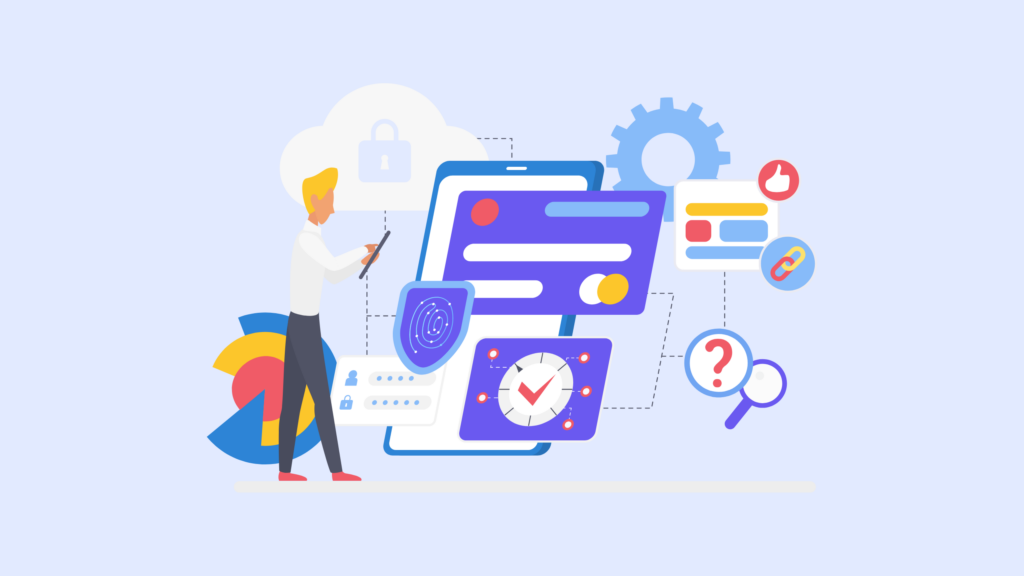
Pros and Cons of Antivirus
In most instances, an antivirus is only meant to protect you from malicious programs such as malware and viruses. It detects and prevents device infections but usually does not protect data in transit or remote access to information. An antivirus can sometimes interfere with your SaaS work if not correctly configured. This type of software must also be continuously updated to detect new cyber threats.
Pros and Cons of a VPN
A VPN can secure remote access, protect data in transit, and enhance user privacy. This way, even if the company has remote workers, you gain an extra layer of security. Yet, when a device is compromised, a VPN might not protect it from malware or viruses.
Of course, everything depends on the type of VPN and antivirus you use. Both software may come with various additional features. Some VPNs have threat protection and anti-tracker features, and some antivirus can come with a VPN of its own.
To make an informed decision, research the most reliable providers. Pay attention to client reviews. Check what extra features a provider offers and how your SaaS project can benefit from them. With these cybersecurity measures employed, you can focus on your SaaS development without worry.
Where Security Belongs in the Delivery Cycle
Controls are cheapest where the developer already is, and most expensive once code is running in production.
In the editor and pre-commit: secrets detection, so a credential never reaches history. This is the single highest-return control in the pipeline, because a leaked key is exploited by automated scanners within minutes and cannot be un-leaked by deleting the commit.
In the pull request: dependency and static analysis, reported as review comments rather than build failures. Advisory first, enforcing later on a narrow set of high-confidence findings — a gate that blocks on every low-severity issue gets disabled within a month.
At build and deploy: container image scanning and infrastructure-as-code checks, which catch misconfiguration before it becomes an exposed bucket.
In production: runtime monitoring and periodic penetration testing for the logic flaws no scanner detects.
Secrets, Dependencies and the Supply Chain
Two categories account for a disproportionate share of incidents in software delivery, and both are addressable with tooling that costs little.
Secrets in source control
A credential committed to a repository is exploited within minutes by automated scanners, and deleting the commit does not help because the value remains in history and in every clone. Rotation is the only real remediation.
Prevention is a pre-commit hook plus server-side scanning, and the important configuration detail is scanning history rather than only new commits — most organisations enabling this for the first time find live credentials already present.
Dependency and supply-chain risk
Modern applications carry hundreds of transitive dependencies, and the realistic threat is a vulnerable or compromised package rather than a flaw in your own code. Automated dependency scanning with pull requests that propose the upgrade is what keeps this manageable.
Pin versions and use lockfiles so builds are reproducible, and treat a dependency that has gone unmaintained as a risk in its own right — an abandoned package receives no fixes while remaining installed everywhere.
Signing and provenance
Knowing that the artefact you deployed is the one your pipeline built has moved from a nice-to-have to a baseline expectation, particularly for anyone selling into enterprises or government. Container image signing and a software bill of materials are increasingly asked for during procurement.
Generating an SBOM is cheap once wired into the build. Being asked for one during a security review and having no process is the expensive version.
Access Control Inside the Product
Most of this article concerns protecting the pipeline. The other half of SaaS security is what the application itself enforces once running.
Authorise per object, not per endpoint
The dominant vulnerability in multi-tenant applications is an endpoint that confirms you are authenticated without confirming the record belongs to your tenant. Every data access should carry a tenant check enforced server-side, ideally at the data layer where it cannot be forgotten.
Testing for this requires two accounts and a deliberate attempt to reach one’s data with the other’s session. Scanners will not find it, because every request looks valid.
Design tenant isolation explicitly
Whether tenants share a database with a discriminator column or hold separate schemas, the decision should be deliberate and documented. Shared-table designs are cheaper and put the entire burden on query-level filtering, which means one missing clause exposes everything.
Treat admin surfaces as a separate attack surface
Internal tools that can impersonate users or read any tenant’s data are the highest-value target in the product. They deserve stronger authentication, full audit logging, and access limited to named individuals rather than an engineering group.
Log what would matter afterwards
Authentication events, permission changes, data exports and administrative actions, retained long enough to investigate. The common regret after an incident is not having the logs, and that is a decision made months earlier.
Incident Readiness for a Small Engineering Team
Preparation is what separates a contained incident from a prolonged one, and most of it costs nothing.
Decide in advance who leads an incident, who talks to customers, and who has authority to take a service offline. Ambiguity on that last point costs hours at exactly the wrong moment.
Keep credentials for critical systems reachable without the systems themselves — an incident affecting single sign-on should not lock you out of responding to it.
Know your notification obligations before you need them: which regulators, which customers by contract, and within what window. Those windows begin at discovery.
And run one tabletop exercise a year. Ninety minutes talking through a plausible scenario surfaces more gaps than any document review, and it is the cheapest security exercise available.
Frequently Asked Questions
What security controls belong in a SaaS development pipeline?
Dependency scanning to catch vulnerable libraries, static analysis on your own code, secrets detection so credentials never reach the repository, container image scanning before deploy, and infrastructure-as-code checks for misconfiguration.
Secrets detection returns the most value for the least effort. A leaked key in a commit is exploited within minutes by automated scanners, and it is entirely preventable.
What is shift-left security in practice?
Moving checks earlier so defects are caught while they are cheap to fix — in the editor and the pull request rather than in a penetration test months later.
It fails when it becomes a gate that blocks every build on low-severity findings. The version that works starts advisory, tunes out noise, then enforces on a narrow set of high-confidence, high-severity issues.
How do you secure an API in a SaaS application?
Authenticate every request, authorise per object rather than per endpoint, rate-limit by client, validate input against a schema, and never rely on the client to enforce anything.
Broken object-level authorisation is the dominant API vulnerability — an endpoint that checks you are logged in but not whether the record you requested belongs to you. It is invisible to scanners and found by testing with two accounts.
Related Articles
Cybersecurity
10 Best CrowdStrike Alternatives in 2026 (Ranked for Every Security Team)
Continue reading →
Cybersecurity
Best Cybersecurity Software in 2026: Complete Guide for Every Business Size
Continue reading →
Cybersecurity
Best Identity and Access Management Software (IAM) in 2026
Continue reading →
Buyers guide
How To Choose The Best Security Awareness Training Software For 2026
Continue reading →