
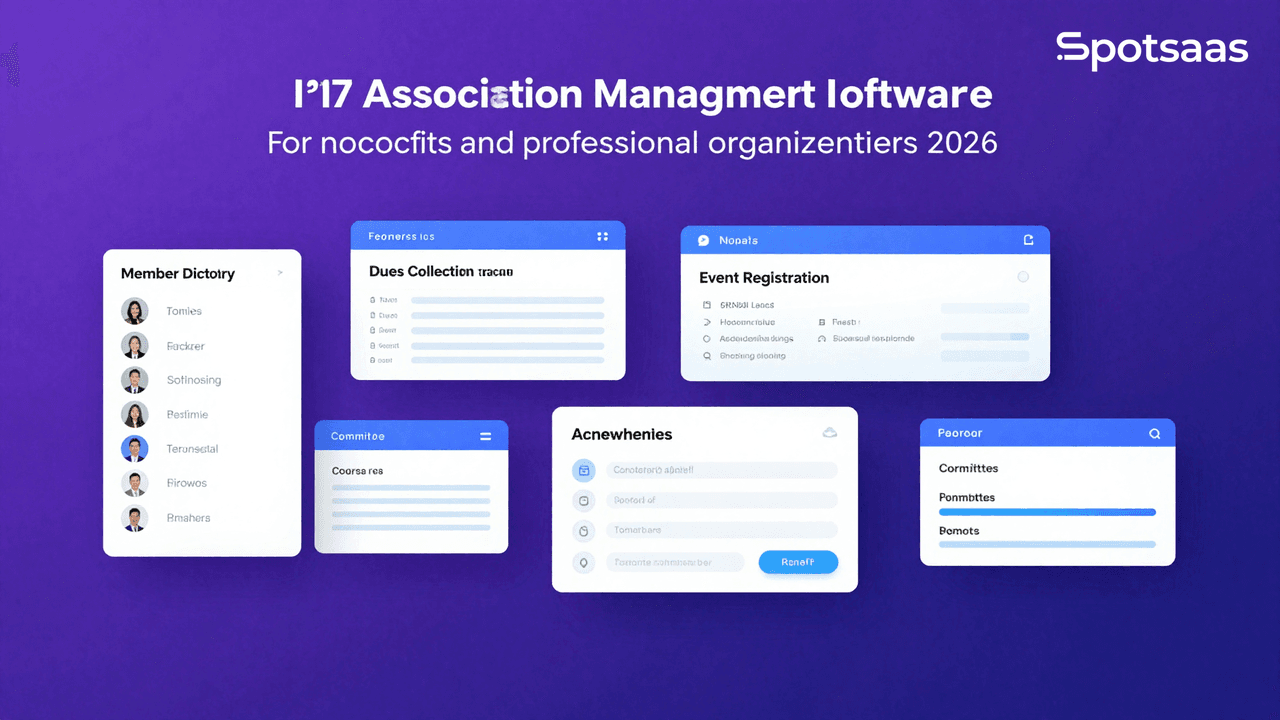
What Is Association Management Software and How Can It Help Organizations?
Association Management Software (AMS) is an all-in-one tool designed to help professional and nonprofit associations simplify membership management, event planning, financial tracking, and communication.
These platforms integrate various administrative functions. This reduces manual efforts and improves efficiency. AMS enables associations to manage members, collect dues, track engagement, and organize events in a centralized system.
Why Should You Use Association Management Software?
Association Management Software automates membership, events, finances, and communication. This makes operations more efficient. It enhances member engagement, reduces administrative workload, and provides data-driven insights for strategic growth.
Managing memberships with ease
Association Management Software automates member registrations, renewals, and communications. This reduces manual effort and ensures smooth operations. It helps maintain an organized database. This allows easy access to member details. This provides better organization and efficiency in managing member relationships.
Keeping members engaged and connected
Personalized communication tools, event notifications, and networking features keep members actively involved. Automated reminders and targeted content improve engagement and retention rates. Fostering stronger connections enhances overall member satisfaction.
Handling finances with accuracy
The software automates dues collection, invoicing, and financial reporting. This reduces errors and administrative workload. It ensures timely payments and provides clear financial insights. This reduces financial discrepancies and improves budgeting accuracy.
Making event management smoother
Integrated event management features handle the registration, ticketing, and tracking of attendees for conferences, webinars, and networking events. This makes planning easy and the participant experience richer. Automating processes, therefore, makes event execution even smoother and easier.
Using data to guide decisions
Advanced analytics track member interaction, event success, and financial trends to allow organizations to make strategic decisions regarding growth and improvement. This means there is better resource allocation and long-term planning.
What Are the Key Features of Association Management Software?
Essential features include membership databases, automated billing, event management, email marketing, analytics, and integrations. These tools simplify association processes, improve engagement, and enhance overall efficiency.
Organizing member data in one place
Store and organize member data, including profile, history, and communication log. This centralized repository allows fast access to information about members and thus enhances the management of relationships. It ensures easy updates in records, keeping them accurate and current. Advanced search and filtering options enable easier segmentation and management of membership. The database saves time and energy by reducing the manual handling of data.
Automating billing and payments
Manages membership renewal, event payments, and billing through secure online transactions. Automatic reminders reduce last-minute payments. This ensures steady cash flow for the associations. Financial tracking integration maintains transparency in record-keeping. The system supports multiple payment options for members to make transactions easier. It reduces manual invoicing. This reduces administrative workload and errors.
Coordinating events from start to finish
Plans, schedules, and tracks events through integrated ticketing and attendee management tools. The system simplifies event logistics, from registrations to post-event follow-ups. The automated workflows ensure simplified scheduling, invitations, and reminders. Attendance tracking and real-time reporting of events are significant sources of input for future planning. This makes the event much more engaging, so participation rates and satisfaction levels rise.
Communicating effectively with members
Sends newsletters, event invites, and updates to members through automated email campaigns. Personalization features enable targeted communication, increasing engagement rates. Scheduled email automation ensures the timely delivery of important information. Built-in analytics track open rates and responses to measure campaign effectiveness. A centralized communication hub enhances member interaction and retention.
Tracking performance with reports and analytics
It provides actionable intelligence on member retention, financials, and engagement measures. Association members can make fact-based decisions based on customizable reports for strategic growth. Analytics provide insights into patterns and areas needing improvement. Key performance indicators come alive in dashboards with immediate visibility. Such a feature supports operational efficiency in real-time and better long-term planning.
Integrating with other business tools
Integrate with CRM, accounting, and marketing software. Data silos disappear, and workflows across departments can be harmonized. Eliminating data redundancy leads to fewer errors and more saved time in data re-entry. The association can then employ third-party apps for efficiency and automation purposes. All the above-mentioned things create a connected system and improve operations overall.
Providing mobile access for flexibility
Allows members and administrators to access and manage data from any device. This provides flexibility. This enables real-time updates and on-the-go engagement. Mobile access enhances convenience for members who prefer self-service options. Administrators can monitor key operations and respond to issues anytime, anywhere. A mobile-friendly platform improves user experience and operational efficiency.
What Are the Benefits of Association Management Software?
This software saves time and costs by automating tasks, improving member retention, and centralizing data. It supports scalability, ensures compliance, and enhances security for better management.
Saving time and reducing costs
Reduces administrative workload by automating renewals, payments, and event registrations. Automation minimizes manual tasks. This allows staff to focus on strategic initiatives. Reduced paperwork and simplified workflows lead to significant cost savings. Faster processing times improve overall productivity and operational efficiency. This software helps associations maximize their resources while minimizing overhead costs.
Keeping members loyal
It keeps members engaged through timely communication, networking tools, and access to exclusive content. It automatically sends reminders and uses personalized messaging to build a strong relationship. The chances of members renewing are higher than the possibility of attending events. All these things help members engage and be active in the network and give a complete feeling of satisfaction. This improves long-term member loyalty.
Centralizing all data in one place
All association-related data is stored in one place. This ensures easy access and security. A unified system eliminates information silos and enhances collaboration among teams. Secure access controls ensure data integrity and regulatory compliance. Members and administrators can retrieve information quickly and efficiently. Centralized management simplifies operations and improves decision-making.
Growing with the organization
It handles increased membership, events, and financial transactions for growing associations. Changes in needs are accommodated to ensure the smooth running of the business as the organization grows. Scalable solutions prevent bottlenecks and keep the system efficient. Features can be added as the association grows. It’s a long-term investment in an organization that will see it through to long-term success.
Maintaining compliance and security
This approach guarantees strict compliance with data protection regulations. This ensures that access controls are secure and reliable. With advanced encryption in place, we effectively protect sensitive member and financial information. This gives you peace of mind and confidence in our commitment to security. Multi-layer authentication prevents unauthorized access and data breaches. Regular software updates and security audits keep the system secure. This ensures that associations operate within legal frameworks and maintain member trust.
What Are the Types of Association Management Software?
Various AMS types include cloud-based, on-premise, all-in-one, open-source, and specialized solutions. Each type offers different advantages and caters to the specific needs of different organizations.
Using cloud-based AMS for flexibility
It provides remote access, scales up, and has automatic updates with minimal maintenance in IT. It allows administrators to be always available. Cloud-based solutions reduce the costs of infrastructure and IT dependency. Data is safe with its backups, thereby minimizing data loss. This model is best for associations seeking flexibility, efficiency, and cost-effectiveness.
Choosing on-premise AMS for full control
Installed locally. This provides associations with complete control over data security and customization. Associations can also customize the software to meet specific operational needs. On-premise solutions require dedicated IT resources for maintenance and updates. This is appropriate for organizations with strict data privacy policies. With greater control comes higher setup and maintenance costs.
Simplifying operations with all-in-one AMS
Integrates membership, event management, accounting, and communication. Fewer software systems are needed, resulting in a simplified process. A single system increases efficiency through the centralization of all critical activities. Automated workflows reduce administrative workloads and increase productivity. Associations will have a smooth experience with fewer integration challenges between software.
Customizing with open-source AMS
Budget-friendly and customizable for associations with technical expertise. The organization can modify the software according to unique requirements. Open source-based solutions are flexible but require IT support when implementing and maintaining them. This variant delivers cost savings but demands periodic security updates. It is ideal for associations with a technical team.
Adopting specialized AMS for niche needs
Designed for niche organizations, including trade associations, nonprofits, and professional groups, such systems serve specific industry needs with tailor-made features. Customization ensures that associations receive functionalities aligned with their operations. Industry-specific tools help optimize workflows and member engagement. Specialized AMS solutions enhance the efficiency and effectiveness of targeted organizations.
How to Choose the Best Association Management Software?
Choosing the right association management software (AMS) is essential for simplifying operations, enhancing member engagement, and optimizing financial and event management.
With so many AMS options available, selecting the best one requires a clear understanding of your organization’s needs and goals. This guide will help you navigate the process and make an informed decision.
What goals should your AMS support?
Simplify Member Management
Managing memberships efficiently is at the core of any association. AMS software centralizes member data, making it easy to track renewals, communication history, and engagement levels.
Automated Workflows for Renewals and Engagement
Organizations can send reminders, track subscriptions, and provide smooth membership services with automated workflows.
Enhance Event & Conference Management
Associations frequently organize events, conferences, and training sessions. AMS software simplifies event planning with features like online registrations, ticketing, attendee tracking, and automated follow-ups.
Simplified Ticketing and Registration
This ensures smooth event execution while keeping members engaged and informed.
Automate Administrative Processes
Administrative tasks such as invoicing, subscription renewals, and document management can be tedious and error-prone.
Free Up Staff for Strategic Work
AMS automates these processes, freeing staff to focus on strategic initiatives while improving operational accuracy.
Strengthen Member Engagement
An AMS builds better engagement by providing tools like discussion forums, networking platforms, and member directories.
Boost Communication with Personalized Tools
Automated email campaigns, personalized communication, and mobile-friendly portals enhance interactions and member retention.
Improve Financial Oversight
AMS solutions provide built-in accounting tools to track payments, generate invoices, and manage financial reports.
Built-in Accounting and Transparency
With automated reporting features, organizations can monitor revenue streams, track donations, and ensure financial transparency.
What types of AMS models are available?
The right AMS model depends on your organization’s size, budget, and operational complexity. Selecting the right type ensures efficiency, long-term scalability, and ease of management.
Cloud-Based AMS
Cloud-based AMS solutions offer remote access, automatic updates, and scalability. These platforms allow teams to work from anywhere. This ensures data security and system reliability without needing in-house IT maintenance.
On-Premise AMS
On-premise AMS is the best choice for organizations that require complete data control. It ensures higher security, customization, and operational autonomy. However, in-house IT expertise is needed for setup, updates, and ongoing maintenance.
Open-Source AMS
Open-source AMS software provides flexibility for organizations that need a customizable solution. While it offers cost savings, it requires technical expertise for implementation, customization, and support.
Enterprise AMS
Significant associations with complex operations require enterprise-grade AMS that supports multi-chapter management, role-based access, and integration with existing IT infrastructure.
These platforms often include advanced features like AI-powered analytics, compliance tracking, and extensive API connectivity.
What data integrations should your AMS support?
A well-integrated AMS ensures smooth data flow across different operational areas, eliminating redundancies and enhancing decision-making.
Membership Databases
An AMS should integrate smoothly with membership databases to provide a single source of truth. It should allow for tracking membership status, dues, attendance, and member interactions in real-time.
Event Management Platforms
Associations that host multiple events need an AMS that integrates with event management platforms like Eventbrite, Zoom, or custom booking systems. This allows synchronized data sharing, automated attendee tracking, and hassle-free ticketing.
Learning Management Systems (LMS)
Integration with an LMS ensures smooth content delivery and certification tracking for associations offering online courses, training, or certification programs. This helps improve educational offerings for members.
Payment Processing Systems
AMS should support various payment gateways like Stripe, PayPal, or Square to facilitate the collection of membership dues, event registrations, and donations. Secure transaction handling and automated payment reminders are essential features.
What features should you prioritize in AMS?
The best AMS solutions have features that simplify operations and enhance member engagement. Selecting software with the right capabilities ensures efficiency and ease of use.
Core Features
Membership Management
The AMS should provide an easy-to-use interface for tracking membership levels, renewal dates, and activity history. Member portals should also allow users to update their profiles, manage subscriptions, and access exclusive content.
Automated Renewals & Reminders
An AMS should automate membership renewal notifications and payment processing. This reduces churn and ensures timely collections. Customizable reminders help maintain steady membership revenue.
Event Registration & Ticketing
Built-in event management tools should support event sign-ups, virtual attendance tracking, and ticket sales. The software should allow scheduling multiple events, from conferences to networking sessions.
Communication & Email Marketing
An AMS with built-in email marketing tools allows organizations to send newsletters, announcements, and automated messages. Segmentation features enable targeted communication to different member groups.
Financial Management & Reporting
The AMS should offer integrated accounting tools to track revenue, generate financial reports, and automate invoicing. Organizations can manage funds effectively while ensuring compliance with financial regulations.
Advanced Features
Member Portals & Directories
A self-service member portal allows users to manage their accounts, register for events, and participate in discussions. A searchable member directory enhances networking opportunities.
Custom Workflows & Automation
An AMS should support workflow automation for new member approvals, event registrations, and engagement tracking tasks. Automating routine operations reduces staff workload.
Data Security & Compliance
Ensuring that the AMS complies with security standards like GDPR, HIPAA, or PCI-DSS protects sensitive member information. Features like encryption and multi-factor authentication enhance data security.
Multi-Chapter & Affiliate Management
For organizations with regional or international chapters, an AMS should offer tools for managing multiple branches. Centralized reporting and access controls simplify operations across various locations.
How can AMS reporting and insights drive better decisions?
Strong reporting and analytics capabilities help organizations track membership growth, event success, and financial performance.
Granular Reporting
Membership Growth Trends
To refine engagement strategies, organizations need data-driven insights on new sign-ups, renewal rates, and inactive members.
Event Performance Metrics
Tracking attendance numbers, ticket sales, and feedback scores helps associations improve their events and optimize planning.
Visualization Tools
Interactive Dashboards
Dashboards visually represent key performance indicators (KPIs) such as revenue growth, member retention, and event engagement rates.
Exportable Reports
Reports should be available in multiple formats, including PDF, Excel, and CSV, for internal analysis, board presentations, and compliance reporting.
What pricing models and costs should you consider?
Choosing an AMS with a suitable pricing model ensures affordability and feature compatibility with organizational needs.
Subscription-Based Plans
Monthly or annual subscription plans are ideal for associations seeking regular updates and customer support.
One-Time Licensing Fees
On-premise solutions typically require a one-time licensing fee. This makes them cost-effective for organizations that prefer long-term investments.
Custom Pricing for Enterprise Solutions
More prominent associations may require customized pricing for additional features, integrations, and high-volume member data management.
Is your AMS ready to scale with your organization?
Selecting a scalable AMS ensures long-term usability as the organization grows and membership needs evolve.
Handling Increased Membership Volume
A scalable AMS should support growth in membership databases without performance issues.
Multi-Chapter & Committee Support
Organizations with multiple chapters require AMS features that facilitate smooth communication and centralized data management.
Integration with Future Technologies
AMS software should be compatible with AI-driven analytics, chatbots, and automation tools to long-term operations.
What kind of support and training should AMS offer?
An attentive support team, combined with extensive training resources, guarantees a smooth transition to the software and ensures long-term usability. With our commitment to your success, you can confidently embrace the new system and maximize its potential.
Evaluate Support and Training Options
24/7 Technical Assistance
Round-the-clock support ensures organizations can resolve technical issues promptly.
Webinars & Knowledge Base
Access to tutorials, user manuals, and live training sessions gives staff to maximize software efficiency.
How to compare top AMS platforms effectively?
Comparing AMS solutions would involve assessing pricing, features, ease of use, integrations, and customer support. The right AMS for an organization depends on its size, needs, and long-term goals.
Below is a comparison of leading association management software solutions, including pricing, best use cases, key features, and notable customers.
| Tool | Pricing | Best For | Key Features | Notable Customers |
|---|---|---|---|---|
| Wild Apricot | Starts at $60/month | Small to Medium Associations |
|
Nonprofits, Clubs |
| MemberClicks | Custom Pricing | Professional Associations |
|
Trade Organizations |
| Glue Up | Custom Pricing | Event-Driven Associations |
|
Business Networks |
| GrowthZone | Starts at $99/month | Chambers of Commerce |
|
Local Business Groups |
| iMIS | Custom Pricing | Enterprise-Level Associations |
|
Global Nonprofits |
Final Verdict On Choosing Best Association Management Software
Association Management Software simplifies operations for member-based organizations. This provides the tools needed to manage membership and coordinate finances.
Investing in the right AMS will help associations become more efficient, enhance member engagement, and optimize. For a small club or large trade organization, choosing scalable and feature-rich platforms can ensure long-term success and growth.
Related Articles
Best Tools
SaveFrom.Net Review (2026): Is It Safe, Legal & Worth Using?
Continue reading →
Buyers guide
How to Choose Healthcare Software: A Complete Buyer’s Guide (2026)
Continue reading →

Buyers guide
How to Automate HR Processes: A Practical Guide for 2026
Continue reading →
Applicant Tracking Software
How to Set Up an ATS: Step-by-Step Implementation Guide (2026)
Continue reading →