
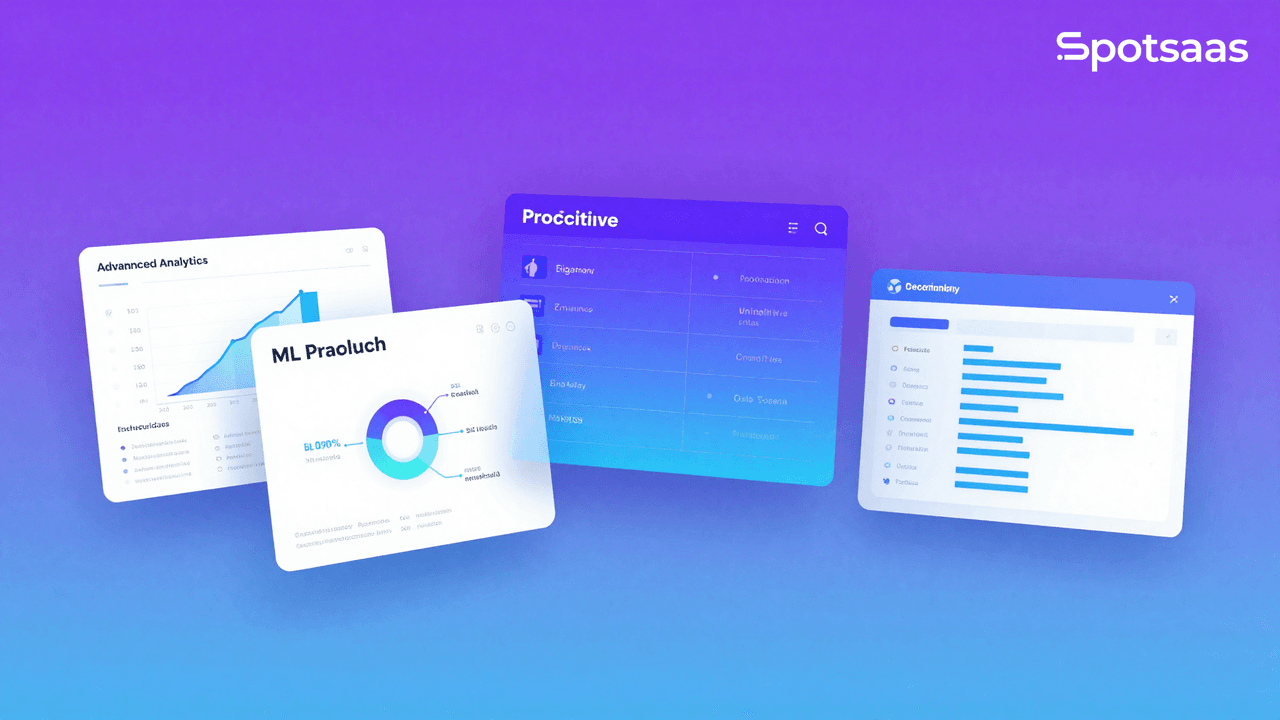
Many teams want to make data-driven decisions but feel overwhelmed by the size and complexity of their datasets. Advanced analytics is built to handle exactly that problem.
This article sets out the techniques and applications of advanced analytics and the benefits they bring to decision-making and business productivity, so you can see where these methods fit and what results they deliver.
Key Takeaways
- Advanced analytics uses advanced statistical methods, machine learning techniques, and big data to analyze complex datasets for better decision-making and business outcomes.
- The benefits of advanced analytics include better decision-making, higher productivity, and a stronger customer experience.
- Techniques used in advanced analytics include descriptive modeling, predictive analytics, optimization and simulation, text analytics, and multimedia analytics.
- Applications of advanced analytics range from analyzing customer behavior and identifying market trends to improving operational efficiency through data analysis.
Understanding Advanced Analytics
Advanced analytics refers to the use of advanced statistical methods, machine learning techniques, and big data to analyze and interpret complex sets of data for better decision-making and business outcomes.
Definition
Advanced analytics is the application of high-level data analysis techniques, such as machine learning and predictive modeling. With this approach, businesses can dig deeper into their data to find patterns, relationships, and insights that are not readily visible through traditional Business Intelligence (BI) methods.
The main goal of advanced analytics is to give companies solid, reliable knowledge for strategic future planning. The approach relies on computational processes that run complex algorithms to build statistical models, and those models are capable of producing meaningful interpretations from large and varied data sets.
In real-time environments, advanced analytics supports quick decision-making by providing full insight into bulky and complex data trends. Industries like healthcare, finance, and manufacturing rely heavily on these techniques because they need detailed analyses of complex information sets.
Importance
Advanced analytics plays a critical role in the modern corporate world. It lets companies examine their data more closely than traditional Business Intelligence methods allow, which surfaces subtle patterns and relationships that would otherwise stay hidden.
With machine learning techniques, advanced analytics handles large and complex datasets and gives decision-makers useful patterns. It opens up real-time analysis, so businesses can make quick, informed decisions based on emerging trends and customer behavior.
This capability matters across many industries, including finance, healthcare, marketing, and manufacturing, where thorough data analysis is vital. Because it puts better efficiency, potential cost savings, and improved customer targeting within reach, advanced analytics keeps businesses competitive in an increasingly data-driven market.
Benefits of Advanced Analytics
Advanced analytics offers several key benefits for a business, including better decision-making, higher productivity, and a stronger customer experience. Each of these builds on the same foundation of turning raw data into practical guidance.
Improved decision-making
Advanced analytics directly improves decision-making in corporate settings. Companies use it to evaluate complex data sets and recognize underlying patterns. Its real-time analysis speeds up the decision-making process, so companies can respond quickly and appropriately to emerging business trends or changes.
It helps organizations understand both where they stand today and what their future possibilities look like. That predictive power gives companies a clear edge, helping them anticipate market shifts, customer behavior, and vital business activities well before they happen rather than reacting after the fact.
In short, advanced analytics gives businesses the fact-based insights they need for strategic planning and the critical decisions that drive growth and competitiveness, replacing hunches with evidence drawn directly from their own data.
Increased productivity
Putting advanced analytics techniques to work can raise productivity for businesses. Through data analysis, machine learning, and process automation, companies can improve their operations and simplify workflows.
Advanced analytics helps organizations spot inefficiencies, automate repetitive tasks, and make data-driven decisions that improve efficiency and productivity. With the ability to analyze large amounts of complex data in real time, businesses get timely insights that point to areas for improvement and let them act early.
With advanced analytics in place, companies can raise their productivity levels, get more out of the resources they already have, and outpace the competition.
Enhanced customer experience
A stronger customer experience is one of the key benefits of advanced analytics. By analyzing large amounts of data, businesses can learn a great deal about customer behavior and preferences.
This lets them shape their products and services to the specific needs of their customers, which makes the experience more personal and satisfying. Advanced analytics also helps companies anticipate customer needs and offer solutions early, which raises customer satisfaction and loyalty.
With real-time analysis, businesses can respond promptly to customer feedback or issues, resolve them in good time, and improve the overall customer experience.
Advanced Analytics Techniques
Advanced analytics techniques include descriptive modeling, predictive analytics, optimization and simulation, text analytics, and multimedia analytics.
Descriptive Modeling
Descriptive modeling is a technique used in advanced analytics to analyze data and create statistical models. It helps businesses identify patterns, relationships, and trends across their complex data sets.
Through computational methods, companies gain insight into customer behavior, market trends, and important business activities. Descriptive modeling supports real-time analysis of data, which makes decision-making faster and better informed.
The technique is important for industries like finance, healthcare, marketing, and manufacturing, where complex data analysis is required. Descriptive modeling can lead to better efficiency, cost savings, sharper customer targeting, and stronger competitiveness for businesses.
Predictive Analytics
Predictive analytics is a technique used in advanced analytics to forecast future outcomes from historical data and patterns. By analyzing large datasets and applying statistical models, businesses learn a great deal about customer behavior, market trends, and potential risks or opportunities.
This information helps companies make more informed decisions and build effective strategies for growth. With predictive analytics, organizations can anticipate demand, improve operations, reduce risks, personalize marketing campaigns, and lift overall business performance.
It matters directly in industries like finance, healthcare, marketing, and manufacturing, where accurate predictions are essential for success.
Optimization and Simulation
Optimization and simulation are key techniques in advanced analytics that help businesses make better decisions. Optimization finds the best possible solution to a problem by weighing various factors and constraints.
It lets companies maximize efficiency, minimize costs, and make the most of their resources. Simulation uses mathematical models to imitate real-world scenarios and forecast outcomes.
It helps organizations see how different variables interact with one another and evaluate potential strategies before putting them in place, which reduces the cost of trial and error.
By applying optimization and simulation in advanced analytics, businesses can improve their decision-making. They can find the most efficient routes for logistics operations, allocate resources well, and improve production schedules.
With simulation, companies can also test different business strategies without any risks or consequences in a virtual environment. This lets them judge the impact of their choices before making actual investments or changes.
Text Analytics
Text analytics is a technique used in advanced analytics that pulls meaningful information and insights from unstructured text data. It lets businesses analyze large volumes of written content, including emails, social media posts, customer reviews, and surveys.
By applying natural language processing (NLP) and machine learning algorithms, companies can find patterns, sentiments, themes, and relationships within the text. Text analytics gives organizations a clear read on customer feedback, market trends, brand reputation, and employee sentiment.
It improves decision-making by turning textual data into actionable intelligence. With text analytics built into their advanced analytics solutions, businesses can put unstructured text data to real use for strategic planning and improvement.
Multimedia Analytics
Multimedia analytics is a technique in advanced analytics that focuses on analyzing various types of media, such as images, videos, and audio. By applying statistical methods and machine learning algorithms to these multimedia data sets, businesses learn a great deal about consumer behavior and market trends.
For example, they can analyze customer reviews from social media platforms to understand how people feel about a product, or use image recognition technology to identify patterns in visual data such as photos and video frames. Multimedia analytics helps businesses surface hidden information and make informed decisions based on a deeper understanding of their target audience.
Applications of Advanced Analytics
Applying advanced analytics in data science lets businesses pull useful patterns from large datasets, which supports better decision-making and more efficient processes.
Using data for business intelligence
Advanced analytics is central to turning data into business intelligence. Here are some ways organizations can use data to gain useful patterns and make informed decisions:
- Analyzing customer behavior: By analyzing customer data, companies can understand their preferences, buying patterns, and satisfaction levels. This information helps them shape products and services to meet customer needs well.
- Identifying market trends: Advanced analytics lets businesses study market trends through factors such as competitor analysis, industry benchmarks, and consumer sentiment. This supports strategic decisions like introducing new products or expanding into new markets.
- Improving operational efficiency: Data analysis helps organizations find bottlenecks or inefficiencies in their processes. Once they understand the root causes, companies can take corrective action to improve productivity and reduce costs.
- Enhancing risk management: Advanced analytics helps companies identify potential risks and predict future outcomes from historical data. This supports proactive risk mitigation and better decisions about investments or business operations.
- Personalizing marketing campaigns: By analyzing customer data, businesses can segment their target audience and build personalized marketing campaigns. This makes marketing more effective by delivering relevant content and offers that resonate with individual customers.
- Optimizing pricing strategies: Through data analysis, organizations can set the right price points for their products or services based on factors like demand elasticity, competition, and cost structures. This keeps pricing decisions grounded in data rather than guesswork.
- Improving supply chain management: By analyzing supply chain data, companies can right-size inventory levels, reduce lead times, and improve supplier relationships. This leads to cost savings, better product availability, and stronger operational efficiency.
- Simplifying financial performance analysis: Advanced analytics lets organizations run detailed financial performance analysis by combining various financial data sources such as sales figures, expenses, and cash flows. This helps them find areas of improvement and make data-driven financial decisions.
Applying advanced analytics in data science
Companies are increasingly applying advanced analytics techniques in the field of data science. This helps them gain useful patterns and make informed decisions from data. Here are key points about using advanced analytics in data science:
- Advanced analytics is central to data science, letting companies analyze complex datasets and extract meaningful information.
- It lets businesses find patterns, trends, and correlations in large volumes of data, which supports predictive modeling and decision-making.
- By applying advanced analytics techniques such as machine learning and statistical methods, organizations can surface hidden insights and build accurate models for future predictions.
- Data visualization is an important part of advanced analytics in data science. It presents complex information in a visual format, which makes it easier to understand and act on.
- Applying advanced analytics in data science helps companies improve processes, raise efficiency, and drive innovation with the strength of big data.
- Advanced analytics also lets businesses detect anomalies or outliers within their datasets, which points to potential risks or opportunities.
Transforming analytics for better results
Advanced analytics can reshape businesses and drive better results. Here are some ways analytics can be put to work for improved outcomes:
- Identifying hidden opportunities: Advanced analytics can surface hidden patterns and trends within large datasets, so businesses can find new opportunities for growth or improvement.
- Enhancing operational efficiency: By analyzing processes and data, advanced analytics can point to bottlenecks, inefficiencies, and areas for improvement. This lets organizations simplify operations and reduce costs.
- Personalizing customer experiences: Analytics lets businesses understand customer preferences and behavior at an individual level. That insight can shape personalized marketing campaigns, product recommendations, and tailored customer experiences.
- Optimizing resource allocation: With predictive models and optimization techniques, businesses can make informed decisions about resource allocation. This includes right-sizing inventory levels, workforce planning, supply chain management, and more.
- Making data-driven decisions: Advanced analytics lets businesses make strategic decisions from objective data rather than intuition or guesswork. This leads to more accurate forecasting, risk assessment, and better decisions overall.
- Improving risk management: Analytics helps businesses identify potential risks and predict how likely they are to occur. By understanding the factors behind a risk, organizations can build proactive strategies to reduce it.
- Driving innovation: With analytics, organizations gain insight into market trends, emerging technologies, and customer needs. This information fuels innovation by helping companies develop new products or services that meet changing demands.
- Enabling proactive maintenance: Through predictive maintenance models, advanced analytics helps businesses catch equipment failures or maintenance needs before they occur. This reduces downtime, improves productivity, and extends asset lifespan.
- Speeding up decision-making: Analytics provides real-time data analysis and visualization tools that make decisions faster at every level of the organization. This improves agility and responsiveness in a fast-moving business environment.
- Gaining a competitive edge: With advanced analytics, businesses can gain a real advantage in their industry. It lets organizations keep pace with market trends, deliver strong customer experiences, and make data-driven decisions that lead to better outcomes.
Conclusion
Advanced analytics gives businesses a full approach to data analysis and delivers useful patterns for better decision-making. With advanced techniques such as predictive modeling and machine learning, organizations can improve operations, strengthen customer experiences, and gain a competitive edge.
With its broad range of applications across finance, healthcare, marketing, manufacturing, and other industries, advanced analytics has become an essential tool for any data-driven business that wants to compete on the quality of its decisions.
FAQs
1. What are advanced analytics?
Advanced analytics refers to the use of complex techniques and algorithms to analyze large datasets and uncover hidden patterns, trends, and insights that can inform decision-making and improve business outcomes.
2. What are some common techniques used in advanced analytics?
Some common techniques used in advanced analytics include machine learning, data mining, predictive modeling, natural language processing, and optimization algorithms.
3. How are advanced analytics applied in different industries?
Advanced analytics is applied across industries such as finance, healthcare, retail, manufacturing, and marketing. It can be used for customer segmentation, fraud detection, demand forecasting, inventory management, risk assessment, and personalized recommendations.
4. What are the benefits of using advanced analytics?
The benefits of using advanced analytics include better decision-making from data-driven insights; higher operational efficiency by identifying areas for improvement; stronger customer satisfaction through personalized experiences; lower costs through improved processes; and a competitive advantage from staying ahead of market trends.
5. Do I need specialized skills or tools to implement advanced analytics?
Implementing advanced analytics may call for specialized skills such as data analysis and programming knowledge. Software tools like R or Python can help with the work, but they are not always required, since user-friendly platforms that need no coding expertise are also available.

- Independent picks for exactly what you just read about
- Matched to your team size & needs
- Vendors don't pay for placement
Step 1 of 4
How big is your team?
We tailor recommendations to companies your size.















Related Articles

E-commerce Platforms
Best E-commerce Software in 2026: Complete Guide for Every Business Size
Continue reading →
E-commerce Platforms
What Is Market Information Management? A Complete Guide to Data-Driven Business Growth
Continue reading →

E-commerce Platforms
Pirate Ship Shipping Software for Small Business in 2026: Best Alternatives Compared
Continue reading →
AI Software
Is Square Up POS the Right Point of Sale System for Your Business in 2026?
Continue reading →