
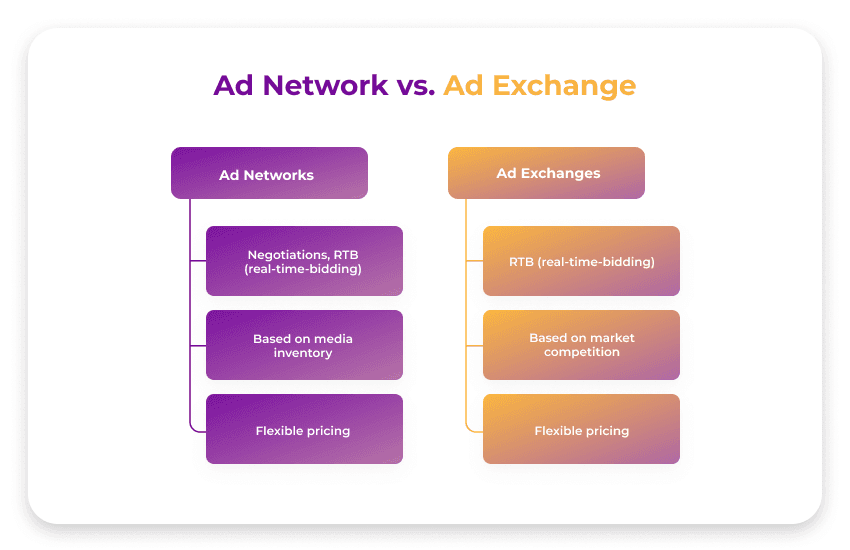
Ad networks and ad exchanges are the two main routes for buying and selling online ad space, and the terms get mixed up constantly. This piece breaks down what separates an ad exchange from an ad network, so you can pick the right platform for your campaign instead of guessing which one fits.
What follows sticks to how each model actually works day to day, without the buzzwords that usually crowd out the practical differences.
Key Takeaways
- Ad networks sit between advertisers and publishers, bundling unsold inventory into pre-segmented packages that are sold using fixed pricing models.
- Ad exchanges run on real-time auctions: publishers put impressions up for sale and advertisers bid on each one individually through programmatic advertising known as real-time bidding (RTB).
- Advertisers need to weigh their own specific goals and target audience before choosing between an ad network or an ad exchange.
- For SaaS companies trying to get more out of their marketing spend, understanding the fundamentals of PPC for SaaS companies matters just as much.
What is an Ad Network?
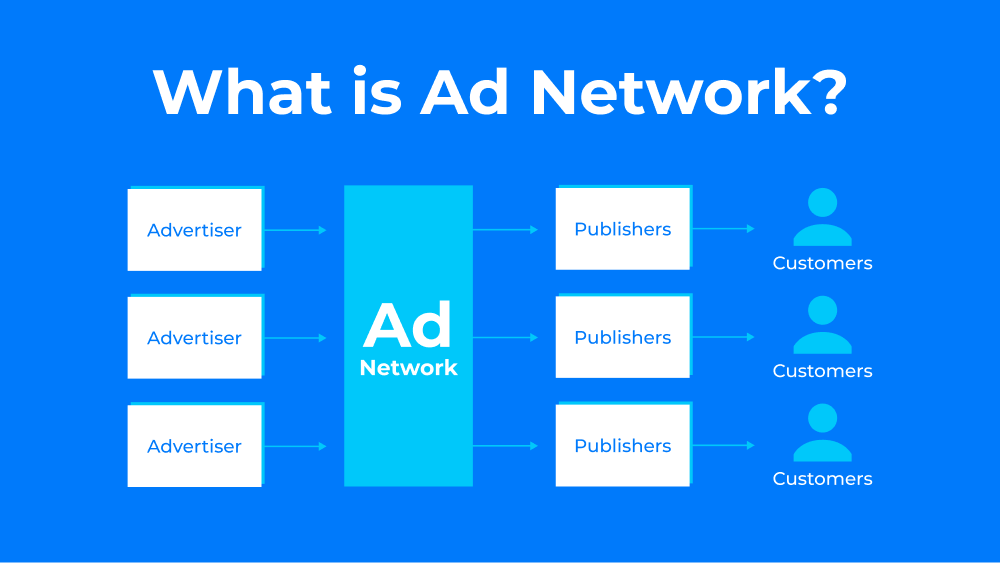
An ad network is the digital marketplace that connects online publishers with advertisers, letting them buy and sell ad space between each other.
Definition and function
The ad network works as the go-between for advertisers and publishers, collecting unsold ad space from a range of publishers and offering it back out to advertisers. Networks sort that inventory using factors like demographics, location, and content niche.
Once it’s categorized, that inventory gets sold to advertisers who want their ads shown to a specific audience. An ad exchange works differently: it’s also a digital marketplace for buying and selling online ad space, but pricing runs on real-time bidding (RTB) instead of fixed rates.
Publishers list their available ad space in that open marketplace, the exchange, where multiple advertisers bid on each impression individually, in real time, through automated auctions.
Whoever bids highest wins the right to display their ad on that particular site.
Inventory management and pricing
Ad networks play a central role in inventory management and pricing. They act as the go-between for online publishers who have ad space available and advertisers who want to place ads on that space.
Networks manage that inventory by sorting it according to factors such as site content, audience demographics, and user behavior. That segmentation is what lets advertisers target a specific audience effectively.
Pricing on an ad network is usually set through models like cost-per-click (CPC) or cost-per-thousand impressions (CPM). Advertisers bid on the inventory that’s available, and the highest bidder gets their ads placed on the publisher’s site.
What is an Ad Exchange?
An ad exchange is the digital marketplace that connects online publishers who want to sell ad space with advertisers who want to buy and display ads on it.
Definition and function
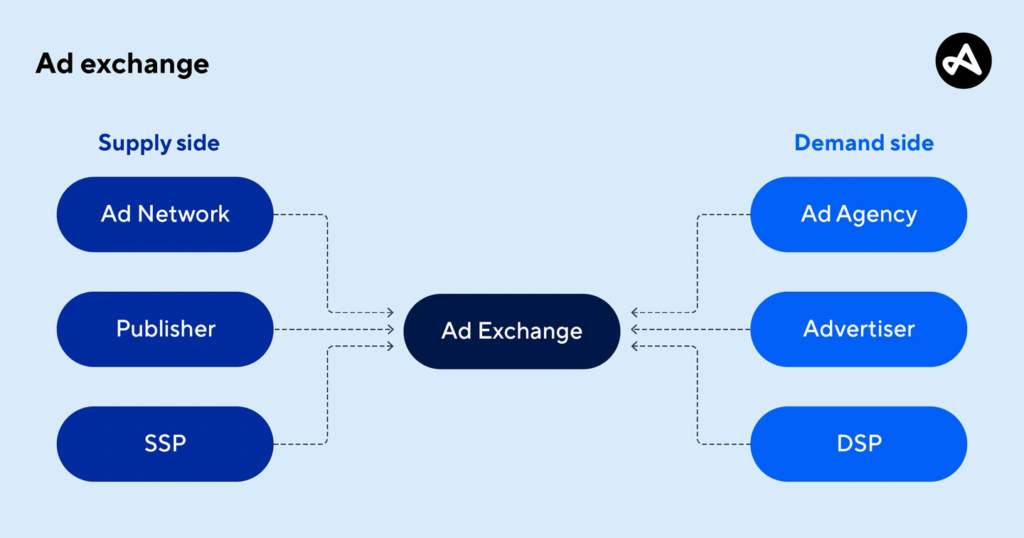
An ad exchange is a digital marketplace that connects online publishers directly with advertisers. Its main job is to facilitate the buying and selling of ad space, giving advertisers a way to reach their target audience and publishers a way to monetize their inventory.
Ad networks manage pricing and ad placement themselves, often through bidding models like cost-per-impression or cost-per-click. An ad exchange, on the other hand, is a real-time auction-based platform where publishers sell their ad impressions to advertisers through a programmatic advertising process known as real-time bidding (RTB).
That structure gives both parties involved in the transaction more transparency and control.
Real-time bidding
Real-time bidding is the defining feature of ad exchanges. It lets advertisers bid in real time for ad impressions the moment they become available, competing with each other to have their ad shown the instant a user visits a page or opens an app.
That setup gives advertisers the chance to target specific audiences and pay only for the impressions that are actually valuable to them. It also makes ad buying more efficient, since it removes the need for upfront negotiation and simplifies how ad inventory gets purchased.
Key Differences Between Ad Network and Ad Exchange
Ad networks and ad exchanges part ways on several fronts: how they pre-segment inventory versus running an open marketplace, how they price ad space, who their target users are, how campaigns get optimized, and how they handle audience segmentation.
Inventory pre-segmentation vs open marketplace
The two platforms take different approaches to managing inventory. Ad networks typically pre-segment theirs, categorizing websites based on specific criteria like demographics or content type.
That pre-segmentation lets advertisers target their ads more precisely. Ad exchanges, on the other hand, operate as open marketplaces where publishers list their ad space without any pre-segmentation applied.
Advertisers then have the freedom to bid on available impressions in real time, which gives them more control over where their ads end up. Choosing between pre-segmented inventory and an open marketplace comes down to how much targeting precision an advertiser wants versus how much control they want over ad placement.
Pricing models
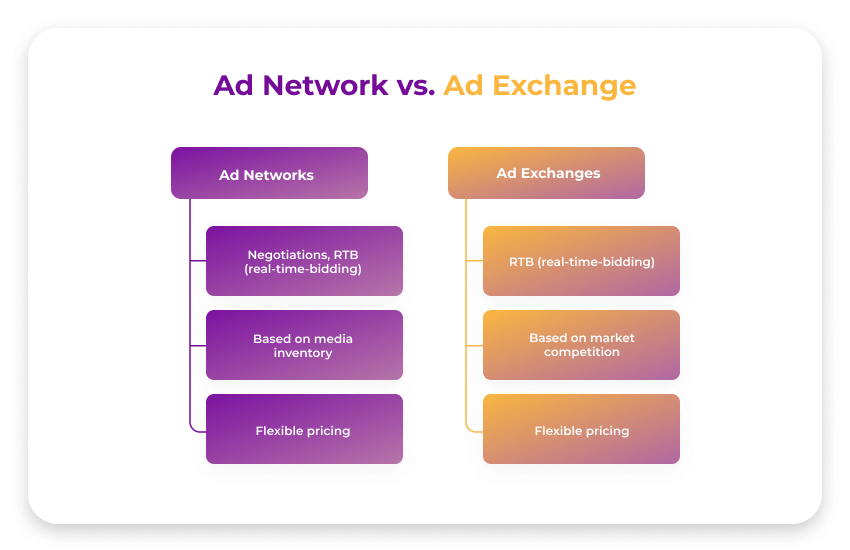
Ad networks and ad exchanges also use different pricing models for buying and selling ad inventory. Ad networks typically run on a fixed pricing model, where advertisers pay a predetermined rate for a set number of impressions or clicks.
That structure gives advertisers more control over budgeting and campaign planning. Ad exchanges instead use a real-time bidding (RTB) pricing model, where advertisers bid in real time for each impression as it becomes available.
This dynamic, auction-based system lets advertisers pay based on the perceived value of each individual impression, which can mean lower costs and higher efficiency over time.
Target users
Advertisers are the primary target users of both ad networks and ad exchanges. They’re looking to reach a specific audience with their ads, and each platform offers a different way to get there.
Ad networks typically focus on pre-segmenting inventory based on demographics or interests, so advertisers can easily choose where their ads will run. Ad exchanges, on the other hand, provide an open marketplace where advertisers bid in real time for available impressions across a much wider range of publisher inventory.
That structure gives advertisers more control and flexibility in reaching the audience they want. Ultimately, the choice between an ad network and an ad exchange comes down to the advertiser’s specific goals and preferences.
Campaign optimization
Getting the most out of an advertising campaign means optimizing it continuously, which starts with analyzing data and adjusting based on what it shows. Keeping an eye on metrics like click-through rate, conversion rate, and cost per acquisition helps identify where a campaign can improve.
Adjusting ad placement, targeting options, bidding strategies, and creative elements are all part of that optimization work. Fine-tuning campaigns continuously, based on real-time data insights, drives better results and helps campaigns hit their marketing goals more effectively.
Campaign optimization isn’t a one-time task; it’s an ongoing process that takes careful analysis and experimentation. It lets advertisers adapt their strategies as market conditions or customer behavior change.
Audience segmentation
Both advertisers and publishers benefit from audience segmentation on ad exchanges and ad networks alike. Dividing a broad audience into smaller, more specific groups based on demographics, interests, or behavior lets advertisers tailor campaigns to reach the right people at the right time.
For advertisers, that means a better return on investment, since ads reach people who are actually likely to be interested in what’s being sold.
Publishers benefit too: audience segmentation lets them offer targeted ad placements that command higher prices, which increases their revenue potential. Overall, audience segmentation is a core strategy for optimizing campaign performance and monetizing publisher inventory effectively, on both ad exchanges and ad networks.
Which is Better: Ad Network or Ad Exchange?
Advertisers and publishers need to carefully weigh their own specific needs and goals to work out whether an ad network or an ad exchange is the better choice for them.
Considerations for advertisers and publishers
Advertisers and publishers each face their own considerations when deciding between an ad network and an ad exchange. Advertisers need to evaluate their target audience and advertising goals to figure out which platform gives them better access to the inventory and audience they want.
Ad networks offer pre-segmented inventory, letting advertisers reach specific demographics or interests directly. Ad exchanges offer an open marketplace with real-time bidding instead, which brings more flexibility and control over pricing and targeting options.
Publishers, meanwhile, need to decide how they want to monetize their ad space: through a fixed rate offered by an ad network, or through auctions on an ad exchange. How much control they want over their publisher inventory and impressions also factors into that call.
Choosing the right platform for your needs
Choosing the right platform comes down to a handful of factors. Start with your goals and objectives as an advertiser or publisher: if you want to target specific audiences and keep more control over your campaigns, an ad network is likely the better fit.
If instead you want access to a wide range of inventory in real time through auctions, an ad exchange is the way to go.
The targeting options offered by each platform matter too. Ad networks often provide pre-segmented inventory that helps you reach your desired audience more effectively.
Ad exchanges, by contrast, offer real-time bidding (RTB) opportunities, where advertisers bid for impressions based on their own specific targeting criteria.
Conclusion
In short, advertisers and publishers deciding between an ad network and an ad exchange need to carefully weigh their own needs and goals. Ad networks offer pre-segmented inventory and pricing models that tend to suit specific targeting needs.
Ad exchanges, on the other hand, provide access to a larger marketplace through real-time bidding and open auctions, trading that flexibility for the need to invest more in campaign optimization.
Ultimately, the choice between an ad network and an ad exchange comes down to individual preferences and how a business wants to approach monetization within the advertising ecosystem.
Frequently Asked Questions
1. What are the differences between an ad exchange and ad network?
An ad exchange is a realtime marketplace for buying and selling ads, while an Ad network collects inventory from multiple publishers and sells it to advertisers.
2. How does Realtime Bidding (RTB) work in ad exchanges?
Realtime Bidding is a feature of ad exchanges where display advertising spaces are bought and sold through a bidding process in real-time.
3. Is pricing different in an ad exchange compared to an Ad Network?
Yes, Ads on an exchange are typically priced in real-time, whereas on an Ad Network they can be pre-segmented or fixed price.
4. Can DSPs interact with both networks and exchanges?
Yes! A Demand Side Platform (DSP) interacts with both networks and exchanges, helping marketers manage their bids for the automated buying of online advertising.

- Independent picks for exactly what you just read about
- Matched to your team size & needs
- Vendors don't pay for placement
Step 1 of 4
How big is your team?
We tailor recommendations to companies your size.















Related Articles

Marketing Automation
PPC vs CPC: The Complete Guide to Understanding Digital Advertising Metrics
Continue reading →

Best Tools
Best Web Analytics Tools & Software: A Complete 2026 Guide
Continue reading →

Best Tools
5 Best Marketing Automation Software Tools in 2026: Find the Best Tool for Your Business
Continue reading →

Buyers guide
What Is Marketing Automation? A Complete Guide for 2026
Continue reading →